
Reviewed · BUDAPEST WALKING TOURS
Budapest District 8 Crime and Culture Walking Tour
A neighborhood called District 8 sounds like a warning label, until you see what it became. This walking tour takes you into Budapest’s District VIII and shows the area’s shift from trouble spots to music, food, and politics. You also get an easy-to-follow route that starts at Golgota tér and finishes at Rákóczi square.
I especially liked the guide’s focus on how the district changed over time, with real context as you walk. I also loved the variety: China Market, underground cultural venues, and today’s stylish bars and bakeries all in one route. One thing to consider is in the tour title the word crime is part of the theme, but the focus is more on transformation and context than detailed crime stories.
In This Review
- Key highlights worth showing up for
- District 8 crime and culture: why this tour feels different
- Starting at Golgota tér: logistics that actually matter
- China Market: your first clue that Budapest is bigger than it looks
- Underground music and cultural venues: listening with your eyes
- Former crime hotspots turned into bars and bakeries
- Politics and activism: the district’s mindset, not just its streets
- What makes the route work in real life
- Price and value: is $34.32 a good deal?
- Who should book this District 8 walk (and who might skip it)
- Weather and comfort: the one thing to watch before you go
- Final call: should you book?
- FAQ
- FAQ
- Where does the tour start and end?
- How long is the walking tour?
- How much does it cost?
- What language is the tour offered in?
- Is a mobile ticket provided?
- What group size should I expect?
- What happens if the weather is bad?
- Is it refundable if I cancel?
Key highlights worth showing up for
- Small group size (max 12) means questions feel normal, not rushed
- China Market + international Budapest gives you a different first impression of the city
- Underground music and culture stops help you read the area like a local
- Crime hotspots as a transformation story explains why the neighborhood looks the way it does now
- District VIII through a political lens adds meaning beyond architecture and photos
Budapest at street level, more routes on foot
- Big Bus Budapest Hop-On Hop-Off Bus and Walking Tour★ 3.5 · 2,206 reviews
- Budapest: Buda Castle District Walking Tour★ 4.6 · 2,108 reviews
- 3-Hour Orientation Walking Tour of Buda and Pest★ 4.8 · 1,834 reviews
- Budapest Historical Sightseeing – Free Walking Tour★ 5.0 · 1,302 reviews
District 8 crime and culture: why this tour feels different
Budapest has a loop of big sights that most first-timers hit. This tour breaks you out of that habit fast. District 8 isn’t about postcard views so much as people, places, and the way a neighborhood evolves when outsiders stop paying attention.
The best part is the tour’s point of view. You’re not just walking from one photo stop to another. You’re learning how this district shifted from an industrial reputation into a magnet for art, culture, and political activism, and you do it by seeing where daily life happens now.
And yes, the tour title brings up crime. In practice, the walk treats it like a historical thread you’ll understand as you go, not like a gory crime documentary. If you’re expecting lots of specific criminal details, you may leave wanting more. If you want context and how the area re-invented itself, you’re in the right place.
Starting at Golgota tér: logistics that actually matter
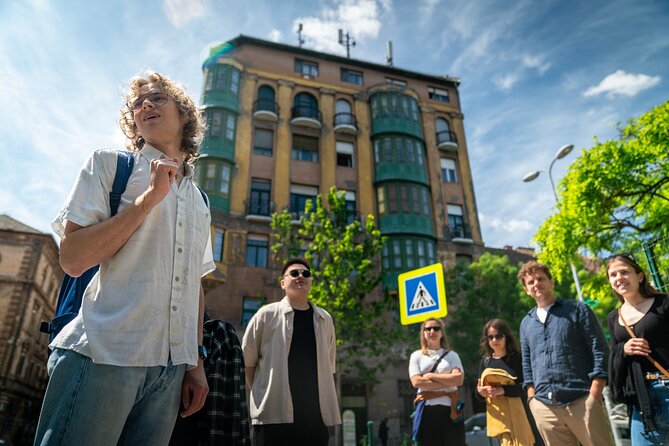
The tour meets at Budapest, Golgota tér, 1089 Hungary. That matters because it sets you up in District 8 from the first minute, instead of dragging you there later. The end point is in the city centre at Rákóczi tér, so you finish near a key public area rather than deep backstreets.
This is a roughly 3-hour walking experience. That time window is long enough to build a story as you move, but short enough that you won’t feel like you’re spending half a day commuting across Budapest. It’s also offered in English, and you get a mobile ticket, which keeps things simple and paper-free.
The small group size is capped at 12 travelers, so you don’t get that big-bus feeling even though you’re outdoors. For a culture-and-history walk, that’s a real advantage. You can ask follow-ups when something clicks, like why a street corner feels one way now compared with how it used to be.
China Market: your first clue that Budapest is bigger than it looks
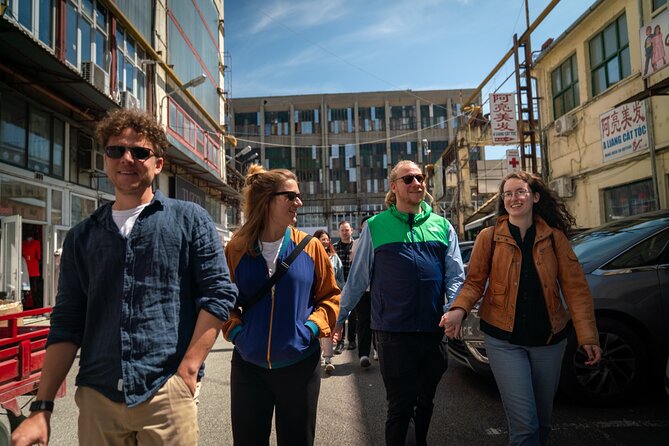
The first major stop centers on the area’s China Market. This isn’t a random detour. It’s a key landmark for understanding why District 8 has long attracted an international community, and how immigration and trade shape a neighborhood’s identity.
What I liked here is that you get a sense of everyday life. Markets are where you see patterns quickly: foot traffic, language mix, what people buy, and what kind of businesses stick around. You start the tour by grounding it in something practical, then the story widens from there.
If you only see Budapest through Parliament photos and museum hallways, China Market is a reality check. It shows you a different side of the city’s economy and culture—one that’s closer to the street, less polished, and more honest about how neighborhoods function.
Underground music and cultural venues: listening with your eyes
After the market, the walk moves into District 8’s world of underground music and cultural venues. These stops help you read the district as a creative space, not just an address on a map. Even if you don’t know the music scene, the guide’s explanations give you something to latch onto as you walk past the venues.
This is the kind of cultural tour that works well because it’s not just naming places. You learn the logic behind why these venues exist here and what they signal about the district’s vibe. In other words, you start connecting dots: how a neighborhood’s past affects its present art scene, and why nightlife and creativity often cluster where communities feel they can breathe.
There’s also a good pacing shift here. Early on, you get the international and social story. Then you shift into creative energy—still cultural, still local, but more about style and expression than commerce.
More Budapest on foot
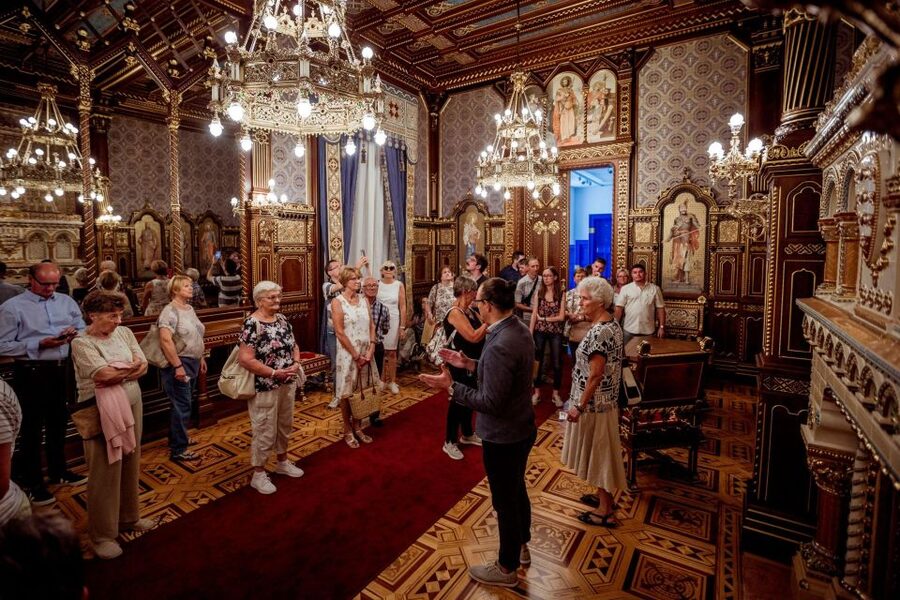

Former crime hotspots turned into bars and bakeries
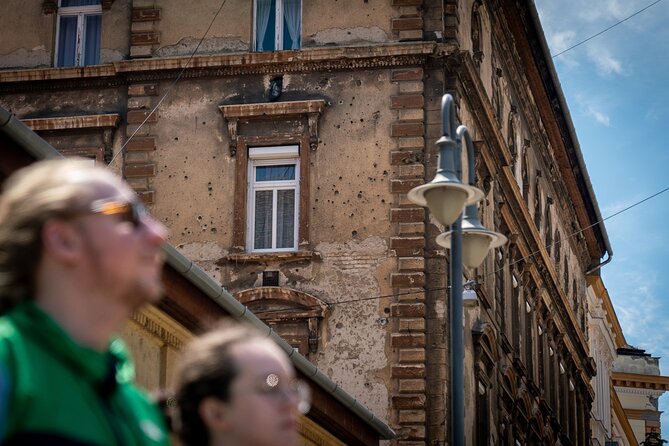
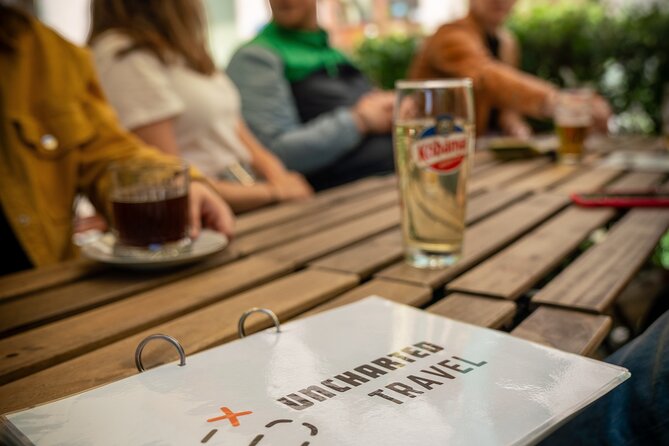
This is the thematic spine of the tour: the idea of former crime hotspots that have transformed into places for food, drinks, and casual hangouts. The walk helps you see how urban change isn’t only about big developments. It happens street by street, business by business, when new people and new uses take hold.
A practical way to think about this: when a neighborhood becomes a draw for culture, it changes who feels comfortable showing up. That doesn’t mean problems vanished overnight. It means the everyday mood shifts, and that shift shows up in what’s open late, what lines up at lunch, and what kinds of storefronts replace the old ones.
I liked that the tour doesn’t pretend the past disappears. It treats the district’s tougher reputation as part of the explanation for why things feel the way they do today. You get to see the transformation with your own eyes, not just hear it as a lecture.
Politics and activism: the district’s mindset, not just its streets
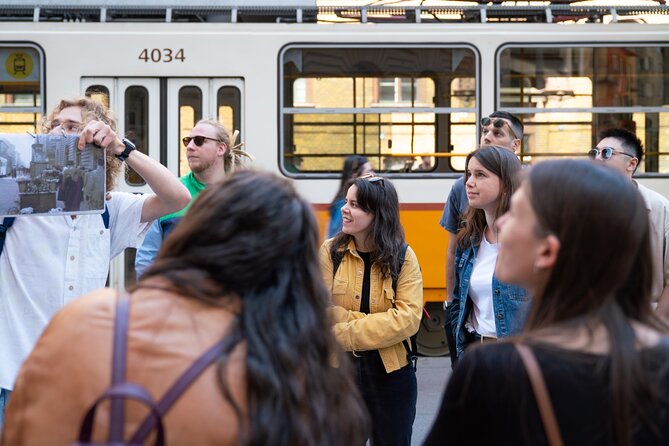
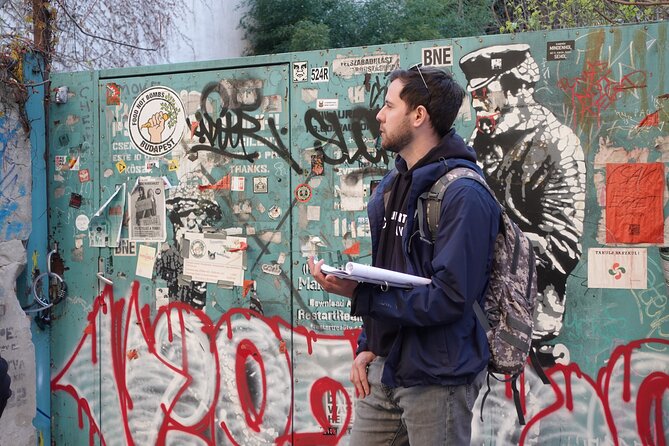
One of the most useful takeaways is how District 8 ties into political activism. That theme can be easy to miss if you only visit Budapest’s major monuments. Here, politics is shown as something lived: connected to where people gather, how communities organize, and why certain spaces attract movements.
This is where a good guide earns their fee. On my walk, the guide—Davide—was a fountain of knowledge about Budapest beyond District 8 itself. He connected the dots between neighborhood identity and larger city dynamics, so the activism thread felt grounded instead of abstract.
You don’t need to be a politics buff to enjoy this part. It’s simply a stronger way to understand what you’re seeing. When you know that a neighborhood has a legacy of activism, the current street culture makes more sense.
What makes the route work in real life
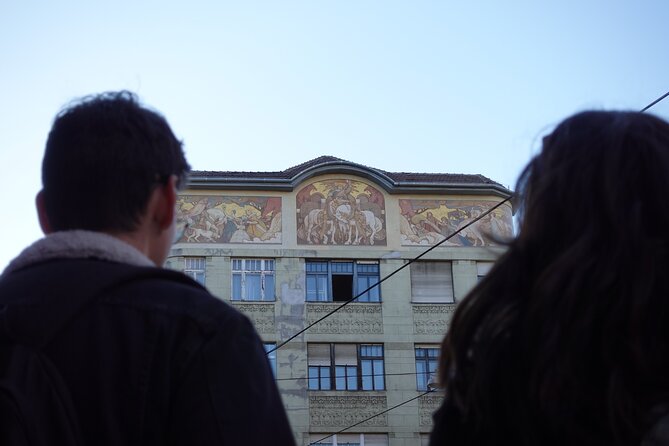
This is a walking tour, so comfort matters. Luckily, the structure is built for attention. You’re not cramming in a long list of random stops. Each location supports the story arc: international community, underground culture, transformation of former hotspots, and the politics thread.
Also, the tour ends at Rákóczi square in the city center. That’s a smart finish. You can easily continue your day with transit and food options nearby without having to navigate your way back from far-off locations.
The group size cap at 12 also helps with route flow. In a smaller group, your guide can adjust pacing. That keeps the tour from turning into a rushed race to the next corner.
And because it’s offered in English with confirmation at booking time (or as soon as possible if you book within a day), you can plan confidently without worrying that you’ll show up to a language mismatch. Mobile tickets are the cherry on top.
Price and value: is $34.32 a good deal?
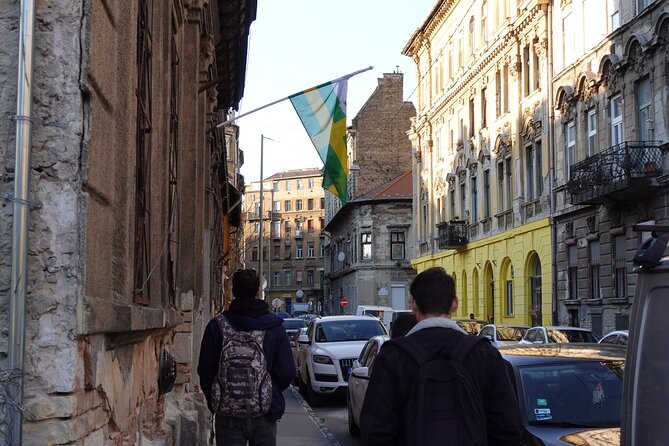
At $34.32 per person, this tour sits in the “reasonable splurge” category for a 3-hour, guided walking experience. The value comes from two things.
First, you get a focused District 8 storyline rather than a generic city walk. That matters because this area is not the usual first-choice sightseeing stop. Second, you’re paying for interpretation. Knowing what China Market represents, why underground culture cluster in certain spots, and how crime history connects to today’s nightlife and food scene turns a walk into learning.
It’s not an all-day tour, so you’re not buying hours of passive sightseeing. You’re buying a guided lens for a tight window, and it’s designed to get you back into the city center after.
If you want a traditional Budapest checklist, skip it. If you want a more human, less obvious side of the city, $34.32 feels fair—especially with a small group and a guide who can explain how the place works.
Who should book this District 8 walk (and who might skip it)
This tour is a great fit if you like:
- Neighborhood culture over landmark overload
- Walking tours with context, not just directions
- Trying to understand how a city changes over time
It may not be ideal if you’re only interested in major sights like Parliament, Fisherman’s Bastion, or Heroes’ Square. This tour isn’t built to compete with those. It’s built to give you another layer of Budapest, one that you won’t get from the standard routes.
Also consider your expectations about the crime theme. The word matters, but the tour’s real power is in transformation and meaning. If your goal is specific crime stories, you might find the tone more historical and sociocultural than sensational.
Weather and comfort: the one thing to watch before you go
This experience requires good weather. If it’s canceled because of poor weather, you’ll be offered a different date or a full refund. It’s a walking tour, so plan for real walking time and wear shoes you trust.
There’s also a minimum number of travelers required. If that minimum isn’t met, you’ll get offered another date or experience, or a full refund. That’s normal for small-group tours, and the cap of 12 travelers keeps the experience intimate.
Final call: should you book?
I’d book this tour if you want Budapest that feels more lived-in than staged. District 8 is the kind of place that rewards curiosity, and the China Market + underground culture + transformation story approach makes it easy to understand what you’re seeing.
Skip it only if you want a classic sightseeing route or you’re chasing lots of detailed crime anecdotes. For everyone else, this is one of those good-value walks that gives you a sharper sense of the city by showing how neighborhoods evolve—then sending you back to the centre at Rákóczi tér so you can keep exploring.
FAQ
FAQ
Where does the tour start and end?
It starts at Golgota tér, 1089 Hungary and ends in the city centre at Rákóczi tér.
How long is the walking tour?
The tour lasts about 3 hours.
How much does it cost?
The price is $34.32 per person.
What language is the tour offered in?
The tour is offered in English.
Is a mobile ticket provided?
Yes. The tour includes a mobile ticket.
What group size should I expect?
The tour has a maximum of 12 travelers.
What happens if the weather is bad?
This experience requires good weather. If it’s canceled due to poor weather, you’ll be offered a different date or a full refund.
Is it refundable if I cancel?
No. This experience is non-refundable and cannot be changed for any reason.
More Tours in Budapest






More Tour Reviews in Budapest






More of Budapest, Step by Step




Just Added: More Budapest Reviews
- Sightseeing flight over Budapest
★ 5.0 · 3 reviews - Budapest: Walking Tour with Chimney Cake & Polaroid Photos
★ 5.0 · 3 reviews - Self Guided Tour In Budapest With 100 Captivating Audio Stories
★ 5.0 · 3 reviews - Budapest Art Nouveau Walking Tour
★ 5.0 · 3 reviews - Hungary today: a no-taboo conversation
★ 5.0 · 3 reviews
Budapest Walking Tours, compared.
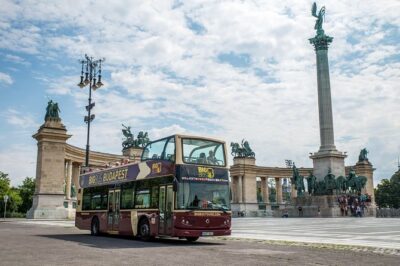 ★ 3.5Big Bus Budapest Hop-On Hop-Off Bus and Walking TourFrom $422,206 reviews
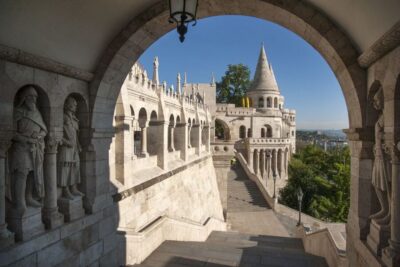 ★ 4.6Buda Castle District Walking TourFrom $142,108 reviews
 ★ 4.83-Hour Orientation Walking Tour of Buda and PestFrom $411,834 reviews
 ★ 5.0Budapest Historical Sightseeing – Free Walking TourFrom $31,302 reviews
 ★ 5.0Budapest All in One Small Group Walking Tour with Strudel StopFrom $1001,277 reviews
 ★ 4.8Budapest Food Walking Tour: Eat, Sip & Explore Like a LocalFrom $731,027 reviews
 ★ 4.9Buda Castle District Walking Tour with a HistorianFrom $63867 reviews
 ★ 4.9BloodThirsty Hungary: Walking tour & Dark Historical StoriesFrom $21633 reviews
Browse the lists this tour appears in