
Reviewed · CONCERTS
Budapest: Concert on the Oldest Working Organ in the City
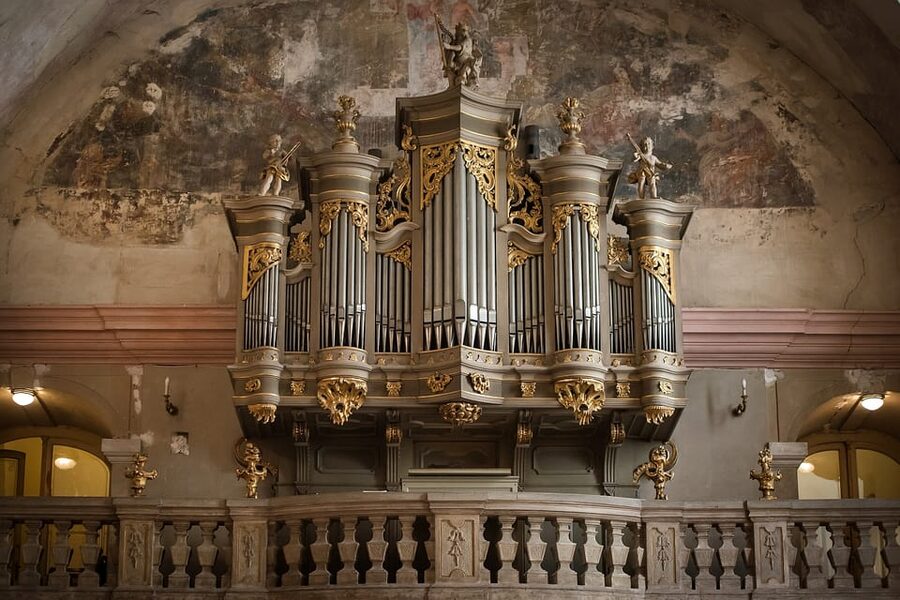
A 25-pipe organ can still stop time. In St. Michael’s Church, you get Budapest’s oldest working organ plus an English introduction that makes the music click fast, even if you do not read sheet music. My only heads-up: it is 70 minutes of focused listening, so if you want constant sightseeing noise, this is not the vibe.
This concert series is built around real craft and real musicianship, with solo organ or chamber music depending on the date. The venue itself matters too: you are not sitting in a “concert hall” so much as in a Baroque church where the sound has somewhere to go.
If you’re planning a calm evening near the Danube, this is one of the simplest ways to add high-art to your Budapest days.
In This Review
- Key Things You’ll Notice
- St. Michael’s Church and the 5th District: Getting Oriented Fast
- What You’re Really Paying For: The Value of a Live Organ Concert
- The Music Program: Famous Composers Plus Hungarian Flavor
- Sample program style, so you know what to expect
- Meet the Organist: Miklós Teleki and the Dates That Change It Up
- If the concert includes chamber music
- Inside the Concert Experience: How the Show Flows
- The Organ Itself: Why a 25-Pipe Instrument Can Still Feel Huge
- Practical Tips for Your Best Seat and Smooth Evening
- Who This Concert Is Best For (and Who Might Skip It)
- The Bottom Line: Should You Book This Budapest Old-Organ Concert?
- FAQ
- How long is the concert?
- Where is the meeting point for this concert?
- What’s included with the ticket?
- What kind of music will I hear?
- Are there chamber music concerts, or is it only solo organ?
- Who plays the organ?
- Will there be an English introduction?
- Can I record video or audio during the concert?
- Is transportation included?
Key Things You’ll Notice
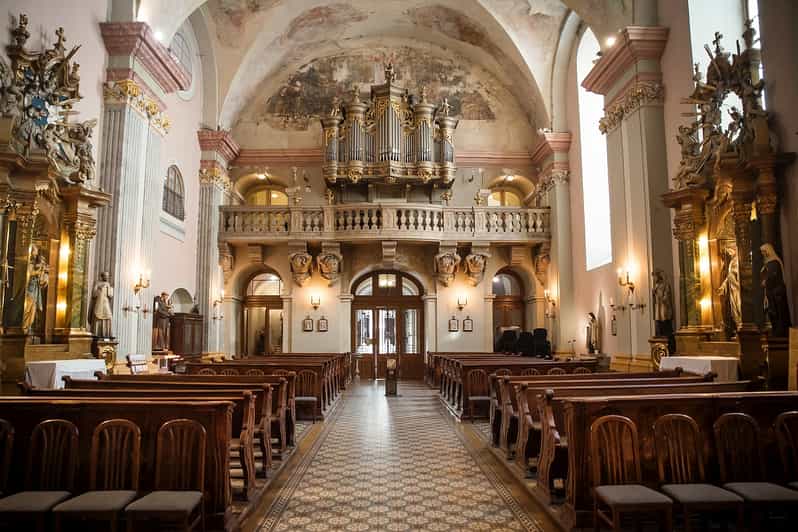
- Budapest’s oldest working organ in a Baroque church setting at St. Michael’s
- 70 minutes that feel perfectly sized for a Friday night, with no long breaks to slog through
- English (and Hungarian) guidance plus a printed leaflet you can follow
- Video support for the organist, so you can see what the musician is doing
- Music programs that mix big names like Bach and Mozart with Hungarian organ selections
- Music-maker Miklós Teleki leads most concerts, with select dates featuring other organists
Wider sweeps across the two banks
- Budapest: City Highlights Sightseeing Cruise★ 4.6 · 43,981 reviews
- Budapest: City Sightseeing Hop-On Hop-Off Bus Tour & Extras★ 4.1 · 4,337 reviews
- Budapest City Landmarks Walking Tour in 2 Hours★ 5.0 · 2,048 reviews
- Budapest: Nighttime or Daytime City Sightseeing Cruise★ 4.1 · 2,046 reviews
St. Michael’s Church and the 5th District: Getting Oriented Fast
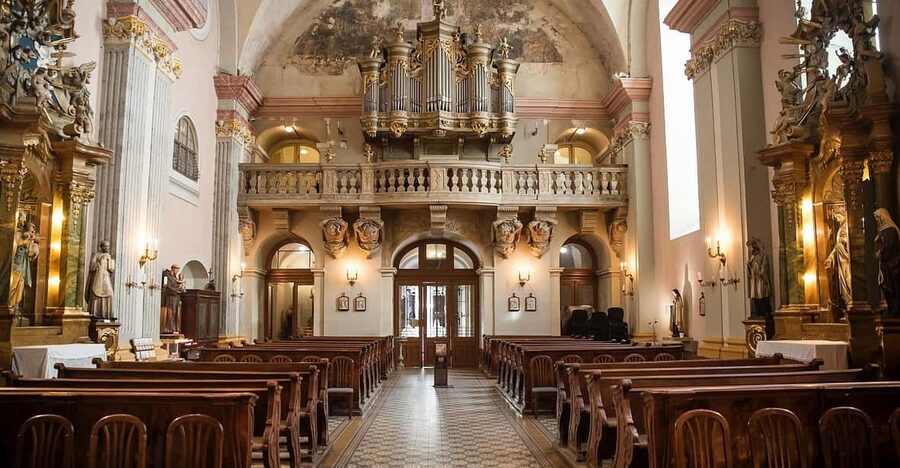
The concert meets at the white church building on the corner of Váci utca and Nyáry Pál utca in Budapest’s 5th District (1056). You are fairly close to the Danube, so this works nicely as an evening stop before or after dinner in the area.
What I like about the location for visitors is how practical it feels. You do not need a complicated plan to get there. You can just aim for the corner, find the church, and get settled. There is also a clear check-in flow at the door, and you get to skip the ticket line, which saves time when you’d rather be inside listening than standing around outside.
This is also a helpful spot if you are doing Budapest the usual way: walk a little, eat a little, then swap noise for music. The church atmosphere makes that switch feel natural.
What You’re Really Paying For: The Value of a Live Organ Concert
The price is listed as $24 per person for about 70 minutes. On paper, that is not “cheap,” but it is strong value for a private-feeling performance with a major instrument and an actual program.
Here is the value equation I see:
- You are paying for live musicianship, not a recorded show.
- You are paying for an instrument with local importance: the oldest working organ in Budapest.
- You are paying for an experience that has structure (introduction + leaflet + visible organist cues), so you can follow along instead of just sitting there guessing.
Also, the “small organ” detail matters for value. The instrument is not the massive cathedral-type setup you might picture. It is a 25-pipe organ, installed in a church where acoustics and aesthetics blend well. In other words, you are more up close than you would be in a huge venue, and the sound can feel personal.
The Music Program: Famous Composers Plus Hungarian Flavor
One of the best parts is that the repertoire is broad but still coherent. You can expect a mix of classic organ staples and selected works that connect to Hungarian organ tradition.
Depending on the date, your program might include composers such as Bach, Dubois, Franck, Handel, Liszt, Mendelssohn, Mozart, Purcell, and Vivaldi. The series specifically calls out “gems” of centuries of organ writing, and that shows in the way the programs are built: they move between prelude and fugue-style logic, lyrical lines, and more showy, virtuosic passages.
Sample program style, so you know what to expect
If you land on a concert with Bach and Vivaldi influences, you might hear pieces like:
- Prelude and Fugue in B minor, BWV 544
- Trio Sonata in E-flat major (with movements listed as Allegro moderato, Adagio, Allegro), BWV 525
- Vivaldi–Bach Concerto in A minor (Allegro, Adagio, Allegro), BWV 593
- Pastorella sequence (Preludium, Allemande, Air, Gigue), BWV 590
On a different date, the lineup might jump to Mozart and Liszt, then round out with organ music by Théodore Dubois. One program example includes:
- Mozart: Fantasy in F minor
- Six old Hungarian organ compositions (from Kilián Szigeti’s collection)
- Liszt: Consolation in D-flat major and Choral: Nun danket alle Gott
- Dubois: In Paradisum and Toccata in G major
- Bach: Nun komm, der Heiden Heiland, BWV 659 and Toccata and Fugue in D minor, BWV 565
Even if you recognize only a couple of titles, you will usually recognize the musical “types.” That is what makes organ concerts fun: once you clock the pattern (fugal construction, hymn-like chorales, rhythmic drive), you can follow what is happening without needing a conductor to translate everything.
More music under Budapest ceilings
Meet the Organist: Miklós Teleki and the Dates That Change It Up
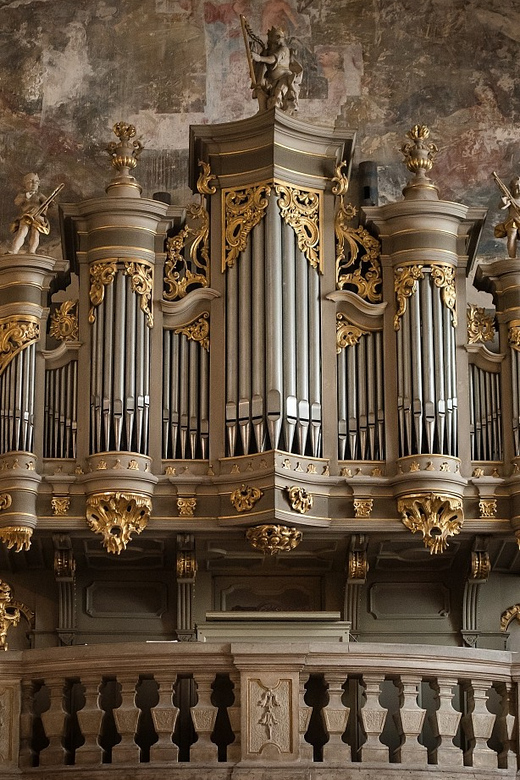
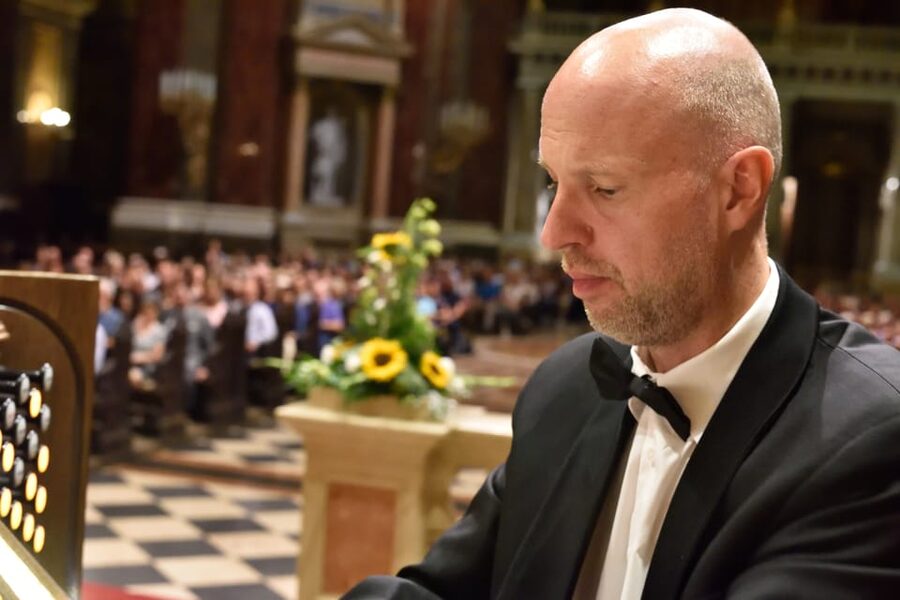
Most of these concerts are led by Miklós Teleki, described as the creative director and main organist of the Majestic Sounds series. He is an award-winning Hungarian musician who performs about 120 organ and piano recitals a year, which is a fancy way of saying you’re likely to hear someone who has played hundreds of times and still keeps the performance alive.
However, the series does switch organists for specific dates:
- 4 July: Andres Uibo (Estonian musician) plays the organ
- 31 October: Tamás Lozsányi plays
- Tuesday night concerts in 2025: 23 and 30 December
So if you have a particular organist in mind, checking your date matters.
If the concert includes chamber music
Some dates offer a combined setup with chamber music, adding a voice to the mix. The program can include a young soprano, Nóra Ducza, performing with Miklós Teleki. The dates listed for this chamber option are:
- 30 May
- 18 July
- 29 August
- 17 October
- 23 December
If you want something that feels less purely instrumental, this is your chance. Organ music is already dramatic, but adding a soprano gives you text, phrasing, and a different kind of emotional contrast.
Inside the Concert Experience: How the Show Flows
Plan for a straightforward evening. You get:
- A short introduction before the music starts, in English and Hungarian
- A printed program leaflet in English and Hungarian
- A screen showing the organist playing, which helps you connect sound to action
That combination is smart for visitors. When you can see when the organist changes what they are doing, you understand why the music shifts. Pipes and stops are not just a visual gadget; they are part of the musical language.
The concert is also designed to be relaxing. The focus is on listening, and the venue supports that. You are not dealing with flashing lights or a “show” that competes with the music.
One practical note: recording is not allowed. That means no video and no audio recording during the performance. So if you are the type who wants a souvenir clip, plan on taking memories instead.
The Organ Itself: Why a 25-Pipe Instrument Can Still Feel Huge
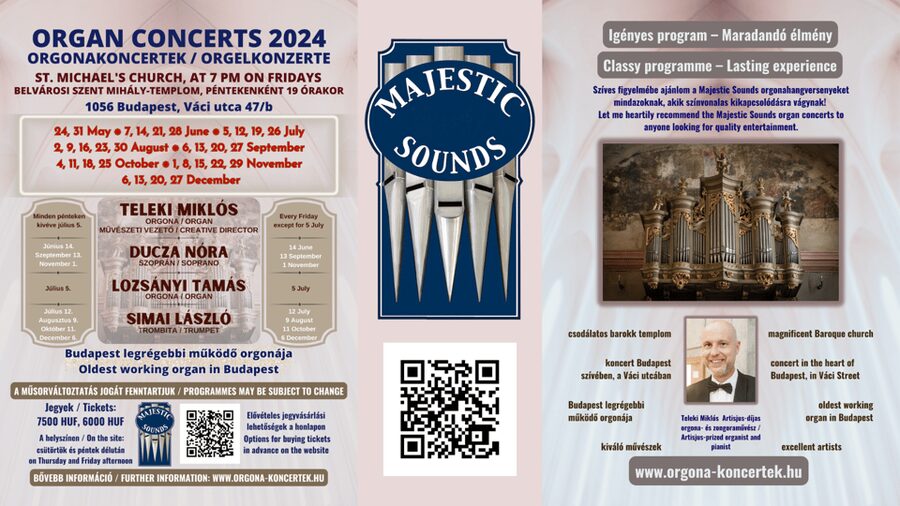
If you expect a cathedral organ monster, adjust your mental picture. This instrument is described as not huge, but it is called a 25-pipe beauty installed in a church with a strong blend of acoustics and aesthetics.
Here is why that can be a good thing for you:
- You often get a clearer, more detailed sound than in a massive hall where everything blurs at distance.
- You tend to feel closer to the musician’s touch, especially when you can see the organist on the screen.
- The church acoustics help the music “stay in the room,” which makes listening feel more immediate.
Organ concerts can be a bit abstract if you are far away and the instrument is hard to picture. In this setup, the format does the connecting work for you.
Practical Tips for Your Best Seat and Smooth Evening
You will not find fancy instructions here, just basics that help you enjoy the concert more.
- Arrive with time to settle so you can read the leaflet and catch the introduction without rushing.
- Use the printed program to spot when familiar pieces arrive, and to follow the structure even if the music is new to you.
- Since the organist is shown on a screen, watch for the visual cues that match big shifts in sound.
- Dress like you are going to a quiet indoor event. The church setting is part of the experience, and you will feel better if you are comfortable sitting still for 70 minutes.
Also, if you are pairing this with dinner, keep it simple. Pick something nearby so you do not end up sprinting across the 5th District right as the introduction starts.
Who This Concert Is Best For (and Who Might Skip It)
This is a great fit if you:
- Want a low-effort, high-impact cultural experience in Budapest
- Like classical music and want to hear it in a real historic setting
- Appreciate structure: introduction, leaflet, and a visible musician help you follow along
You might think twice if you:
- Want a long “tour” with lots of commentary and frequent breaks
- Prefer activities with constant movement and sightseeing
- Plan to record on your phone (recording is not allowed)
The Bottom Line: Should You Book This Budapest Old-Organ Concert?
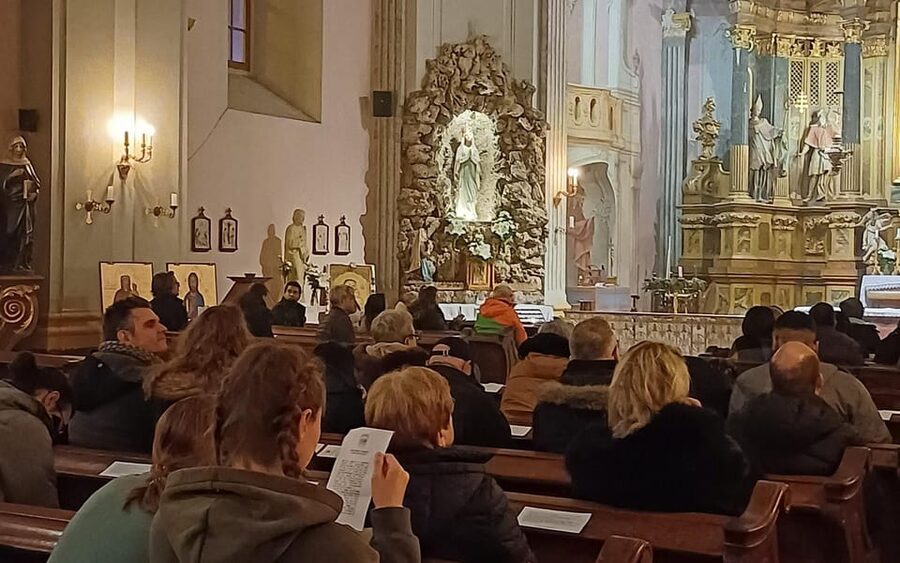
I’d recommend booking it if you want one evening in Budapest that feels calm, classy, and genuinely music-focused. For $24 you get live organ or chamber music, guidance in English and Hungarian, and access to St. Michael’s Church with the city’s oldest working organ. That is a lot of quality packed into 70 minutes.
If you are on the fence, check the date: solo organ dates are pure listening bliss, and the chamber-music dates with Nóra Ducza add a vocal dimension. Either way, this is the kind of experience that leaves you with a real memory, not just photos.
FAQ
How long is the concert?
The concert duration is about 70 minutes.
Where is the meeting point for this concert?
Meet at the white church building on the corner of Váci utca and Nyáry Pál utca in Budapest’s 5th District (1056), near the Danube.
What’s included with the ticket?
Your ticket includes entry, the organ concert, and access to St. Michael’s Church with the city’s oldest working organ. You also get a program leaflet and an English introduction.
What kind of music will I hear?
The program varies by date, but it can include solo organ music or chamber music. Composers listed include Bach, Dubois, Franck, Handel, Liszt, Mendelssohn, Mozart, Purcell, and Vivaldi, plus older Hungarian organ compositions.
Are there chamber music concerts, or is it only solo organ?
Both options exist depending on the date. Chamber concerts include a young soprano, Nóra Ducza, performing with Miklós Teleki on listed dates.
Who plays the organ?
Most concerts feature Miklós Teleki. On select dates, the organist changes (Andres Uibo on 4 July, and Tamás Lozsányi on 31 October).
Will there be an English introduction?
Yes. There is a short introduction in English and Hungarian, and the printed leaflet is also available in these two languages.
Can I record video or audio during the concert?
No. Video recording and audio recording are not allowed.
Is transportation included?
No. Transportation is not included; you’ll make your own way to the church.
If you tell me what date you’re considering, I can help you pick the best option based on whether you want solo organ or the chamber-music line-up.
More Music Under Budapest Ceilings





The City, Bank to Bank






More Tour Reviews in Budapest





Just Added: More Budapest Reviews
- Sightseeing flight over Budapest
★ 5.0 · 3 reviews - Budapest: Walking Tour with Chimney Cake & Polaroid Photos
★ 5.0 · 3 reviews - Self Guided Tour In Budapest With 100 Captivating Audio Stories
★ 5.0 · 3 reviews - Budapest Art Nouveau Walking Tour
★ 5.0 · 3 reviews - Hungary today: a no-taboo conversation
★ 5.0 · 3 reviews
Concerts, compared.
 ★ 4.5Budapest Danube Cruise and Dinner Options, Live Music and DanceFrom $547,428 reviews
 ★ 4.7Candlelit Dinner River Cruise with Live MusicFrom $1292,154 reviews
 ★ 4.4Dinner Cruise with Live Music and Folk Dance ShowFrom $932,090 reviews
 ★ 4.5Budapest Danube River Candlelit Dinner Cruise with Live MusicFrom $1331,770 reviews
 ★ 4.7Dinner Cruise with Live Music & Unlimited DrinksFrom $1161,596 reviews
 ★ 4.7Classical Music Concerts in St Stephen’s BasilicaFrom $701,479 reviews
 ★ 4.4Prosecco Dinner Cruise with Live MusicFrom $1071,336 reviews
 Organ Concert in St. Stephen’s Basilica1,299 reviews
Browse the lists this tour appears in