
Reviewed · CHIMNEY CAKE & COOKING CLASSES
Budapest: Chimney Cake Baking Class – More Flavors & Drinks
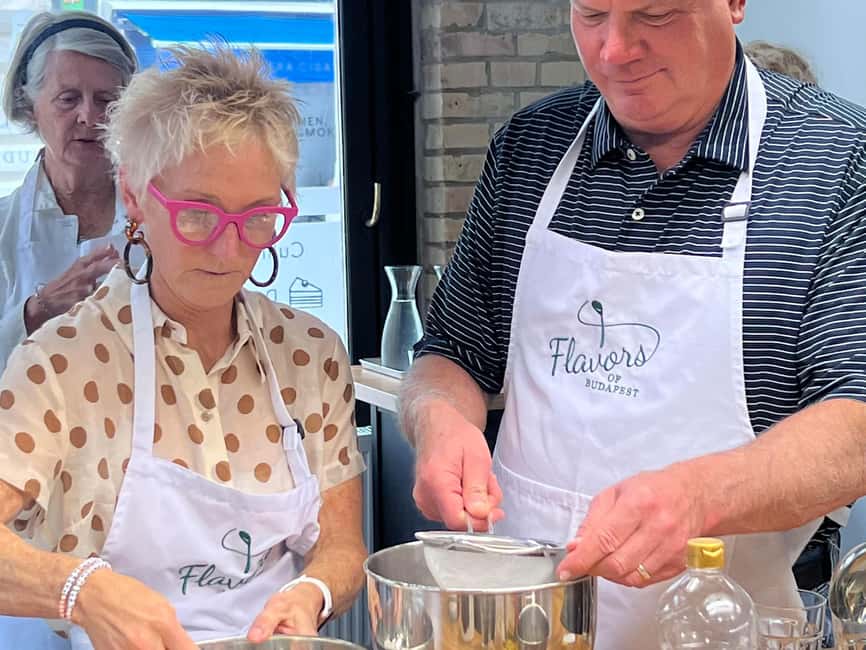
Sugar, fire, and dough—Budapest style. This Budapest chimney cake baking class is a hands-on way to learn kürtőskalács step by step in a real cooking studio, not a demo you watch from a distance. You’ll start with dough from scratch and work through the process at a relaxed, well-structured pace.
I especially like that you make the full thing yourself: two full-size traditional chimney cakes per person, not mini versions. You also choose classic Hungarian flavor coatings like cinnamon, walnut, cocoa, or vanilla, and you’ll enjoy drinks as you bake.
One thing to plan for: there’s no hotel pickup, so you’ll need to get yourself to the central meeting point near the Opera House.
In This Review
- Key highlights worth your time
- What a Kürtőskalács Class Really Teaches You in Budapest
- Finding the Flavors of Budapest Studio Near Andrassy Avenue
- A Relaxed 1.5-Hour Flow: Dough, Shaping, Baking, and Eating
- Flavors and Drinks: Classic Coatings With Real Choice
- Learning the Chimney Cake Story and What Makes It Different
- Taking Home an English Recipe (and Confidence to Repeat It)
- Price and Value: Is $70 Fair for Two Full-Size Cakes?
- Who Should Book This Chimney Cake Workshop (and Who Might Skip It)
- Should You Book This Budapest Chimney Cake Baking Class?
- FAQ
- How long is the Budapest chimney cake baking class?
- What will I make during the class?
- What flavors can I choose?
- Is the class taught in English?
- Are drinks included?
- Does the price include pickup from your hotel?
Key highlights worth your time
- Two full-size chimney cakes per person you actually shape and bake
- Dough from scratch, guided start to finish by an experienced chef
- Classic Hungarian flavors: cinnamon, walnut, cocoa, vanilla
- Practical know-how for recreating chimney cake at home without special equipment
- Bright, comfortable cooking studio in central Budapest
- English recipe + certificate of participation to take home
Aprons on for chimney cake and goulash
- Budapest All in One Small Group Walking Tour with Strudel Stop★ 5.0 · 1,277 reviews
- Budapest: Hungarian Chimney Cake Workshop in the City Center★ 4.7 · 1,263 reviews
- Budapest: Traditional Chimney Cake (Kürtőskalács) Workshop★ 4.8 · 323 reviews
- Chimney Cake Workshop Budapest Downtown – Kürtőskalács Class★ 5.0 · 220 reviews
What a Kürtőskalács Class Really Teaches You in Budapest
Budapest is full of food tours where you sample and move on. This one works differently. Instead of just eating chimney cake, you learn how the dough behaves and how the coating choices change the final result. That makes it more useful when you’re back home and trying to repeat the texture and flavor.
The best part is the full process. You start from scratch with dough, shape and roll real full-size chimney cakes, and then bake them. The workshop also includes the story of chimney cake—where it comes from and how it evolved over time—so you understand this isn’t just a street-food gimmick.
You’ll also get techniques that you can use at home even if you don’t have professional gear. That matters because many cooking classes give you a recipe but not the real troubleshooting tips. Here, you’re guided toward practical methods you can repeat with normal kitchen tools, which is the difference between a one-off experience and something you can actually use.
Finding the Flavors of Budapest Studio Near Andrassy Avenue
Location is a big deal with short classes, and this one is in the center of Budapest. You meet at the chef’s venue, Flavors of Budapest, right behind the Opera House area, next to Andrassy Avenue. The entrance is at the corner of Hajós and Ó Street.
The studio itself is described as professional and bright, with everything set up to make baking comfortable. That means you’re not fighting cramped workspaces or missing basic equipment. For a hands-on workshop, a good setup can make the difference between enjoying the process and feeling rushed or unsure.
If you’re building a day around it, plan your arrival so you can settle in calmly. You’re spending about 1.5 hours working with dough and then waiting for baking steps, so you’ll feel better if you get there a bit early and don’t stress about trains, buses, or foot traffic.
A Relaxed 1.5-Hour Flow: Dough, Shaping, Baking, and Eating
The workshop is about 1.5 hours long, and the pace is intentionally relaxed. It’s designed so beginners can follow along without prior baking experience. You don’t have to know Hungarian pastry techniques before you walk in.
Here’s the core flow you can expect:
First, you make the traditional dough from scratch. That’s not just mixing—this is where you learn the basics you’ll need later when shaping and baking. If you’ve never worked with dough before, this is the part that teaches you how the texture should feel as you handle it.
Next comes shaping and rolling real full-size chimney cakes. You’re not watching someone else do the work. You prepare your own cakes, step by step, which helps you understand how thickness and form affect the baked result. The workshop explicitly focuses on traditional dough thickness, not mini versions.
Then you bake your chimney cakes as part of the class. Since you make two full-size cakes per person, you get enough time to see how your first attempt and second attempt differ. That’s how you learn faster than with a single pastry.
Finally, you enjoy the freshly baked cakes with drinks. This is when the whole lesson clicks—you taste what your dough work and your coating choices produced, and you can immediately connect flavor to technique.
Flavors and Drinks: Classic Coatings With Real Choice
One of the most fun parts is the flavor selection. You can choose from classic Hungarian options including cinnamon, walnut, cocoa, or vanilla. That’s not just a menu checkbox; it gives you control over what your finished chimney cakes taste like.
I like that the workshop doesn’t treat flavors as an afterthought. Since you’re shaping and baking the cakes yourself, your coating choice matters in your hands-on workflow. You can decide what you want most—warm spice with cinnamon, nutty depth with walnut, chocolate notes with cocoa, or a sweeter vanilla profile.
Drinks are included during the workshop, and they help break up the timing between dough work and baking steps. In practical terms, that’s a good rhythm for a short class: you stay energized, you get something to sip while you wait, and you don’t leave hungry.
If you’re going as a couple or group, it’s also a great way to compare. You can each pick a different flavor coating and then taste-test your results side by side, which turns the workshop into a mini lesson in personal preference.
Back to the Hungarian kitchen
Learning the Chimney Cake Story and What Makes It Different
You don’t just get recipes here. The workshop also includes the story of chimney cake: where it comes from and how it evolved over time in Hungary. Even without turning into a lecture, this context helps you understand why the process looks the way it does and why certain flavor combinations became popular.
Most food classes skip the background, which makes it harder to remember what matters. In this workshop, the story and the technique reinforce each other. You learn the practical methods, then you hear the meaning behind the pastry itself.
The class also emphasizes authentic technique instead of shortcuts. That’s why the workshop is from start to finish. You’re learning the traditional dough-making process, then applying it through shaping, rolling, and baking.
And then there’s the biggest advantage: you’re taught practical tips for recreating chimney cake at home without professional equipment. That includes guidance aimed at real kitchens. You’ll leave with a clearer idea of what to watch for so you can adjust rather than guess.
Taking Home an English Recipe (and Confidence to Repeat It)
You’ll receive an English recipe and a certificate of participation, which is more useful than it sounds. The recipe gives you something concrete to follow later, and the language detail matters if you’re not fluent in Hungarian. A recipe in English reduces the friction when you’re trying the class again at home.
But the real take-home value is confidence. The workshop is built around the idea that you should leave not only with delicious chimney cakes, but with techniques you can use again. That’s what turns a food activity into a skill.
If you’re wondering what you’ll be able to replicate later, look for these outcomes:
- You understand the dough-making process well enough to start again without guessing.
- You know how to shape and roll the cakes in a way that matches the traditional result.
- You’ve been taught tips for recreating the look and flavor even without special machines.
- You’ve tasted your own baked chimney cakes immediately, so you have a reference point.
That last part is underrated. When you taste the real result you made, you can compare future attempts and spot differences faster.
Price and Value: Is $70 Fair for Two Full-Size Cakes?
At $70 per person, this isn’t the cheapest food experience in Budapest. Still, I think the value is strong if you care about technique and not just eating.
Here’s why the price feels reasonable:
- You make two full-size traditional chimney cakes yourself.
- Dough-making is included from scratch, guided by an experienced chef.
- Drinks are included during the workshop.
- You get an English recipe and a certificate of participation.
- You’re using a professional, bright indoor kitchen setup in central Budapest.
Compare that to buying chimney cake on the street. You’re paying for a single pastry, while here you’re paying for ingredients, time, and instruction—plus the baked results you create. You’re also learning practical skills you can repeat, which stretches the value beyond the two cakes.
Also, the class is designed for beginners, so you’re not paying extra for advanced skills. You’re paying for the structured coaching that helps you get a good outcome even if you’ve never made dough-based desserts before.
If you’re the type of traveler who likes hands-on experiences that create a real souvenir—one you can eat again later via memory and technique—this price can make sense.
Who Should Book This Chimney Cake Workshop (and Who Might Skip It)
This workshop is suitable for beginners and explicitly welcomes people with no prior experience. If you want a fun Budapest food activity that includes real cooking work, not just tasting, you’ll likely enjoy it.
It’s also a good fit if you like traditional Hungarian treats and want to understand what makes them different. The story component helps, but the core is still the hands-on baking, which is ideal for curious eaters and practical learners.
A key note: it’s not suitable for children under 2 years, and it’s not suitable for children under 8 years. If you’re traveling with young kids, you may want to choose a different activity that fits their age range.
Group size-wise, there’s a minimum requirement of 8 participants for the class to run. That doesn’t tell you the max size, but it does indicate the class won’t run as a super-private one-on-one session by default.
Should You Book This Budapest Chimney Cake Baking Class?
Book it if you want a short, satisfying skill-based experience in the center of Budapest. I’d especially recommend it when you’re craving something more meaningful than eating a pastry and moving on. Making two full-size traditional chimney cakes, choosing from classic flavors, and getting practical tips for home baking is a strong combo for the time.
Skip it if you mainly want a quick snack and don’t care about technique. At 1.5 hours and $70, it’s better viewed as a cooking class than a casual bite.
Also think about logistics. Since there’s no hotel pickup, you’ll want a plan to reach the studio near the Opera House area easily.
If your ideal day in Budapest includes hands-on cooking, learning something you can use later, and leaving with two cakes you made yourself, this is a smart choice.
FAQ
How long is the Budapest chimney cake baking class?
The workshop lasts about 1.5 hours.
What will I make during the class?
You’ll make 2 full-size traditional chimney cakes per person from scratch, with dough-making and shaping included.
What flavors can I choose?
You can choose from classic Hungarian flavors such as cinnamon, walnut, cocoa, or vanilla.
Is the class taught in English?
Yes, the workshop is conducted in English.
Are drinks included?
Yes, drinks are included during the workshop.
Does the price include pickup from your hotel?
No, hotel pickup and drop-off are not included.
Learn Another Hungarian Dish





More Tour Reviews in Budapest






Chimney Cake and the Hungarian Kitchen



Just Added: More Budapest Reviews
- Sightseeing flight over Budapest
★ 5.0 · 3 reviews - Budapest: Walking Tour with Chimney Cake & Polaroid Photos
★ 5.0 · 3 reviews - Self Guided Tour In Budapest With 100 Captivating Audio Stories
★ 5.0 · 3 reviews - Budapest Art Nouveau Walking Tour
★ 5.0 · 3 reviews - Hungary today: a no-taboo conversation
★ 5.0 · 3 reviews
Chimney Cake & Cooking Classes, compared.
 ★ 5.0Budapest All in One Small Group Walking Tour with Strudel StopFrom $1001,277 reviews
 ★ 4.7Hungarian Chimney Cake Workshop in the City CenterFrom $421,263 reviews
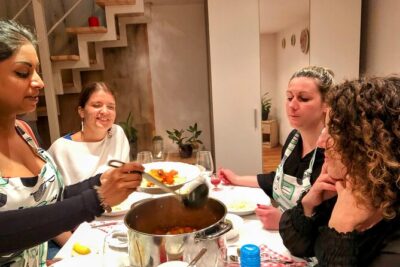 ★ 5.0Budapest Cooking Class & Market Tour with Local Guide & WinesFrom $99553 reviews
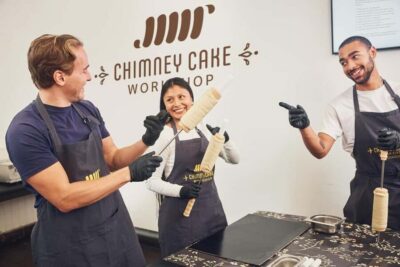 ★ 4.8Traditional Chimney Cake (Kürtőskalács) WorkshopFrom $22323 reviews
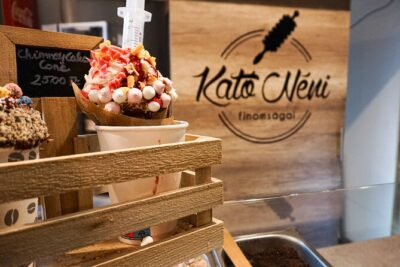 ★ 5.0Chimney Cake Workshop Budapest Downtown – Kürtőskalács ClassFrom $38220 reviews
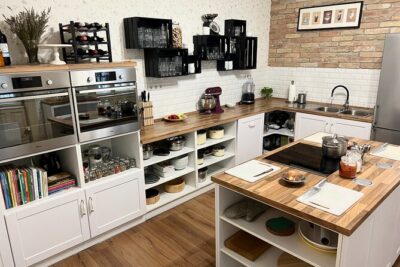 ★ 5.0Premium Hungarian Home Cooking Experience with Chef MartiFrom $131169 reviews
 ★ 5.0Small-Group Cooking Class & Market Tour with LocalFrom $100138 reviews
 ★ 4.5Hungarian Cooking and optional Local Market TourFrom $12698 reviews
Browse the lists this tour appears in