
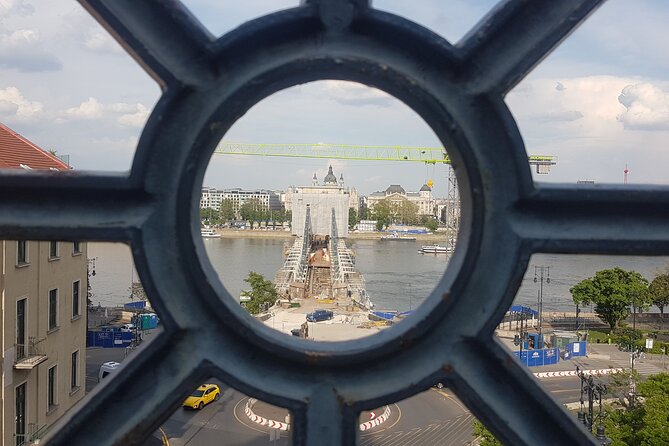
Reviewed · BUDA CASTLE & FISHERMAN'S BASTION
Budapest Castle District Walking Tour
Steps, views, and real Budapest stories. This Budapest Castle District walking tour packs major sights into a tight route and keeps you oriented with a local guide who builds in time for questions.
I especially like that it’s structured around the hill’s big landmarks without turning the day into a ticket-buying marathon. The other thing I like is the variety of what you learn, from church history to WWII damage to underground defense.
The one catch is that the area around Fisherman’s Bastion can be crowded, and that can slow down photos while you’re already climbing stairs.
In This Review
- Key moments worth your attention
- Why this Castle District walk works in about 2 hours
- Price and what you should budget beyond the ticket
- Finding the start at Batthyány tér (and what the walk feels like)
- Stop-by-stop: Batthyány Square sets the stage
- Matthias Church: context without the interior ticket
- Fisherman’s Bastion: views, trivia, and the crowd factor
- Medieval Jewish Prayer House: smaller sights, stronger context
- National Archives of Hungary: WWII damage and unexpected connections
- Hospital in the Rock: underground defense, labyrinths, and huszár stories
- Buda Castle: power, rebuilding, and the mythical bird
- Prince Eugene of Savoy: the Pest-side panorama and a smart quiz finish
- What makes the guiding style matter (and why names like Dora and Zsófia come up)
- Who should book this tour (and who should rethink)
- Should you book the Budapest Castle District Walking Tour?
- FAQ
- How long is the Budapest Castle District walking tour?
- Where do I meet the guide?
- Does the tour include entry tickets to the main stops?
- How much walking and climbing is involved?
- What language is the tour offered in?
- Do I need to tip the guide?
Key moments worth your attention
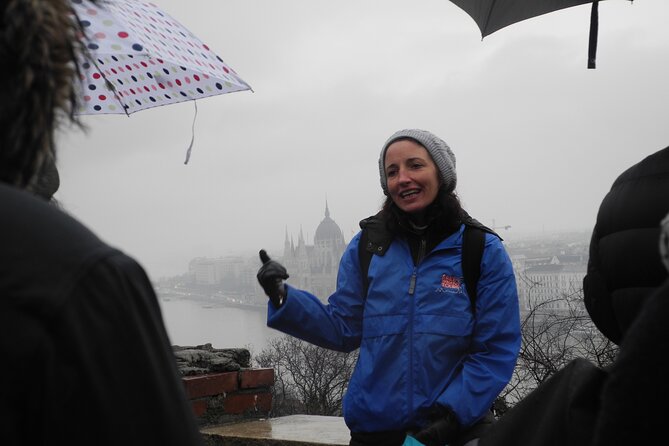
- Meet at Batthyány tér metro exit with a fully licensed local guide who sets expectations early
- Two hours, eight major stops designed to give you the whole Castle District picture fast
- Matthias Church stop without entry, so you get context without losing time in lines
- Fisherman’s Bastion includes fun trivia, including Disney connections and cross-strip meaning
- Hospital in the Rock focuses on the underground Castle Hill maze and defense history
- Small-group feel (max 30) with frequent opportunities to ask questions
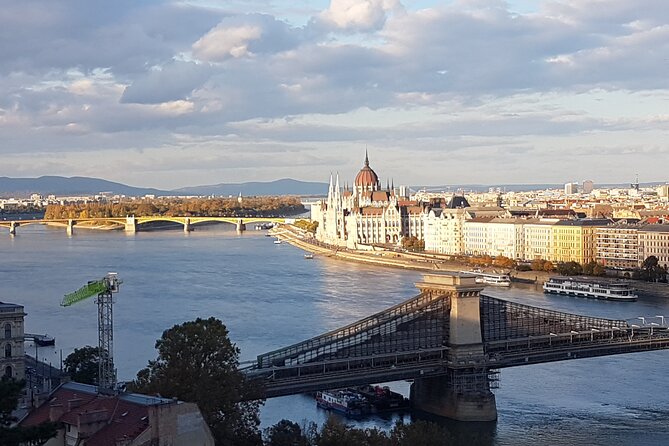
More of Castle Hill, turrets and the river below
- Budapest: Buda Castle Cave Tour★ 4.7 · 5,677 reviews
- Budapest: Buda Castle District Vampires and Myths Night Tour★ 4.6 · 3,830 reviews
- Budapest: Buda Castle Walk with Saint Stephen’s Hall★ 4.5 · 3,012 reviews
- Budapest: Buda Castle District Walking Tour★ 4.6 · 2,108 reviews
Why this Castle District walk works in about 2 hours
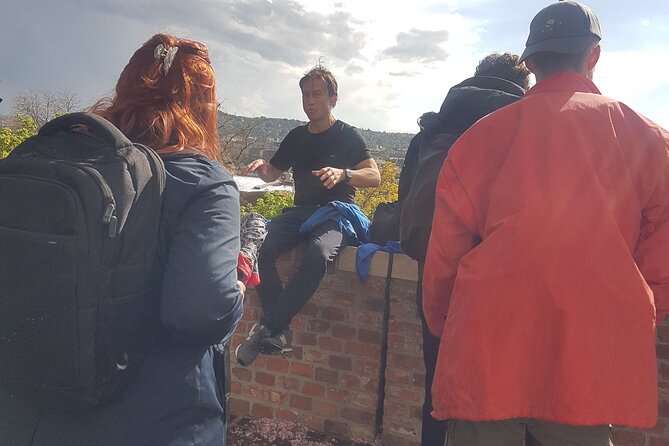
Budapest’s Castle District is one of those places where you can walk around for hours and still feel like you missed the “why.” This tour’s big strength is that it gives you the story of the hill while you’re still standing in the right spots. In roughly 2 hours, you get a practical orientation: where power lived, what changed after wars, and how different communities shaped everyday life.
You’ll also appreciate the pacing. The stops are short—often around 10 to 20 minutes—which keeps the walk from turning into long museum time. That matters on Castle Hill, where walking can feel more like a workout than a stroll.
And it’s not just sightseeing. The tour is built for interaction. Expect the guide to answer questions as you go, which is a big deal when you’re trying to understand why Hungary’s history looks the way it does on this hill.
Price and what you should budget beyond the ticket
The listed price is $3.62 per person, and that’s where you need to think like a local. What you’re really paying for here is the guided storytelling and direction. The stops themselves are marked as admission ticket free, so you’re not hit with a string of separate attraction prices.
That said, the experience is donation-based at the end. Tips are not included, and the guides depend on donations. Also note that the booking fee supports administration and does not go toward guide earnings. So if you want the best experience, plan to bring a few extra dollars/euros for the person guiding you.
One more practical point: the tour averages being booked about 16 days in advance. It’s popular enough that booking ahead is smart, especially if you’re traveling during peak season or on a day with weather changes.
Finding the start at Batthyány tér (and what the walk feels like)
The meeting point is Batthyány tér 1, 1011 Hungary, and you’ll meet at the Batthyány tér metro exit in the park. This is helpful because it’s a clear, public landmark—less guesswork than vague meeting points tucked into side streets.
You’ll be on a guided walk with a maximum group size of 30 travelers, which usually keeps things conversational. It’s also offered in English, with a mobile ticket.
Be ready for movement. The tour asks for moderate fitness, including a 10-minute uphill walk, and the Castle District has plenty of steps. Reviews repeatedly mention stair climbing and the importance of breaks, shade, and pacing. If you’re sensitive to cold, heat, or fatigue, wear layers and bring water when you can.
Also keep in mind: it’s not wheelchair accessible, since the route involves stairs.
Stop-by-stop: Batthyány Square sets the stage
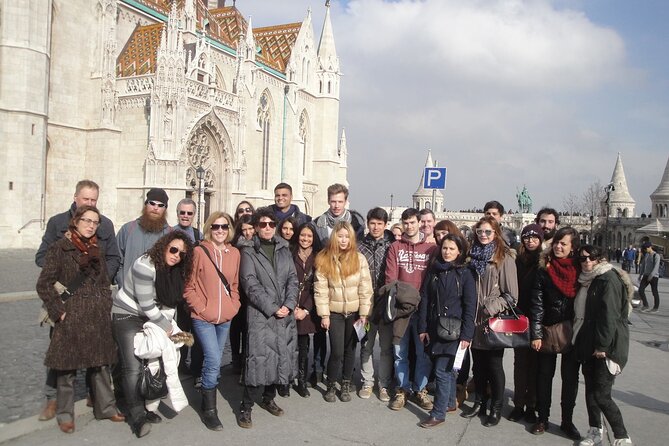
You begin at Batthyány Square, where the guide meets you right at the metro exit and outlines the Castle District route. This is where the hill’s layout suddenly starts making sense.
From here, you’ll get an overview of what makes the Castle District significant: Buda Castle, Matthias Church, Fisherman’s Bastion, Maria Magdalena Church Tower, and other buildings tied to major chapters of Budapest’s past. You’ll also hear about public art mini monuments and look out terraces, plus a note that the underground cave and defense systems matter to understanding the area.
This first stop is the difference between wandering and learning. With the guide’s framing, every next corner becomes a clue.
Budapest at street level, more routes on foot

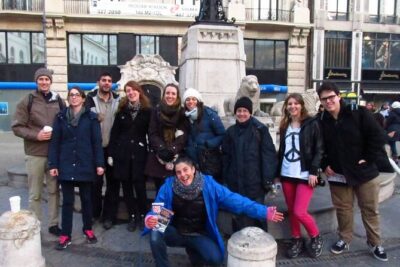
Matthias Church: context without the interior ticket
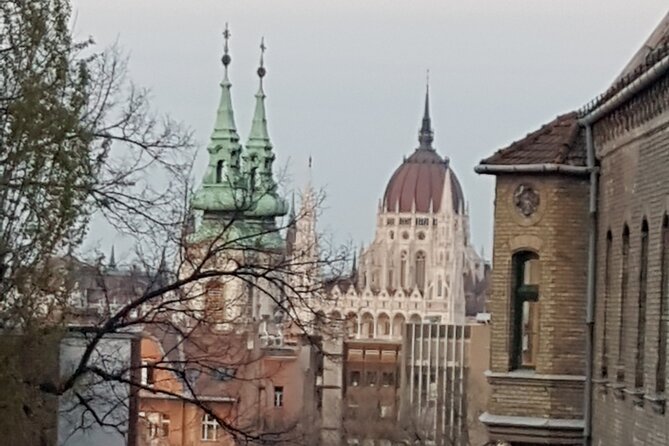
Next up is Matthias Church. The big point here is that you get the story of the area—about 800 years of wars and occupations—without entering the church. That keeps the tour moving and avoids time lost to queues or confusing logistics.
You’ll hear how the neighborhood’s daily life connected different populations, including German, Jewish, and Hungarian communities. Even if you’re not going inside, this stop helps you “read” the architecture and understand why certain eras show up in what you see around the church.
If churches aren’t your thing, you’ll still get plenty from the history angle. If churches are your thing, you’ll appreciate getting the background first so the details mean something later.
Fisherman’s Bastion: views, trivia, and the crowd factor
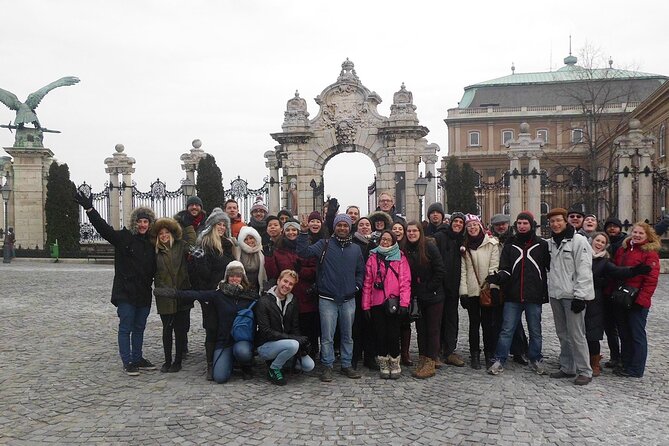
Fisherman’s Bastion is the big postcard stop, but the tour adds more than the photo angle. You’ll learn about the connection between Walt Disney and Fisherman’s Bastion—plus small details that visitors often miss, like how to interpret a cross design with one, two, or three strips.
You’ll also get practical advice on enjoying a free view from the Castle Hill area. The guide’s job here is to steer you toward the best angles without wasting time.
The drawback is real: this place can be crowded. That means you might have to time your photos and accept that the view may come with shoulder-to-shoulder moments. One way to handle this is to focus on the “what you’re seeing” first—then take pictures when the group’s flow gives you a small opening.
Medieval Jewish Prayer House: smaller sights, stronger context
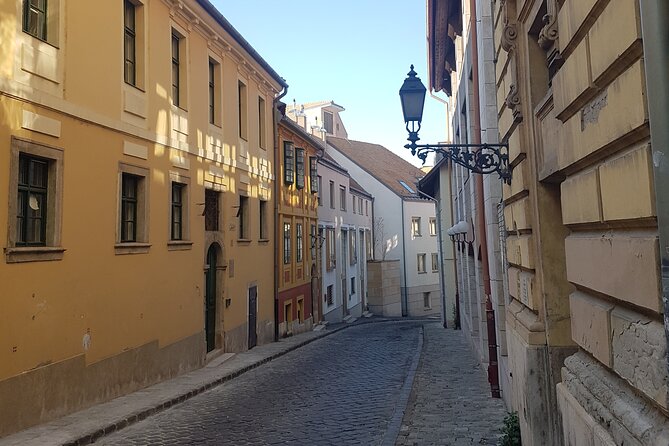
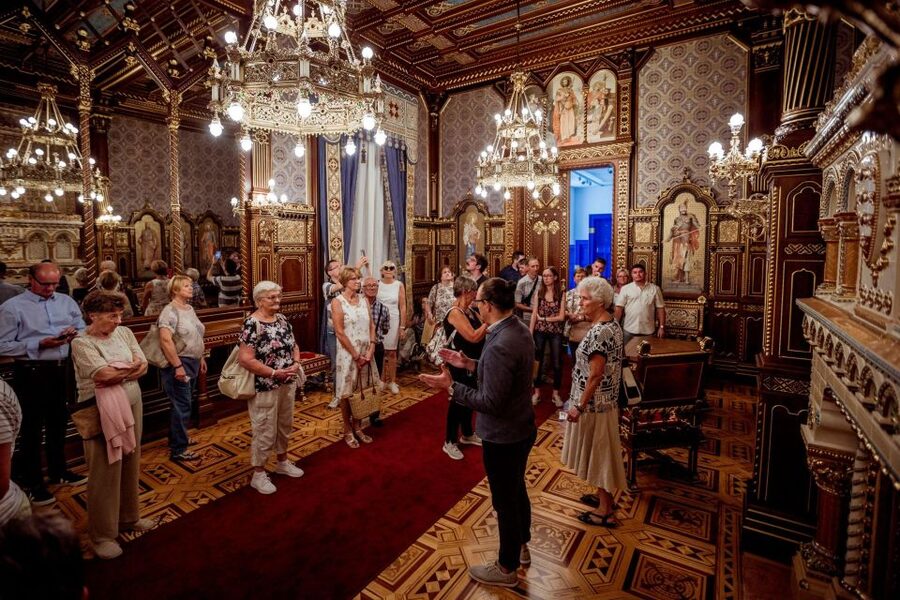
At the Medieval Jewish Prayer House, you’ll shift away from the headline landmarks and into the district’s quieter layers. The tour highlights the prayer house and the surrounding baroque residential buildings.
This is valuable because it reminds you that Castle Hill isn’t just royal power and tourist views. It’s also where communities lived, worshipped, and built cultural identity. If you like history that’s tied to everyday life—not only kings and battles—this is one of the more meaningful stops.
National Archives of Hungary: WWII damage and unexpected connections
Next is the National Archives of Hungary, where the tour leans into the 20th century. You’ll see clues of the mass destruction from WWII, and you’ll get a sense of where the Nazi stronghold was located.
The tour also points out places tied to who lived there and why, including where the rich Hungarians live. And there’s a surprising religious and cultural link: the Muslim pilgrimage site for Gül Baba, described as an Ottoman Turkish monk and soldier.
This stop is a good reminder that Budapest’s layers overlap. One hill can hold empires, occupations, faiths, and political shifts—all within walking distance.
Hospital in the Rock: underground defense, labyrinths, and huszár stories
Then comes Hospital in the Rock Nuclear Bunker Museum. This is where the tour’s variety really pays off.
You’ll get introduced to what it was like underground Castle Hill—labyrinths, defense over the centuries, and how the space worked during conflicts. It also leans into humor: you’ll see the guide’s pick of some of the funniest public statues in Budapest.
One of the standout pieces of story here is the mention of huszar figures—described as womanizer light cavalry fighters. Even if you don’t remember every detail, you’ll come away with a sense that the bunker and the statues aren’t random. They’re part of the same cultural conversation: how Hungary tells war stories with both seriousness and wit.
Buda Castle: power, rebuilding, and the mythical bird
At Buda Castle, you’ll see the massive building that once served as the residence of Hungarian kings. The tour also explains that it was rebuilt many times because of war destruction, which helps you understand why what you see today isn’t a single “original” moment.
You’ll also hear about the mythical bird of the Hungarians. That detail adds flavor, because it shifts the focus from concrete and stone into symbolism—how national myths get woven into architecture.
The guide will point out where the president and prime ministers’ offices are located. That modern political continuity is easy to miss when you’re just looking for the biggest palace facade.
One bonus from real-world experience: there are bathrooms at Buda Castle, and you can refill water bottles there. Castle Hill days get easier when you know where that comfort is.
A practical note: some people feel the castle stop can feel a bit rushed for photos. If you care most about capturing wide shots and street-level details, keep your camera ready, and don’t wait until the last minute for pictures.
Prince Eugene of Savoy: the Pest-side panorama and a smart quiz finish
You wrap at the Statue of Prince Eugene of Savoy. The tour includes a terrace panorama of the Pest side of the Danube, which is the payoff moment for many people. When your eyes have climbed the hill for the last stretch, this view helps you understand why Castle Hill sits like a command post over the river.
If your guide is in the mood, you might get tested with tricky questions about major Castle Hill landmarks and daily life in Hungary. It’s a fun way to turn scattered facts into a mental map you can carry around.
The tour ends with practical information and time to answer remaining questions. Then you’re finished at a location that’s about a 30-minute walk from where you started, so you can keep exploring on foot if you want.
What makes the guiding style matter (and why names like Dora and Zsófia come up)
This tour lives or dies on the guide’s storytelling pace. And the good news: the guides are often praised for energy, clarity, humor, and making it easy to ask questions.
You’ll hear about guides like Dora, keeping the tour fun even in cold weather while managing the climbing. Zsófia is mentioned for lots of Hungarian history mixed into the route. Rita and Esther show up in feedback as balanced—history with wit and a steady rhythm. Andy is praised for deep knowledge, though one review notes that a less engaging delivery can drag on a hot day.
Other guides are highlighted for practical pacing. People mention that guides find shade, build in rest times during stair-heavy sections, and keep groups together. There’s also praise for guides who teach a few Hungarian words, which is a small effort that makes you feel connected instead of just coached.
So if you’re choosing a time slot, I’d pick one where you can manage the temperature. If it’s brutally hot or freezing, the guide’s ability to pace and rest matters even more.
Who should book this tour (and who should rethink)
This is a great match if you want:
- A first-time introduction to the Castle District that turns the hill into a readable story
- A guided route that focuses on major landmarks without heavy museum ticketing
- Regular question time and a guide who gives context, not just directions
You might rethink it if:
- Crowds frustrate you. Fisherman’s Bastion can be packed.
- You struggle with stairs. The route isn’t wheelchair accessible and involves uphill walking.
- You’re the kind of traveler who wants a long, slow sit-down at Buda Castle for photography. Some schedules feel brisk.
If you’re traveling with teenagers, or you like history told with some personality, this tends to land well.
Should you book the Budapest Castle District Walking Tour?
Yes, if you want the fastest way to understand what you’re seeing on Castle Hill. For the price, the value is in the guide-led context and the way the route strings together Buda Castle, Matthias Church context, WWII scars, and underground defense history into one coherent walk.
Book it with eyes open: plan for stairs and possible crowding at Fisherman’s Bastion. If you’re sensitive to pacing, choose a time when the weather is more comfortable, and bring water so you’re not rushing because you feel depleted.
If you do book, do one extra smart thing: save your questions for the guide’s natural pause points. That’s where you’ll get the most satisfying answers—and it’s also where this tour really becomes worth more than the sightseeing checklist.
FAQ
How long is the Budapest Castle District walking tour?
It runs for about 2 hours.
Where do I meet the guide?
Meet at Batthyány tér 1, 1011 Hungary, at the Batthyány tér metro exit in the park.
Does the tour include entry tickets to the main stops?
The stops on the route are marked as admission ticket free, and the Matthias Church stop is described as not entering the church.
How much walking and climbing is involved?
You’ll want moderate fitness. There’s an uphill walk of about 10 minutes, and the route involves a good amount of steps.
What language is the tour offered in?
It’s offered in English.
Do I need to tip the guide?
Tips aren’t included. The guide depends on donations at the end, and the amount is your choice.
More Tour Reviews in Budapest






More of Budapest, Step by Step






More of Castle Hill




Just Added: More Budapest Reviews
- Sightseeing flight over Budapest
★ 5.0 · 3 reviews - Budapest: Walking Tour with Chimney Cake & Polaroid Photos
★ 5.0 · 3 reviews - Self Guided Tour In Budapest With 100 Captivating Audio Stories
★ 5.0 · 3 reviews - Budapest Art Nouveau Walking Tour
★ 5.0 · 3 reviews - Hungary today: a no-taboo conversation
★ 5.0 · 3 reviews
Buda Castle & Fisherman's Bastion, compared.
 ★ 4.7Buda Castle Cave TourFrom $195,677 reviews
 ★ 4.6Buda Castle District Vampires and Myths Night TourFrom $233,830 reviews
 ★ 4.6Buda Castle District Walking TourFrom $142,108 reviews
 ★ 4.33-Hour Grand City Tour and Castle WalkFrom $491,437 reviews
 ★ 4.5Buda Castle District Dark History, Legends and Vampire Night TourFrom $211,240 reviews
 ★ 4.9Buda Castle District Walking Tour with a HistorianFrom $63867 reviews
 ★ 4.6Classical Music Concerts in Matthias ChurchFrom $70792 reviews
 ★ 4.6Matthias Church Entry TicketFrom $25787 reviews
Browse the lists this tour appears in