
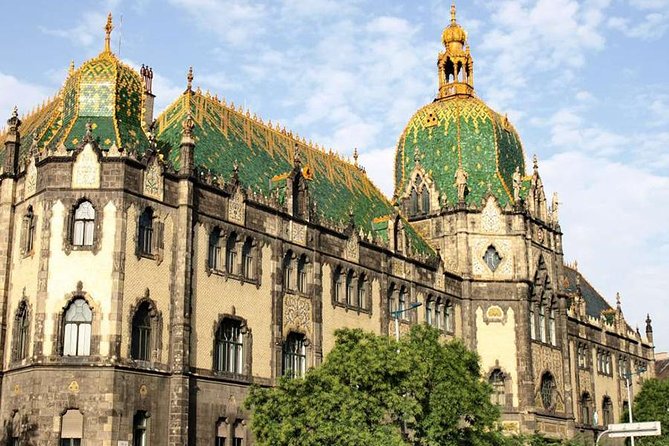
Reviewed · BUDAPEST WALKING TOURS
Budapest Art Nouveau Walking Tour
Art Nouveau is Budapest’s best visual clue. I love the historian guide who ties building details to how modern Hungarian identity formed, and I love the focused stops that show Ödön Lechner at work. One drawback to plan for: it’s a moderate walk, and the meeting point area can be busy, so you’ll want to arrive a bit early.
This is a smart 3-hour way to spot patterns you’d otherwise miss, especially if you’re into architecture that looks “busy” but has rules. The tour includes a mobile ticket and you’ll get several free entry stops, but you should expect the final synagogue interior to have extra admission rules (not included, and not on Saturdays).
In This Review
- Key highlights to know before you go
- Budapest Art Nouveau on foot: why this walk works
- Your route, stop by stop: what the 3-hour pacing feels like
- Stop 1: Gresham Palace and the lesson of “luxury with intent”
- Stop 2: Royal Postal Savings Bank and Ödön Lechner’s signature style
- Stop 3: Thonet House, tiles, and the Zsolnay materials connection
- Stop 4: Kazinczy Street Synagogue and the Art Nouveau finale
- The guide factor: what a historian guide adds (and what to expect)
- Logistics that can make or break your day
- Meeting point: Madal Café Budapest (Alkotmány u. 4)
- Timing and walking pace
- Public transport passes: at your expense
- Price and value: is $126.16 a good deal?
- Who this Budapest Art Nouveau tour suits best
- Should you book this Art Nouveau walking tour?
- FAQ
- Is this tour available in English?
- How long is the Budapest Art Nouveau walking tour?
- How big is the group?
- Are admission tickets included?
- Can I visit the synagogue interior?
- Does the tour use public transportation?
- Where does the tour start and end?
- What should I wear for the walk?
- Can I cancel for a full refund?
Key highlights to know before you go
- Historian guide-led route that explains what you’re seeing, not just what it is
- Small-group format (maximum of 8 travelers; small-group departures can be up to 6)
- Lechner’s influence in real buildings, including the Royal Postal Savings Bank
- Zsolnay ceramics and tile techniques you can actually see on façades
- Gresham Palace + Postatakarek Bank with free admission tickets on the stops listed
- Kazinczy Street Synagogue finale (interior visit except Saturdays; admission not included)
Budapest at street level, more routes on foot
- Big Bus Budapest Hop-On Hop-Off Bus and Walking Tour★ 3.5 · 2,206 reviews
- Budapest: Buda Castle District Walking Tour★ 4.6 · 2,108 reviews
- 3-Hour Orientation Walking Tour of Buda and Pest★ 4.8 · 1,834 reviews
- Budapest Historical Sightseeing – Free Walking Tour★ 5.0 · 1,302 reviews
Budapest Art Nouveau on foot: why this walk works
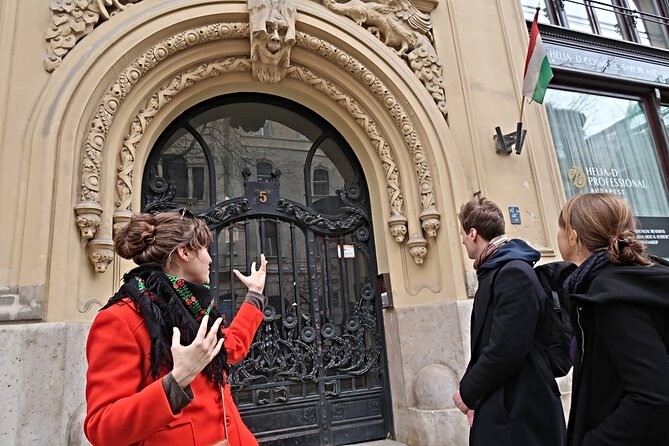
Budapest’s Art Nouveau isn’t random decoration. It’s a visual language. When you know what to look for, you start seeing the same motifs repeat across buildings: floral shapes, bold geometry, and—most famously—ceramic tile surfaces.
This tour is built for that “pattern spotting.” You’re not doing a long, exhausting march across the whole city. It’s a compact route in the inner parts of Budapest where the movement really shows up. The historian guide helps you read the façades like clues, so the style becomes more than pretty stone.
Two things make it especially worth your time:
- You get a guided explanation of style elements as you’re standing in front of them.
- You see a chain of examples tied together by Hungarian architecture’s big names and materials, including the link to Ödön Lechner and the Zsolnay ceramics tradition.
The route also has a practical rhythm: each stop is long enough to look closely, then move on before you get tired of standing around.
Your route, stop by stop: what the 3-hour pacing feels like
The tour runs about 3 hours with a handful of focused stops. Expect around 20 minutes at the main Art Nouveau buildings, then about 25 minutes at the finale synagogue. There’s also some public transport use on the route, but you’ll handle transport passes at your own expense.
Here’s how the day flows:
- Gresham Palace
- Postatakarek Bank (Royal Postal Savings Bank)
- Thonet House
- Kazinczy Street Synagogue (interior visit depends on day)
This pacing is good because it keeps you engaged. It also helps you avoid the classic walking-tour problem: arriving at the next stop still half-thinking about the last one. Here, each building is treated like a chapter with a clear point.
One small planning tip: since the meeting point can be busy, you’ll do best arriving early, then giving yourself a little buffer to find your group.
Stop 1: Gresham Palace and the lesson of “luxury with intent”
You start at Gresham Palace, a standout Art Nouveau building that blends theatrical exterior design with carefully detailed interiors. It’s been an office space and luxury apartments, and today it operates as Budapest’s most luxurious hotel.
At this stop, the value isn’t only in admiring grand plaster and stonework. The guide’s job here is to show you how Art Nouveau in Budapest isn’t just about appearance—it’s about function and status. The palace form, the façade choices, and the interior design all work together to communicate a modern, confident city.
A practical plus: this stop lists free admission. That matters on tours like this, because it means you can spend your limited time actually looking inside rather than standing outside only.
What to focus on while you’re there:
- Look at how the façade’s curves and decorative elements guide your eye.
- Then shift to interior design cues, where the style turns from “street display” into lived-in detail.
If you’re even slightly picky about architecture, this is a strong first stop. It sets the visual expectation for the rest of the walk.
Stop 2: Royal Postal Savings Bank and Ödön Lechner’s signature style
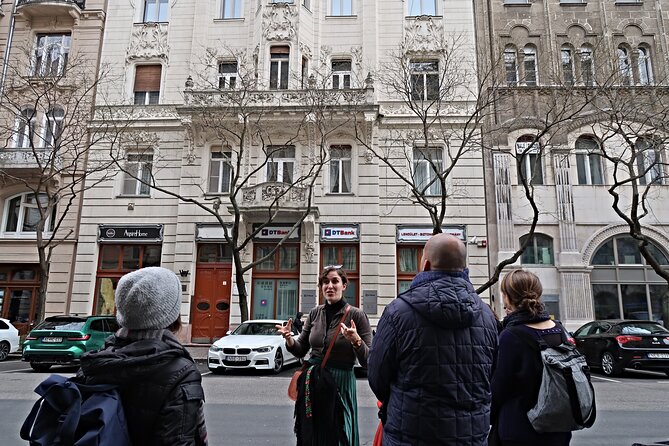
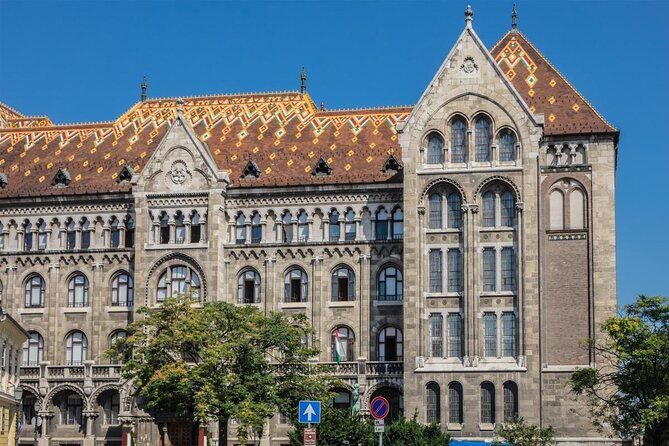
Next comes the Postatakarek Bank, also known as the Royal Postal Savings Bank. This is where the tour leans hard into its Art Nouveau authority: it was designed by Ödön Lechner, often compared to Gaudí for his inventiveness and bold, expressive forms.
What you’ll appreciate here is the entrance area and the interior design emphasis. The highlight isn’t a vague “pretty building” moment. It’s the entrance hall, where you can see how the style gets used to create atmosphere—welcoming, impressive, and distinctly Budapest.
A few things to keep your eyes open for:
- The way decoration supports the building’s purpose (in a bank, the building has to feel both serious and modern).
- How Lechner’s approach looks both ornamental and structured, meaning it’s not just random flourishes.
This stop also lists free admission, so you get a high-value pay-off early. If you’re the type who usually rushes through museums because you get bored, you’ll probably like this: it’s closer to a visual puzzle than a lecture hall.
And yes, the “Gaudí of Hungary” nickname comes up for a reason. The architecture has a personality. By the end of this stop, you’ll start recognizing patterns you can spot again later.
More Budapest on foot
Stop 3: Thonet House, tiles, and the Zsolnay materials connection
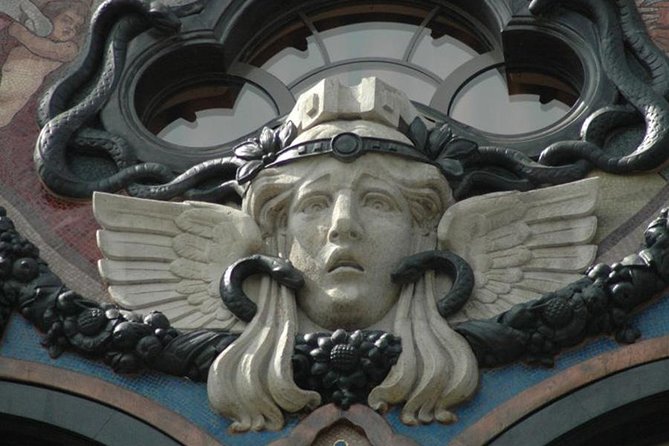
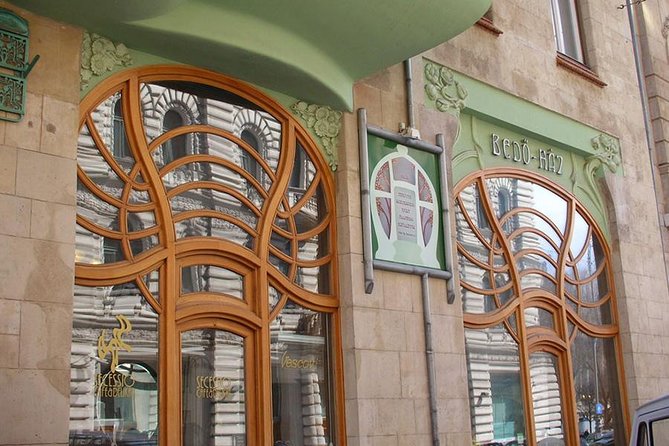
Your third stop is Thonet House. This is an important moment because it’s where you can see how Hungarian Art Nouveau became famous for ceramic tile work.
The tour pause here is timed to help you connect materials to style. The story includes Zsolnay porcelain and ceramics from Pécs, in southern Hungary. The idea is simple: the movement wasn’t only about shapes and silhouettes; it depended on the right materials to make the designs durable and visually distinctive.
So when you look at the façade, you’re not just seeing decoration. You’re seeing a manufacturing and design ecosystem. Tiles don’t just cover surfaces; they create texture and color effects that change how the building reads in daylight.
If you enjoy design history, this stop is a nice mid-tour anchor. It explains why Budapest’s Art Nouveau looks the way it does—down to the surface.
Thonet House is also listed with free admission tickets for this tour stop. That keeps the value strong: you’re paying the guide and getting access where it matters.
Stop 4: Kazinczy Street Synagogue and the Art Nouveau finale
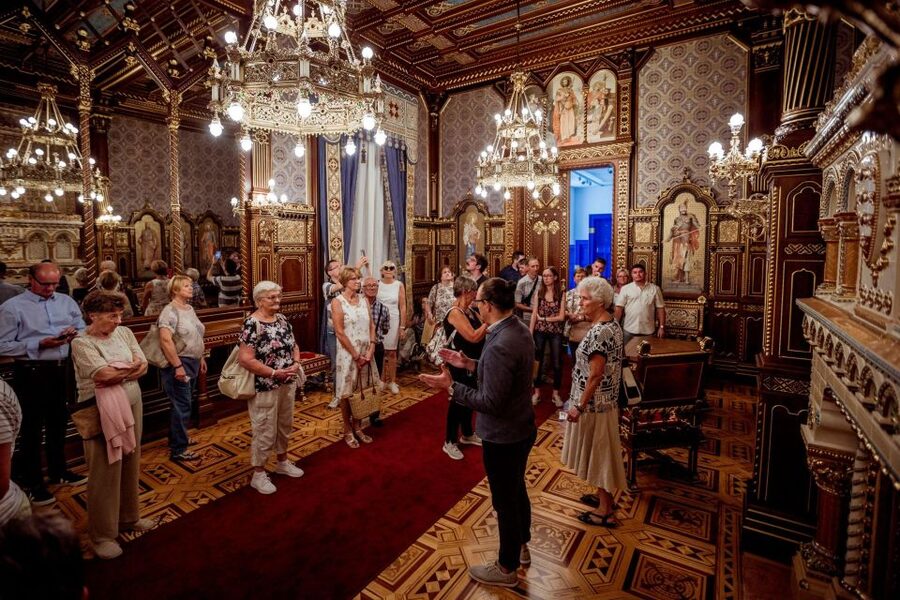
You finish at Kazinczy Street Synagogue, an orthodox synagogue decorated in Art Nouveau style. It’s a fascinating ending because it flips the usual expectation. You often see Art Nouveau tied to shopping, hotels, or civic spaces. Here it’s applied to a place of worship—so you get a different emotional and visual tone.
The big practical detail: the tour includes an interior visit except on Saturdays. If your tour day falls on the Saturday exception, you might still appreciate the external Art Nouveau design, but you won’t get the same interior experience.
Also important for planning: synagogue admission is not included. The tour notes that there may be an additional cost if the synagogue is open on your tour day.
How to approach this finale:
- Give yourself time to look slowly, not just take photos.
- Treat it like a transition from the “city style” buildings earlier in the walk to a more personal and sacred setting.
If you like architecture that makes you ask why something was designed that way, this stop usually lands well. Even when you’re not a religion-history person, you’ll likely find the Art Nouveau detailing here especially thought-provoking.
The guide factor: what a historian guide adds (and what to expect)
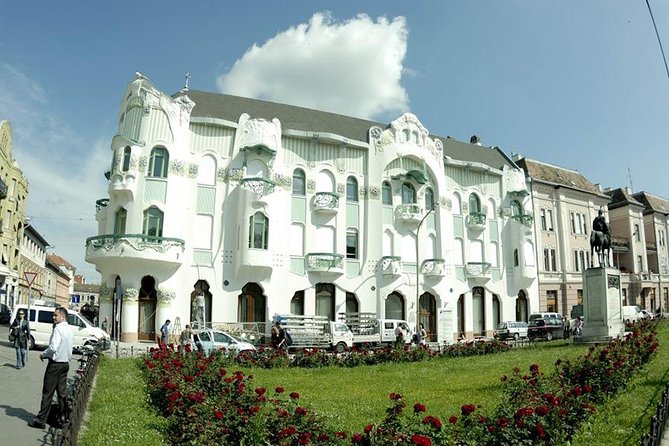
This type of tour lives or dies on the guide. Here, you’re getting a historian guide, and the format is designed so you’re learning while looking, not after you’ve left the building.
The best way to use a guide like this is to show curiosity on the spot:
- Ask what detail is the “signature” of each architect or building.
- If you’re drawn to a specific element—tiles, entrances, floral motifs—mention it and follow the guide’s explanation.
The tour also notes that the group size is small, which helps you interact. With a maximum of 8 travelers (and some departures limited to 6), you’re more likely to be able to hear the stories and keep up without feeling like you’re trapped in a herd.
You’ll also probably get a better experience if you come with at least one question in your head. Examples that match this route:
- Why do some buildings feel Hungarian even when they’re unmistakably Art Nouveau?
- How does tile-making and craftsmanship influence what you see on the street?
It’s a fun way to turn “I like the look of that building” into “I know why it looks like that.”
Logistics that can make or break your day
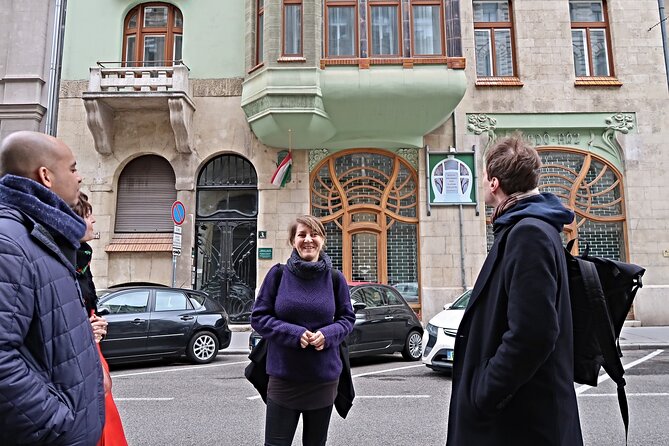
Let’s make the walk easy to enjoy.
Meeting point: Madal Café Budapest (Alkotmány u. 4)
You start at Madal Café Budapest, at Alkotmány u. 4 (1054). The area is near public transportation, which helps if you don’t want to build a long route from your hotel.
But it can be busy. If you’re the type who arrives right on time and checks your map twice, do yourself a favor: arrive a few minutes early and plan to regroup quickly.
Timing and walking pace
Expect moderate walking and comfortable shoes. The stops are timed (roughly 20 minutes for the first three, then 25 at the synagogue), so you’re not stuck in one place for an hour. Still, you’re on your feet enough that your shoes matter.
Public transport passes: at your expense
The tour includes some public transport use, but passes aren’t included. This isn’t a deal-breaker. It just means you should be ready to pay for transit on your own and keep an eye on the route when you transition between stops.
Price and value: is $126.16 a good deal?
At $126.16 per person, this isn’t the cheapest walking tour. But it does a few high-value things that justify the price for architecture lovers:
- You get a historian guide for about 3 hours.
- Several stops include free admission tickets (Gresham Palace, Postatakarek Bank, and Thonet House).
- You’ll see named buildings connected to the movement’s big creative force—especially Ödön Lechner—and the materials story behind Hungarian Art Nouveau (Zsolnay ceramics).
The main value trade-off is the synagogue: Kazinczy Street Synagogue interior admission isn’t included and depends on the day. So your real total may run a bit higher if you want the inside visit.
My practical takeaway: if you’re already planning to visit at least a couple of these buildings, the guide plus included admissions is likely the efficient move. If you’re mostly curious about photos from the street and don’t care about interiors, then you might compare it to a self-guided walk.
Who this Budapest Art Nouveau tour suits best
This tour fits best if you:
- Like architecture enough to notice details, not just big landmarks
- Want context for Hungarian Art Nouveau and how it developed in Budapest
- Prefer small groups over crowded bus tours
- Enjoy walking tours that don’t feel like an all-day gym session
It’s also a good match if you want variety in your Art Nouveau education. You’re not only looking at one building type. You see luxury, finance, residential/commercial details, then a church-like finale in a synagogue setting.
If you’re traveling with someone who mostly cares about stories and atmosphere, this still works. The guide’s job is to connect the visual style to human meaning—how a city expresses itself.
Should you book this Art Nouveau walking tour?
Book it if you want Budapest Art Nouveau in a format that feels organized and story-driven, with real access where it counts. The included admissions on multiple stops and the focus on Lechner plus Zsolnay tile work make it a strong value for what you’ll see in a short time.
Skip it (or at least consider self-guided) if you’re only interested in exterior photos and don’t care about interior spaces. In that case, the price and included admissions might not feel as useful.
One last tip before you go: check what day you’re booked. If you want the Kazinczy Street Synagogue interior, the tour notes that Saturdays are the exception.
FAQ
Is this tour available in English?
Yes. The tour is offered in English.
How long is the Budapest Art Nouveau walking tour?
It runs about 3 hours (approximately).
How big is the group?
It’s kept small, with a maximum of 8 travelers. The small-group departure option is limited to a maximum of six.
Are admission tickets included?
Admission tickets are included (free) for the stops at Gresham Palace, Postatakarek Bank, and Thonet House. Kazinczy Street Synagogue admission is not included.
Can I visit the synagogue interior?
Except on Saturdays, the tour includes a visit to the synagogue’s interior. If it’s open on your day, synagogue admission may cost extra since it’s not included.
Does the tour use public transportation?
There may be some use of public transport during the tour. Public transportation passes are not included, so you’ll need to cover them yourself.
Where does the tour start and end?
It starts at Madal Café Budapest (Alkotmány u. 4, 1054) and ends at the Budapest Orthodox Synagogue (Kazinczy u. 29-31, 1075).
What should I wear for the walk?
You should expect a moderate amount of walking, so comfortable shoes are recommended.
Can I cancel for a full refund?
Yes. You can cancel up to 24 hours in advance for a full refund. If you cancel less than 24 hours before the experience start time, you won’t receive a refund.
More Tours in Budapest





More Tour Reviews in Budapest






More of Budapest, Step by Step





Just Added: More Budapest Reviews
- Sightseeing flight over Budapest
★ 5.0 · 3 reviews - Budapest: Walking Tour with Chimney Cake & Polaroid Photos
★ 5.0 · 3 reviews - Self Guided Tour In Budapest With 100 Captivating Audio Stories
★ 5.0 · 3 reviews - Budapest Art Nouveau Walking Tour
★ 5.0 · 3 reviews - Hungary today: a no-taboo conversation
★ 5.0 · 3 reviews
Budapest Walking Tours, compared.
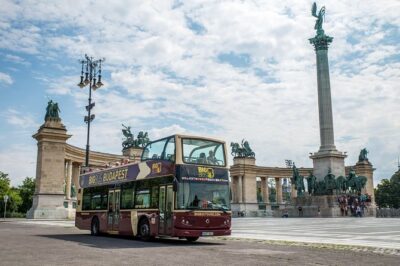 ★ 3.5Big Bus Budapest Hop-On Hop-Off Bus and Walking TourFrom $422,206 reviews
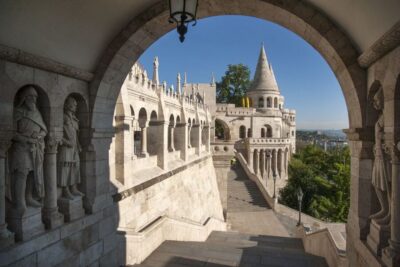 ★ 4.6Buda Castle District Walking TourFrom $142,108 reviews
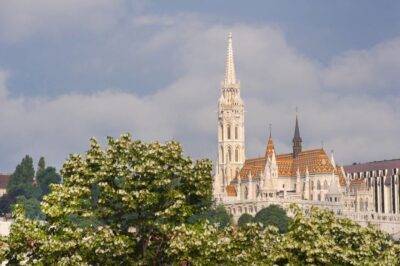 ★ 4.83-Hour Orientation Walking Tour of Buda and PestFrom $411,834 reviews
 ★ 5.0Budapest Historical Sightseeing – Free Walking TourFrom $31,302 reviews
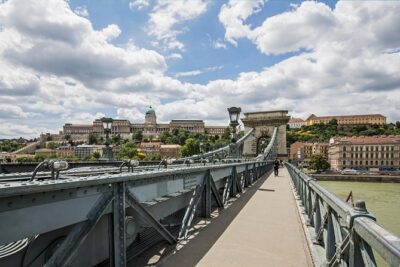 ★ 5.0Budapest All in One Small Group Walking Tour with Strudel StopFrom $1001,277 reviews
 ★ 4.8Budapest Food Walking Tour: Eat, Sip & Explore Like a LocalFrom $731,027 reviews
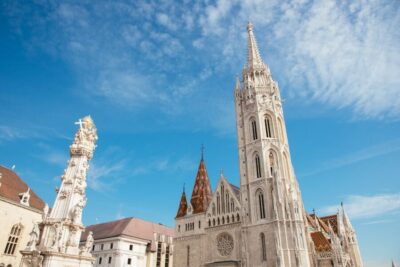 ★ 4.9Buda Castle District Walking Tour with a HistorianFrom $63867 reviews
 ★ 4.9BloodThirsty Hungary: Walking tour & Dark Historical StoriesFrom $21633 reviews
Browse the lists this tour appears in