
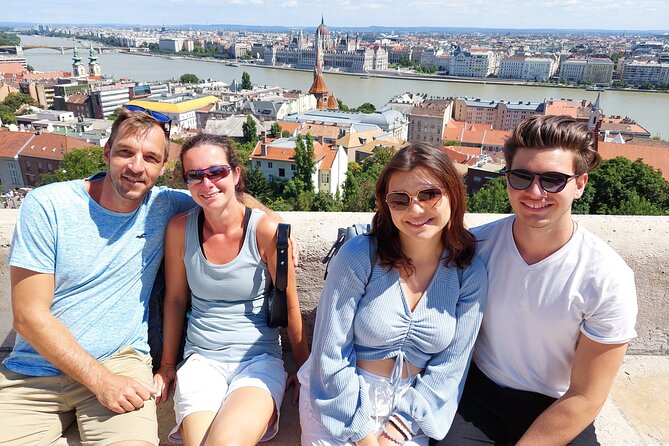
Reviewed · BUDA CASTLE & FISHERMAN'S BASTION
Buda Castle Walking Tour: A Kingdom of Many Nations
Castle Hill changes how you see Budapest. This small-group Buda Castle District walking tour turns the stone streets of UNESCO-protected Hill into a clear story, with stops at Matthias Church and the Danube-view terraces.
What I like most is the tiny group size (max six) and the way the guide connects the buildings to real power shifts, from medieval kings to Ottoman rule and Habsburg emperors. One thing to plan for: tickets for Matthias Church and Fisherman’s Bastion cost extra on your own, so you’ll want a little cash or card ready.
In This Review
- Key highlights worth picking up
- Why this Buda Castle walking tour feels different than the usual bus stop
- Meeting at Országház u. 31 and how the tour keeps moving
- Castle Hill’s narrow streets: the tour’s big “visual lesson”
- The palace story you’ll want to remember: rebuilt, reshaped, and repainted by history
- A quick reality check
- Sándor Palace: where civic power lives (and why it fits this route)
- Matthias Church: what the extra ticket buys you
- Ticket note
- Fisherman’s Bastion views: the Danube photo spot with a story attached
- Ticket note
- Vienna Gate: the payoff view toward Obuda and Aquincum
- Price and value: what you’re really paying for at $126.15
- Who this walking tour suits best (and who might want a different plan)
- Small-group guide dynamics: the details that make the walk better
- Simple tips to get the most out of your 3 hours
- Should you book the Buda Castle Walking Tour?
- FAQ
- How long is the Buda Castle walking tour?
- What’s the group size for this tour?
- What language is the tour offered in?
- Are tickets for Matthias Church and Fisherman’s Bastion included?
- What’s included in the price?
- Where do we meet and where does the tour end?
- Can I get a refund if I cancel?
Key highlights worth picking up

- Castle Hill on foot with a “why this place looks like this” explanation across centuries of rebuilding
- Matthias Church with the decorated roof and a Neogothic interior worth the added ticket
- Fisherman’s Bastion panoramas over the Danube, Pest, Margaret Island, and Gellért Hill
- Sándor Palace exterior: Hungary’s presidential residence and seat of the president’s office
- End at Vienna Gate with views toward Obuda and the Roman site of Aquincum
More of Castle Hill, turrets and the river below
- Budapest: Buda Castle Cave Tour★ 4.7 · 5,677 reviews
- Budapest: Buda Castle District Vampires and Myths Night Tour★ 4.6 · 3,830 reviews
- Budapest: Buda Castle Walk with Saint Stephen’s Hall★ 4.5 · 3,012 reviews
- Budapest: Buda Castle District Walking Tour★ 4.6 · 2,108 reviews
Why this Buda Castle walking tour feels different than the usual bus stop
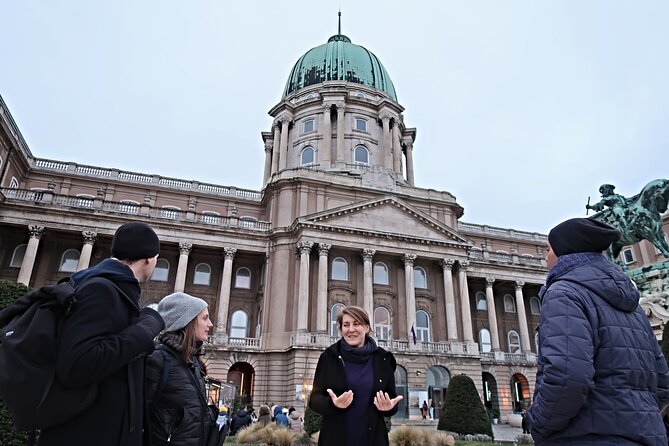
Budapest’s Castle District can feel like a postcard area: pretty roofs, big views, lots of stone. This tour stays human-scale. You’re walking a compact route with time to look up at facades, not just hurry past them.
The group is kept small—up to six in a booking (and a stated maximum of eight)—so the guide can slow down when you want photos, or speed up when you’re ready. I also like that there are both morning and afternoon departures, so you can match it to the rest of your day.
Meeting at Országház u. 31 and how the tour keeps moving
The meeting point is Budapest, Országház u. 31, 1014 Hungary. From there, you’ll spend about 3 hours on a guided walk through Castle Hill and down to major viewpoints.
The key practical point: you’re on cobbles and slopes. Even though most travelers can participate, wear shoes you’d happily walk on all day at home. Castle Hill is not a flat-city stroll, and your comfort matters more than the tour length.
You’ll also be handed a mobile ticket, and the tour runs in English. If you’re the type who likes a plan but also wants room for questions, this setup usually fits well.
Castle Hill’s narrow streets: the tour’s big “visual lesson”
Stop your eyes on Castle Hill and you’ll notice two things fast: the streets are tight, and the buildings wear multiple styles at once. That mix is the point of this experience.
Early on, the guide focuses on the oldest quarter on the hill and the contrast between the palace complex on the southern tip and the vivid, recognizable look of Matthias Church in the middle of it all. You’ll hear why the architecture looks the way it does, and how the hill kept changing hands and functions.
This is where the small-group format pays off. With a group of just a few people, you can actually stop where it makes sense—at a doorway, a viewpoint edge, or a facade detail—and the guide can explain what you’re seeing without rushing.
The palace story you’ll want to remember: rebuilt, reshaped, and repainted by history

You spend substantial time around Buda Castle and the royal-seat idea of the place. The guide lays out a timeline that’s easy to follow: the site began as a fortress after a devastating Mongol invasion, then rose into a major Renaissance court under King Matthias at the end of the 15th century.
Then comes the long Ottoman period, where the area was ruled for over 150 years, followed by Habsburg emperors. Over and over, the palace was rebuilt and reshaped—extended, burned down, and rebuilt again.
By the time you reach the modern look, you’ll understand why it’s described as eclectic, and why so much of what you see today reflects rebuilding after World War II. This tour is especially good at turning abstract history into something visible.
Budapest at street level, more routes on foot

A quick reality check
This is not a “wandering inside every palace room” kind of tour. One of the most common expectations to set: you’re mostly walking the district and seeing key structures from the outside or in the areas the ticketed stops cover. If you want museum-level palace interior time, you may still want a separate self-guided plan.
Sándor Palace: where civic power lives (and why it fits this route)
After the royal-seat story, the tour shifts to another kind of authority at Sándor Palace. It’s the official residence of the President of Hungary and it’s also the seat of the President’s office since 2003.
The palace has a Neoclassical core dating to 1806, originally commissioned by Count Vincent Sándor, an aristocrat and philosopher in the Austro-Hungarian Empire.
You’ll likely spend only a short moment here, but it works as a “now vs. then” contrast. The guide uses it to connect the hill’s past power centers to modern-day government—different eras, same geography.
Matthias Church: what the extra ticket buys you

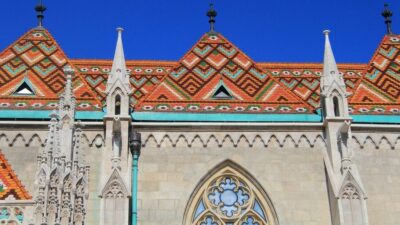
Matthias Church is the emotional highlight for a lot of people, and for good reason. The outside alone is striking, with the famous, decorated roof. Then you get to see why the interior and surrounding design have become such a draw.
The tour explains that what you’re admiring is a very fine Neogothic reconstruction from the end of the 19th century. In plain terms: it’s not Medieval-only leftovers. It’s a later revival that still feels like it belongs in a coronation legend.
This church is tied to Hungarian kings and is noted as the coronation site. If you’re someone who likes your photos to come with meaning, this is the stop where that happens.
Ticket note
The Matthias Church ticket is not included. Expect to pay entrance fees on your own for this portion.
Fisherman’s Bastion views: the Danube photo spot with a story attached
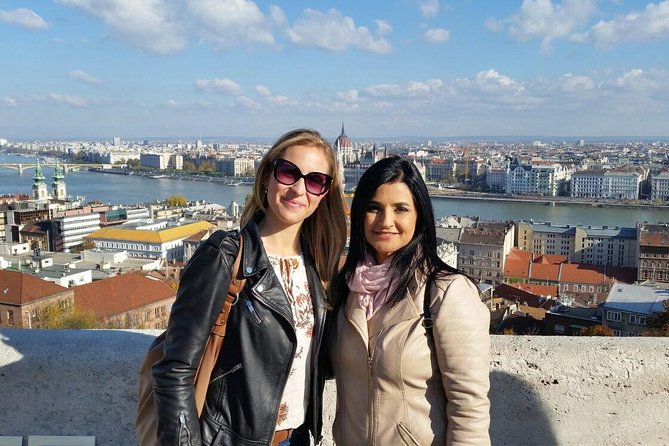
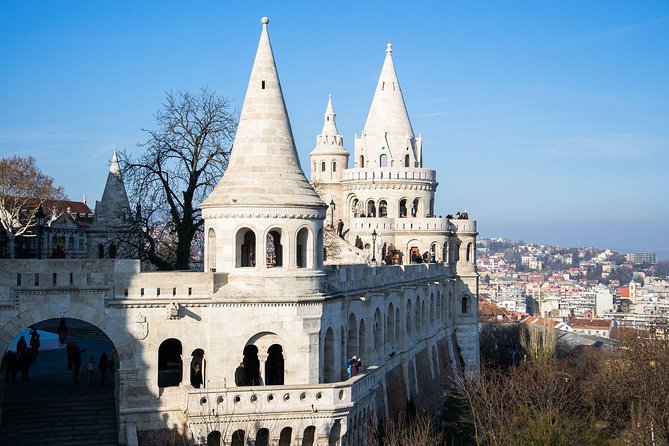
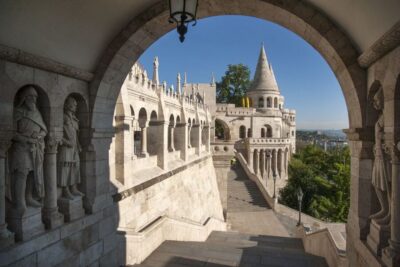
Then you rise to Fisherman’s Bastion, described as an architectural fantasy in neo-Gothic and neo-Romanesque styles, built between 1895 and 1902. It can feel almost too perfect, until the guide gives you the “why” behind the design.
Those seven towers represent the seven Magyar tribes that settled in the Carpathian Basin in the late 9th century. That detail matters, because it stops the place from being just a viewpoint. You’ll get a historical link to the design choices you see around you.
From the terrace, you’ll get one of Budapest’s most famous panoramas: the Danube, Margaret Island, Pest, and Gellért Hill. This is where you should slow down and let your eyes adjust. Castle Hill views are wide, and the best photos come from taking a minute, not sprinting.
Ticket note
Like Matthias Church, Fisherman’s Bastion entrance is not included. Plan for the added cost and bring payment methods you trust.
Vienna Gate: the payoff view toward Obuda and Aquincum

Your walk ends at the Vienna Gate. This stop is short, but it’s a smart finish because it shows the city’s layers beyond the tourist core.
From here, you can look toward Obuda (Old Buda), where the Romans founded the city called Aquincum. The guide uses this last viewpoint to tie the whole Castle Hill story into a longer timeline—people lived, ruled, and rebuilt here long before the later kingdom chapters.
It’s a good way to wrap up the walk: not with a wall of facts, but with a view that makes you curious to keep exploring.
Price and value: what you’re really paying for at $126.15
The price is $126.15 per person, and the walk runs about 3 hours with a professional guide. The baseline includes the guided walk, and there’s also a mobile ticket plus a mention of group discounts.
Here’s what you should weigh as value:
- You’re paying for time with a guide who explains the “why” behind the architecture, not just where to stand for photos.
- You’re paying for a small group that keeps it from feeling like a stampede through cobblestones.
- You’re not paying for every admission. Matthias Church and Fisherman’s Bastion tickets are extra, so your real total will be a bit higher depending on current fees.
If you like history that’s tied to real streets and real views, the guide time is what makes this worth it. If you only want quick exterior snapshots and you already plan to spend hours inside multiple sites on your own, you might feel the added guide cost less.
Who this walking tour suits best (and who might want a different plan)
This tour fits best if you want a focused overview of Budapest’s Castle District with a clear timeline. It’s also a strong choice for people who don’t want to fight big tour crowds.
It may be less ideal if:
- You’re hoping for a lot of palace-interior time beyond the ticketed church and bastion areas.
- You dislike walking on uneven streets or steep sections, even at a moderate pace.
On the positive side, the route is built around the major “must-see” points that most first-time visitors need, plus context that makes them click.
Small-group guide dynamics: the details that make the walk better
One of the best parts of this tour style is how the guide can adapt in real time. In the past, guides such as Peter have been praised for adapting the tour to what the group cares about, and Judith has been noted for helping people figure out practical public transport.
You may also find the tour is more personal than you’d expect for a Castle Hill walk. Guides like Gergely (Gregory), Kata, and Veronica have been highlighted for telling local stories and pointing out small details, like memorable building identifiers you might otherwise miss. For example, someone once called out a red hedgehog building during the walk—those are the moments that turn a sightseeing loop into a place you feel you actually understand.
And yes, the guide matters a lot. When the guide does a great job, the history stops being a list and becomes a story you can see.
Simple tips to get the most out of your 3 hours
- Start with good shoes. Cobblestones are no joke.
- Keep your phone charged. The Danube view payoff is worth a few extra minutes.
- Bring payment for ticketed stops, since Matthias Church and Fisherman’s Bastion are not included.
- If you have flexible time, do this on a day when you want to slow down rather than cram.
If you’re pairing this with other Budapest plans, I like doing this before you go deep into museums. It gives you the geography and the power timeline, so everything afterward makes more sense.
Should you book the Buda Castle Walking Tour?
I’d book it if you want a smart, small-group way to understand Budapest’s Castle Hill. The route hits the best anchors—Castle Hill context, Matthias Church, Fisherman’s Bastion views, and the Vienna Gate look toward Aquincum—without wasting your time.
I’d think twice if you hate walking on cobbles, or if you’re mainly interested in palace-interior touring rather than the district-level story. In that case, you might prefer a different format that’s more museum-heavy.
If you’re on the fence, here’s a quick deciding rule: if you enjoy learning the “why” behind what you see—architecture, rulers, and rebuilding—this is a strong match. If you just want quick sights and you’re happy reading signs on your own, you can probably build a cheaper self-guided day.
FAQ
How long is the Buda Castle walking tour?
It’s about 3 hours.
What’s the group size for this tour?
It’s a small-group tour with a maximum of six people per booking, with a stated maximum of eight travelers.
What language is the tour offered in?
The tour is offered in English.
Are tickets for Matthias Church and Fisherman’s Bastion included?
No. Entrance fees for Buda Castle, Matthias Church, and Fisherman’s Bastion are listed as not included where applicable, so you should budget for those ticketed stops.
What’s included in the price?
You get a 3-hour guided walk with a professional guide.
Where do we meet and where does the tour end?
You meet at Budapest, Országház u. 31, 1014 Hungary. The tour ends in Budapest (the end point is listed as Budapest, Hungary).
Can I get a refund if I cancel?
Yes. There’s free cancellation, and you can cancel up to 24 hours in advance for a full refund. If you cancel less than 24 hours before the start time, the amount paid is not refunded.
More Tour Reviews in Budapest






More of Budapest, Step by Step






More of Castle Hill



Just Added: More Budapest Reviews
- Sightseeing flight over Budapest
★ 5.0 · 3 reviews - Budapest: Walking Tour with Chimney Cake & Polaroid Photos
★ 5.0 · 3 reviews - Self Guided Tour In Budapest With 100 Captivating Audio Stories
★ 5.0 · 3 reviews - Budapest Art Nouveau Walking Tour
★ 5.0 · 3 reviews - Hungary today: a no-taboo conversation
★ 5.0 · 3 reviews
Buda Castle & Fisherman's Bastion, compared.
 ★ 4.7Buda Castle Cave TourFrom $195,677 reviews
 ★ 4.6Buda Castle District Vampires and Myths Night TourFrom $233,830 reviews
 ★ 4.6Buda Castle District Walking TourFrom $142,108 reviews
 ★ 4.33-Hour Grand City Tour and Castle WalkFrom $491,437 reviews
 ★ 4.5Buda Castle District Dark History, Legends and Vampire Night TourFrom $211,240 reviews
 ★ 4.9Buda Castle District Walking Tour with a HistorianFrom $63867 reviews
 ★ 4.6Classical Music Concerts in Matthias ChurchFrom $70792 reviews
 ★ 4.6Matthias Church Entry TicketFrom $25787 reviews
Browse the lists this tour appears in