
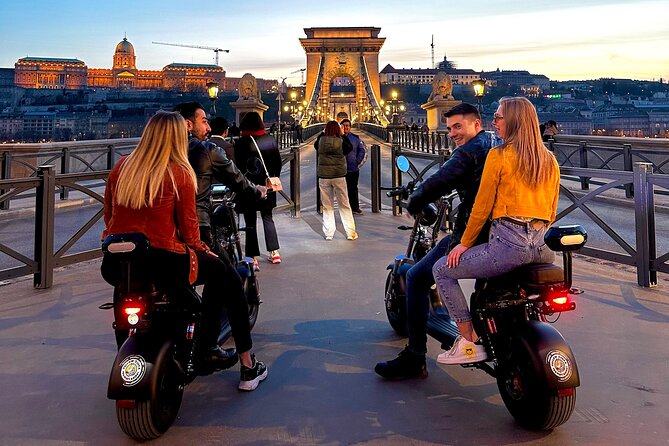
Reviewed · CYCLING TOURS
Monster Bike Sightseeing Tour – City Budapest on Electric Rollers
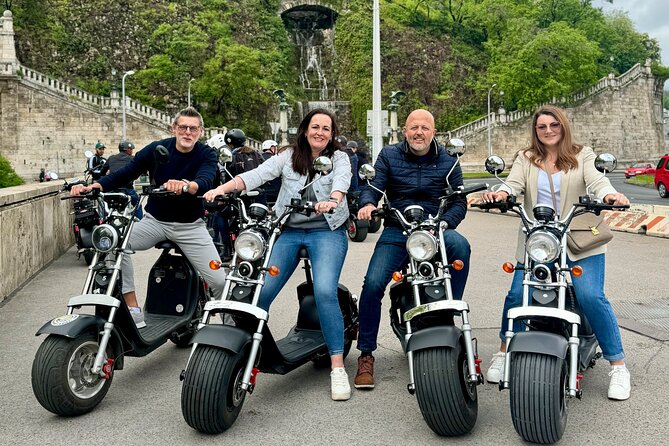
Electric rollers turn Budapest’s famous sights into an easy circuit. What makes this one practical is that the rental is included, so you skip the hassle of hiring gear, and you get the momentum to cover real ground in 2.5 hours.
I especially like that it’s a small-group tour (max 10), which means you’re not stuck waiting for answers while the rest of the group catches up. The one possible drawback is the pace: you’ll see a lot, but many stops are short, so you’ll want to plan for quick photo moments rather than a long wander.
In This Review
- Key highlights to know before you go
- Electric rollers that actually fit Budapest’s pace
- Getting started at the Segway Budapest tour point
- St. Gerard Sagredo Statue: the view over Gellert Hill and Citadel
- Varkert Bazar: a historic shopping complex by the Danube
- Clark Adam Square: the quick course on Chain Bridge and Buda Castle connections
- Fisherman’s Bastion: 10 minutes of photos with a bigger view payoff
- Chain Bridge crossing and Shoes on the Danube Bank: a shift from scenic to solemn
- Hungarian Parliament Building and the Liberty Square to St. Stephen’s Basilica arc
- The guide makes the difference: getting Sam’s style (when possible)
- Price vs. value: $60.34 that buys time and gear convenience
- What to expect from the pace (and how to make it work for you)
- Who this tour suits best, and who should consider alternatives
- Should you book this Monster Bike Electric Roller sightseeing tour?
- FAQ
- How long is the Monster Bike City Budapest electric rollers tour?
- What does the tour cost?
- Is the vehicle rental included?
- Do you get a raincoat if the weather is bad?
- How big is the group?
- Where does the tour start and end?
Key highlights to know before you go

- Included raincoat for changing Budapest weather so you can keep riding instead of postponing the outing
- Max 10 people for more guide time and easier questions during stops
- Segway-style start-and-finish flow with instructions at the office area
- Icon stops that connect the city’s story from the Chain Bridge area to the Danube memorials
- Fisherman’s Bastion photo time with a set window to grab panoramic views
- Guide names matter here, especially Sam who’s singled out for friendly, informative guiding
More Budapest rides on two wheels
- Budapest: Grand Sightseeing Bike Tour★ 4.8 · 984 reviews
- Budapest Highlights Bike Tour★ 5.0 · 770 reviews
- Budapest: Guided City Discovery Bike Tour★ 4.7 · 702 reviews
- Budapest: Guided Downtown Electric Bike Tour★ 4.9 · 595 reviews
Electric rollers that actually fit Budapest’s pace
Budapest is a city of layers: river views, hilltop viewpoints, and major landmarks that don’t line up neatly for a slow walking plan. This tour is designed for that reality. In about 2 hours 30 minutes, you’re moving between key sights without burning time on “how do we get there?” logistics.
The big value is not just speed. It’s also range. On foot, it’s easy to cover only one neighborhood and then feel like you missed half the story. On electric rollers, the distances shrink fast, and you can pack in sights you’d otherwise have to stitch together with taxis or multiple transit rides.
And yes, the setup is straightforward: you get your equipment and instructions at the start, then you ride from stop to stop with a guide. Even better, the tour includes a raincoat, which matters in Budapest. If weather shifts, you’re not stuck waiting out a forecast.
Getting started at the Segway Budapest tour point
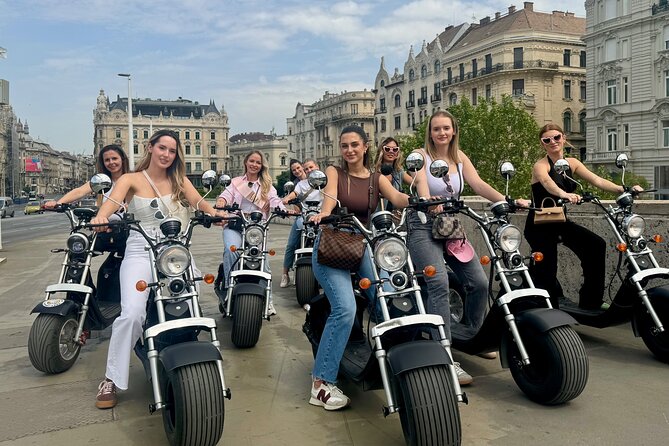
The tour begins where the equipment handoff and basics happen. You’ll meet for the SEGWAY BUDAPEST TOUR portion to get what you need and go over how to operate safely. This is the part that makes the rest feel smoother, because you’re not guessing while you’re already approaching busy pedestrian areas.
Since this is an electric-roller-style sightseeing experience, expect a quick “learn-and-go” rhythm. The goal is simple: you should be comfortable enough to focus on what you’re seeing—Chain Bridge views, Danube monuments, and church exteriors—rather than how to balance or steer.
One more practical note: the tour uses a mobile ticket, and the meeting point is listed near public transportation. That’s a good match for Budapest, where you’ll likely be coming in by tram or metro anyway.
St. Gerard Sagredo Statue: the view over Gellert Hill and Citadel
Your early stop sets the tone with a scenic angle. You’ll stop near the Elizabeth bridge crossing, then pause at the St. Gerard Sagredo Statue area with a view toward Gellert Hill and the Citadel.
This kind of stop is more than a quick break. It helps you read Budapest in the right direction. From the river and bridge areas, you can understand where the hills sit above the city, and why so many famous viewpoints are perched just far enough to feel special. Even if you’re not planning to hike to the Citadel, this viewpoint stop gives you a “map in your head” for the rest of the day.
Time here is short (around 7 minutes), so you’ll want to be ready with your camera once you arrive. Think of it as a positioning moment, not a long photo session.
Varkert Bazar: a historic shopping complex by the Danube
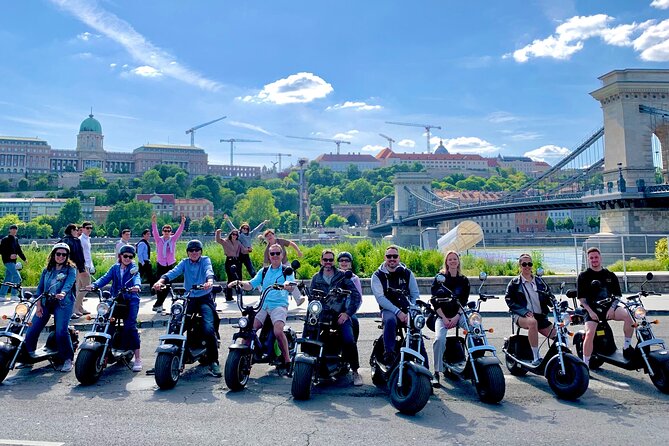
Next up is Varkert Bazar, described as a historic neo-Renaissance complex at the foot of Buda Castle along the Danube. It was built between 1875 and 1883—and even if you don’t go deep into architectural details, the setting matters.
Why this stop works: it breaks the tour’s momentum with a place you can actually look at. It also keeps you connected to the riverfront story—Budapest’s defining feature—without turning every minute into a sprint to the next landmark.
The listed stop time is about 3 minutes, so you won’t linger. Still, it’s one of those moments where you’ll see the difference between “landmark sightseeing” and “actually noticing what you’re passing.”
Wider sweeps across the two banks

Clark Adam Square: the quick course on Chain Bridge and Buda Castle connections
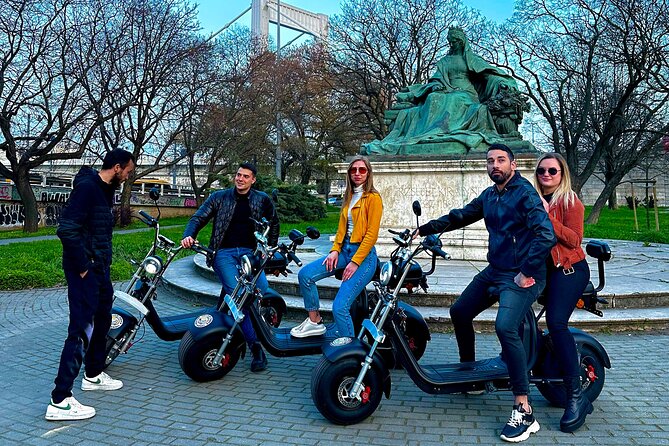
At Clark Adam Square (Clark Adam ter), the guide explains key anchors of the city’s layout. This stop is about understanding how the city connects vertically and horizontally—because Budapest isn’t flat, and that’s part of its charm.
You’ll hear explanations tied to:
- Chain Bridge
- the Zero Kilometre stone
- Budapest Castle Hill Funicular
- Buda Castle Tunnel
- the Adam Clark Statue
Even with a 7-minute window, this kind of guided context pays off later. When you reach major viewpoints or cross big areas like the river bridges, you’ll know what you’re looking at and why the route feels the way it does.
Also, this stop is a good moment to ask practical questions. With a group size capped at 10, you’re more likely to get a direct answer instead of hearing the guide repeat themselves for a large crowd.
Fisherman’s Bastion: 10 minutes of photos with a bigger view payoff
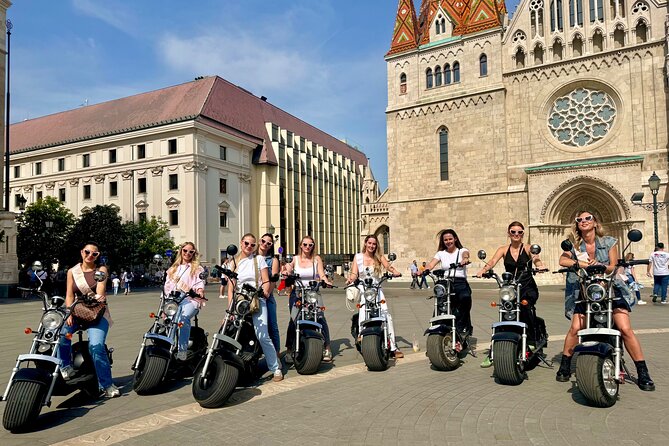
You’ll reach Fisherman’s Bastion, which is built for panoramic views. Here, you get around 17 minutes total at the stop, including about 10 minutes of free time to take photos from the top of the hill.
From this spot, you’ll see Matthias Church, Trinity Square, and the Statue of St. Stephen. That’s a lot of recognizable sightlines packed into one high viewpoint, and it explains why Fisherman’s Bastion is always on the list. This is one of those stops where your brain goes quiet because the geography is doing the storytelling.
The drawback is time pressure. Ten minutes is enough for a handful of angles, but not enough for a slow drift around every corner. So go with a simple plan: pick your best “wide shot,” then work in a couple of closer framing ideas before you move on.
Chain Bridge crossing and Shoes on the Danube Bank: a shift from scenic to solemn
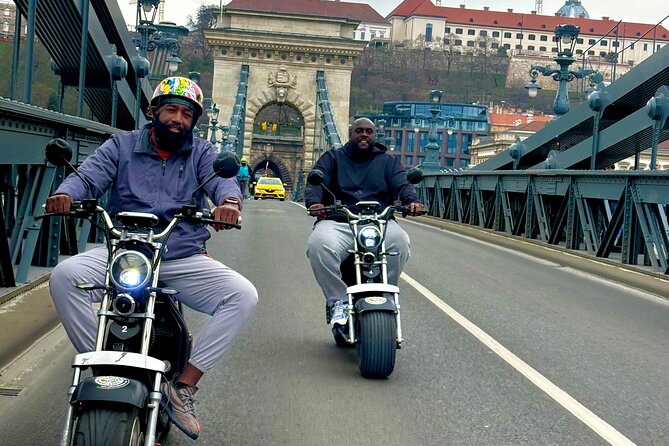
After the Bastion, you’ll cross the Chain Bridge. This matters because it’s not just transport—it’s a visual statement. The bridge gives you a moving perspective of the city’s two sides, and it sets you up for the Danube stretch where the tour transitions from postcard views to remembrance.
Then comes one of the most emotionally direct stops: Shoes on the Danube Bank. This is the iron shoes memorial connected to the Holocaust, and it’s listed as about 5 minutes.
This is not a “stand and pose” stop. The guide context is important here, because this memorial only fully lands when you understand what it represents. Even if you don’t read everything on site, pause for a moment. Let it be what it is: a quiet, heavy marker placed right by the river.
If you’re traveling with kids, this stop may feel like a hard pivot. The tour includes a raincoat and short windows throughout, but the tone here is serious. It’s worth knowing you’re heading into that emotional shift.
Hungarian Parliament Building and the Liberty Square to St. Stephen’s Basilica arc
Now the tour leans into major civic and religious landmarks.
You’ll stop at the Hungarian Parliament Building, around 5 minutes. This is the kind of place where even a short visit feels worthwhile because the building is unmistakable. You’re seeing it from the outside, but the scale and presence do most of the work.
Next is Liberty square of Budapest (time not specified in the details you have, but it’s included as a dedicated stop). This portion helps round out the “Budapest as a capital” feel—big public spaces that make you realize you’re not only looking at monuments, you’re moving through how the city organizes itself.
Finally, you reach St. Stephen’s Basilica (Szent Istvan Bazilika), again around 5 minutes. This is described as the most important and largest churches in Hungary. Like Parliament, it’s the kind of stop where quick framing still gives you a real sense of what the city considers central.
Here’s the practical takeaway: in a 2.5-hour tour, these moments are best used for orientation and exterior appreciation, not for museum-level study. If you later want a longer church or Parliament visit, this tour gives you a strong starting point for deciding what matters most to you.
The guide makes the difference: getting Sam’s style (when possible)
One name that pops up strongly in the tour’s praise is Sam, who’s highlighted for being friendly and informative. The key point isn’t just personality—it’s pacing.
A good guide here keeps you moving, but also makes the stops feel useful. When the guide explains what you’re looking at (like the Chain Bridge context at Clark Adam Square), it turns “I saw a bridge” into “I understand why this matters in the city’s layout.”
And because the group is small, Sam’s style has room to work. You can ask follow-up questions without feeling like you’re disrupting a parade of people.
If you’re booking this and you have the option to note a preferred guide, Sam is the one to aim for based on the strong recommendations connected to him.
Price vs. value: $60.34 that buys time and gear convenience
At $60.34 per person for about 2.5 hours, this tour lives in the “pay for convenience” category. The math makes sense because the tour includes your rental—so you’re not adding a separate vehicle hire cost, and you’re not spending time on a separate setup ritual.
You’re also paying for guided interpretation. In a city like Budapest, landmarks are more meaningful when you understand how they connect: river and bridges, hilltop views, and the way major buildings anchor the city. The itinerary is built to deliver that context across multiple stops instead of letting you bounce between attractions on your own.
Finally, it’s good value because you’re saving energy. You’re covering far more sight ground than a walking-only plan would allow in the same time window, especially once the route starts mixing bridges, hills, and longer riverfront stretches.
A fair consideration: because stops are short, this isn’t the best choice if you want a slow, unhurried experience at each monument. But if you want a smart overview circuit that helps you plan what to do next, the price-to-time trade-off is strong.
What to expect from the pace (and how to make it work for you)
This is a stop-and-ride rhythm. Some stops have listed durations like:
- 5 minutes to start for equipment/instructions
- 7 minutes around St. Gerard Sagredo Statue
- 3 minutes at Varkert Bazar
- 7 minutes at Clark Adam Square
- 17 minutes at Fisherman’s Bastion
- 5 minutes at Shoes on the Danube Bank
- 5 minutes at Parliament
- plus additional stops around Liberty Square and St. Stephen’s Basilica
Even where the time isn’t specified, the overall format stays consistent: ride between sights, stop briefly, then move again. That’s exactly why the tour works for the 2.5-hour window.
To make it feel satisfying instead of rushed:
- Bring water and keep your photo priorities in your head before you reach the biggest viewpoints.
- If you care about one stop most (like Fisherman’s Bastion), treat it as your main photo target and keep everything else as “capture fast, enjoy the rest.”
- Ask questions early, when the guide has the best chance to tailor explanations to what you’re seeing next.
Who this tour suits best, and who should consider alternatives
This tour fits best if you want:
- a high-impact overview of Budapest in a short time
- a route that covers major landmarks without heavy planning
- the ability to ask the guide questions thanks to a small group
It also works for people who don’t want to rent vehicles separately. The inclusion of rental and the raincoat are big comfort boosts.
For kids: children ages 7 to 15 are permitted to sit behind an adult, which can help families keep everyone together. If you’re bringing younger kids, check your specific age needs since the details only confirm that range.
If you’re someone who loves long museum-style visits and unstructured wandering, you may find the short stops leave you wanting more. In that case, use this tour as the kickoff, then return later on your own to the one or two places that really grab you.
Should you book this Monster Bike Electric Roller sightseeing tour?
Book it if you want a practical, efficient circuit that pairs top sights with helpful guide context, and you value not having to arrange rental gear yourself. The small-group size, the included raincoat, and the built-in landmarks—from Chain Bridge to Parliament to St. Stephen’s Basilica—make it a strong “get your bearings fast” option.
Skip or substitute if your ideal pace is slow and linger-heavy. The time windows are short by design, and you’ll want longer stays elsewhere.
If you’re flexible on photos and open to a guide-led route, this tour is a solid way to see a lot of Budapest without burning your day on logistics.
FAQ
How long is the Monster Bike City Budapest electric rollers tour?
It runs for about 2 hours 30 minutes.
What does the tour cost?
The price is $60.34 per person.
Is the vehicle rental included?
Yes. The tour includes your rental, so you don’t need to hire equipment separately.
Do you get a raincoat if the weather is bad?
Yes. A raincoat is included so you can explore in different weather.
How big is the group?
The tour has a maximum of 10 participants.
Where does the tour start and end?
It starts at Budapest, Galamb u. 3, 1052 Hungary, and it ends back at the same meeting point.
Pedalling Around Budapest






More Tours in Budapest




More Tour Reviews in Budapest






Just Added: More Budapest Reviews
- Sightseeing flight over Budapest
★ 5.0 · 3 reviews - Budapest: Walking Tour with Chimney Cake & Polaroid Photos
★ 5.0 · 3 reviews - Self Guided Tour In Budapest With 100 Captivating Audio Stories
★ 5.0 · 3 reviews - Budapest Art Nouveau Walking Tour
★ 5.0 · 3 reviews - Hungary today: a no-taboo conversation
★ 5.0 · 3 reviews
Cycling Tours, compared.
 ★ 4.8Grand Sightseeing Bike TourFrom $44984 reviews
 ★ 5.0Budapest Highlights Bike TourFrom $39770 reviews
 ★ 4.7Guided City Discovery Bike TourFrom $38702 reviews
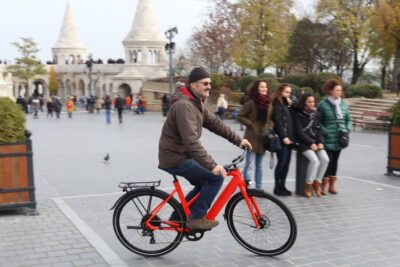 ★ 4.9Guided Downtown Electric Bike TourFrom $63595 reviews
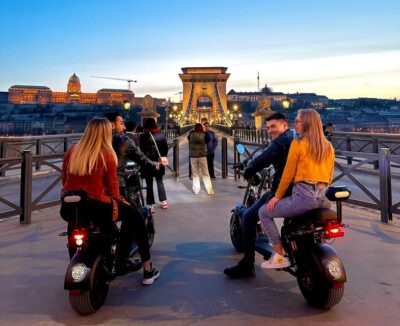 ★ 5.0Monster Bike Roller Guided City TourFrom $53538 reviews
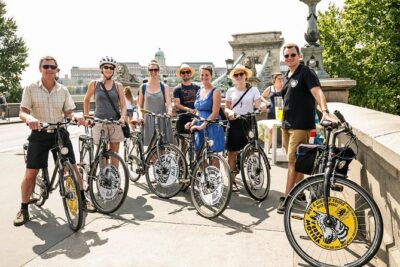 ★ 5.0Budapest Bike TourFrom $47365 reviews
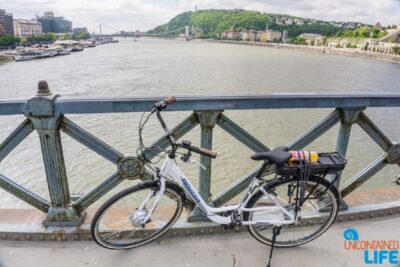 ★ 4.9E-Bike Guided Tour and Castle HillFrom $58241 reviews
 ★ 4.8Guided Bike & E-bike Tour with a GoulashFrom $54220 reviews
Browse the lists this tour appears in