
Hungarian food tastes better with a guide. This Great Market Hall tour turns market wandering into a focused 2-hour tastings-and-stories walk, starting with Hungary’s national spirit, Pálinka. You get the practical, eat-what-locals-eat part, plus the why behind it: food, culture, and the building itself.
I especially like how the tastings are generous and varied, including lángos along with salamis and strudel. I also like the interactive touch, from photo pauses to a kid-friendly mushroom hunt that keeps energy up without turning it into chaos. One possible drawback: Pálinka is included, and it is a strong traditional drink, so if you do not want alcohol, plan for that before you book.
In This Review
- Key highlights worth planning around
- 2 Hours at the Central Market Hall: How the Experience Really Works
- Starting Point: Mercure Budapest Korona Hotel and the Váci Street Views
- Aperitif Time: What to Know Before Pálinka
- Inside the Great Market Hall: Lángos, Salamis, and Strudel
- Paprika, Porcelain, and Embroidery: Why These Stops Matter
- Photo Stops and the Kids’ Mushroom Hunt (Yes, It Works)
- Price and Value: Is $78 Worth It?
- Practical Tips to Enjoy This Tour Without Stress
- Who Should Book This Budapest Market Hall Food Tour?
- Should You Book It?
- FAQ
- How long is the Great Market Hall food tour?
- Where do we meet for the tour?
- What foods and drinks are included in the tasting?
- Is the tour good for families and kids?
- What language is the tour guide?
- What should I bring with me?
Key highlights worth planning around
- Pálinka tasting first, so you start with Hungarian flavor before the market even begins
- Lángos, salamis, and strudel in one route, so you avoid guessing what to try
- Paprika production education, linked to what you’re eating and buying in the hall
- Porcelain and embroidery context, tying souvenirs to culture instead of just sales
- Family-friendly “mushroom hunt”, plus photo stops for easy memories
- English live guide, with strong storytelling that connects food to the market’s walls
Still hungry? More markets, mains and tavern stops
- Countryside Half-day Gastro-Wine Tour from Budapest Meal & pickup★ 5.0 · 1,450 reviews
- Budapest Food Walking Tour: Eat, Sip & Explore Like a Local★ 4.8 · 1,027 reviews
- Budapest Centre Food Tour with 10+ Tastings, Wine & Street Food★ 5.0 · 810 reviews
- Budapest Guided Food Walking Tour with Drinks Included★ 4.8 · 472 reviews
2 Hours at the Central Market Hall: How the Experience Really Works
This is a compact tour designed for people who want maximum payoff without a half-day commitment. You meet in the hotel lobby near the elevators, then you’re on your feet right away. The rhythm is simple: a short aperitif, a quick scenic lead-in through the city streets, then a guided walk and tasting time inside the hall.
The big win is structure. Instead of you standing in front of stalls trying to translate menus and decide what is worth paying for, the guide moves you through a curated sequence of Hungarian specialties. That matters in a market like this, where there is a lot to see and even more to tempt you.
The tour also spreads attention across more than food. You get building history and architecture details, plus introductions to Hungarian paprika production and traditional crafts like porcelain and embroidery. That gives the tastings context, and it makes the experience feel more like culture than just snacking.
Starting Point: Mercure Budapest Korona Hotel and the Váci Street Views
You begin at the Mercure Budapest Korona Hotel lobby, with the guide waiting near the elevators. If you’ve ever tried to meet a group in a busy area, you’ll appreciate how direct this is. No guessing. No wandering. You just check in and go.
From there, you get a scenic walk segment that includes views along Váci Street. It’s not a long detour, but it helps you get your bearings quickly and see the central shopping spine before you reach the market hall. After that, there’s a short walk to the Central Market Hall itself.
Why this matters: the first minutes set expectations. By the time you reach the hall, you’re not just stepping into a crowded indoor space—you know what kind of story the guide will be telling, and what kind of food you’ll be tasting.
Also, because the tour is only 2 hours total, that early “warm-up” prevents the experience from feeling like you arrived late and missed the best part.
Aperitif Time: What to Know Before Pálinka
Before the market tastings begin, you start with an aperitif period that lasts about 20 minutes. This is where the tour introduces Hungary’s national drink: Pálinka.
Pálinka is not like a soft welcome drink. It is a traditional fruit spirit, and it’s typically served in a way that lets you notice the flavor. The practical value here is that the guide sets the tone for what you’re about to eat. You’re not just tasting randomly—you’re learning how Hungarian flavors are built around fruit, spice, and tradition.
Possible consideration: if you do not drink alcohol or you prefer to keep spirits to a minimum, you might want to pace yourself here. The tour includes the tasting, so you will be making a decision early in the experience.
Still, even for people who drink lightly, the aperitif stage is one of the more memorable parts because it anchors the rest of the food. Lángos, salamis, and strudel start to make more sense once you taste something Hungarian first.
Inside the Great Market Hall: Lángos, Salamis, and Strudel
Once you reach the Central Market Hall, the tour shifts into the heart of the experience: guided food tasting inside the market. You get about 1 hour of tastings, with stops that focus on Hungarian specialties rather than a free-for-all.
Here’s what you can expect to taste during that core hour:
- Lángos (the standout fried comfort food people travel for)
- Salami and other Hungarian cured meats
- Strudel, a sweet finish that fits perfectly after savory bites
What I like about this selection is the balance. Lángos is filling and immediate—something you understand fast. The salami tasting adds the “everyday Hungary” side of the menu, where cured meats are part of the national flavor identity. Strudel closes the loop with a dessert that feels classic and approachable.
And because you’re walking with a host, you’re not just eating. You’re being guided through what each item represents—how Hungarian food traditions are shaped by ingredients and preservation habits (especially when you’re talking about cured meats and paprika). That turns tastings into knowledge you can carry forward when you order in a restaurant later.
More Budapest plates and glasses worth the walk
Paprika, Porcelain, and Embroidery: Why These Stops Matter
Food tours sometimes stick to eating and skip the cultural glue. This one does not. You get an introduction to Hungarian paprika production, plus context around traditional Hungarian porcelain and embroideries.
Even without turning into a lecture, these stops are practical. Paprika shows up in Hungarian cooking so often that it helps to understand where the flavor comes from and why it’s so central. When you taste Hungarian dishes later, paprika stops being an abstract spice and becomes part of a story you already learned.
The porcelain and embroidery element is similar. You are in a market, so you’ll see crafts and decorative pieces around you. With this tour, those objects get explained as part of Hungarian tradition, not just souvenirs. That makes it easier to shop intentionally, because you know what you are looking at.
I also like that the guide works in photo opportunities at different points. You get visual proof of the places you are learning about, and you can keep the trip organized in your memory later.
Photo Stops and the Kids’ Mushroom Hunt (Yes, It Works)
This tour includes built-in moments for photos using your smartphone. That’s not just for fun. It helps you pause, look closely, and get the “I’m really here” feeling in the middle of eating and walking.
For families, the best detail is the kid-friendly activity: a mushroom hunt. It adds a playful layer to the indoor market experience. Kids stay engaged because they are not only following an adult through stalls. They have a simple mission tied to the surroundings.
From a practical standpoint, this is a smart way to manage attention spans in a market setting. Markets can feel noisy and overwhelming for little ones. The hunt gives them focus, and the guide can keep the whole group moving without leaving children behind.
Even if you’re not traveling with kids, the interactive style is good for adults too. It breaks up the routine and keeps the tour from feeling like you’re just “consuming” food for two hours.
Price and Value: Is $78 Worth It?
At $78 per person for a 2-hour guided experience, the price might look steep at first glance. But when you break down what’s included, it starts to feel reasonable.
You’re paying for:
- A guided walk through the Great Market Hall
- Multiple tastings: Pálinka, lángos, salamis, and strudel
- Educational segments about Hungarian paprika production and traditional crafts like porcelain and embroideries
- Photo stop opportunities and an interactive element for kids
If you tried to replicate this on your own, you’d likely spend money on several tastings anyway, and you would still miss the context about what you’re eating and why it matters. Food tastings can add up quickly in a tourist-heavy market, especially once you factor in the time and decision fatigue.
This tour is also good value because it compresses the experience. Instead of planning multiple stops on separate days, you get a clean route with a guide doing the selection work for you.
Practical Tips to Enjoy This Tour Without Stress
A few small preparations make a big difference here.
- Wear comfortable shoes. You’re walking inside and outside, and it’s a market—surfaces and crowds vary.
- Bring a camera and a charged smartphone. You’ll want photos during the scheduled photo moments.
- If you don’t want alcohol, consider how you want to handle the Pálinka tasting at the start. The drink is included.
Also, keep expectations realistic for a 2-hour tour. You’re not meant to do every aisle of the entire hall. You’re meant to get the best hits, get the context, and leave feeling like you understand Hungarian food culture a bit better than when you arrived.
This is a tour built for people who like structure—and who want to taste first, then learn.
Who Should Book This Budapest Market Hall Food Tour?
I think this one is a strong match if you want:
- A high-quality food intro to Hungary without hunting for recommendations
- Hungarian flavors in a short time window—especially lángos and Pálinka
- A guide who connects food to culture, including market history and craft traditions
- A group format that works for couples, solo travelers, and teams, not just families
- Something for kids that doesn’t turn the whole outing into a struggle
If you already know exactly what you want to eat and you enjoy browsing on your own, you might feel the tour is more structured than you need. But if you’d rather stop guessing and start tasting with context, this is a satisfying way to experience Budapest through its market food culture.
Should You Book It?
Yes, I’d book it if you want a guided Great Market Hall experience that’s built around real tastings plus cultural context. The mix of Pálinka, lángos, salamis, and strudel gives you a clear Hungarian snapshot, and the paprika, porcelain, and embroidery stories make it more than just eating.
I’d hesitate only if you strongly dislike alcohol or you prefer unguided wandering with no set tastings. Otherwise, this is a smart use of time in central Budapest—and a solid way to leave the market understanding what to look for next time you return.
FAQ
How long is the Great Market Hall food tour?
The tour lasts about 2 hours, with a guided tasting experience inside the Central Market Hall that takes about 1 hour.
Where do we meet for the tour?
You meet in the lobby of the Mercure Budapest Korona Hotel, with the guide near the elevators.
What foods and drinks are included in the tasting?
You’ll have tastings that include Hungarian lángos, Hungarian specialties such as salamis and strudel, and a tasting of Pálinka.
Is the tour good for families and kids?
Yes. The tour is interactive and includes activities for kids, including a mushroom hunt, plus photo stops during the route.
What language is the tour guide?
The tour guide speaks English.
What should I bring with me?
Wear comfortable shoes, bring a camera, and make sure your smartphone is charged for photos.
More Tours in Budapest





More Tour Reviews in Budapest






Eat Budapest: More Food Walks


Just Added: More Budapest Reviews
- Sightseeing flight over Budapest
★ 5.0 · 3 reviews - Budapest: Walking Tour with Chimney Cake & Polaroid Photos
★ 5.0 · 3 reviews - Self Guided Tour In Budapest With 100 Captivating Audio Stories
★ 5.0 · 3 reviews - Budapest Art Nouveau Walking Tour
★ 5.0 · 3 reviews - Hungary today: a no-taboo conversation
★ 5.0 · 3 reviews
Food & Culinary Tours, compared.
 ★ 5.0Countryside Half-day Gastro-Wine Tour from Budapest Meal & pickupFrom $991,450 reviews
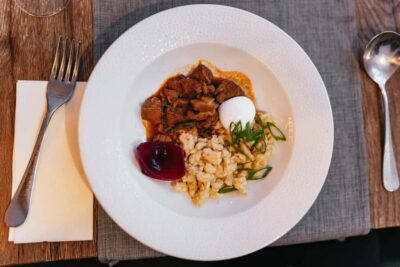 ★ 4.8Budapest Food Walking Tour: Eat, Sip & Explore Like a LocalFrom $731,027 reviews
Budapest Centre Food Tour with 10+ Tastings, Wine & Street FoodFrom $118810 reviews
★ 4.8Budapest Food Walking Tour: Eat, Sip & Explore Like a LocalFrom $731,027 reviews
Budapest Centre Food Tour with 10+ Tastings, Wine & Street FoodFrom $118810 reviews
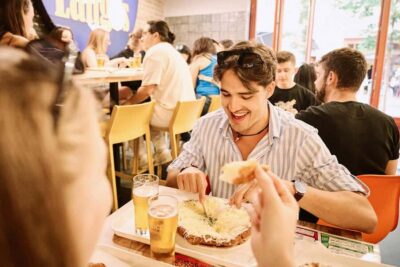 ★ 4.8Budapest Guided Food Walking Tour with Drinks IncludedFrom $69472 reviews
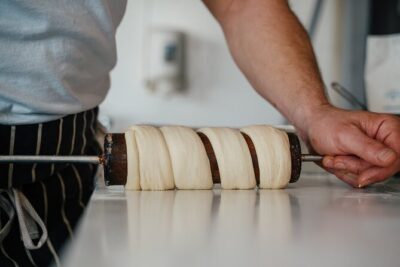 ★ 5.0Budapest Food Tour: Market to Tavern with 14+ Tasters & WinesFrom $76434 reviews
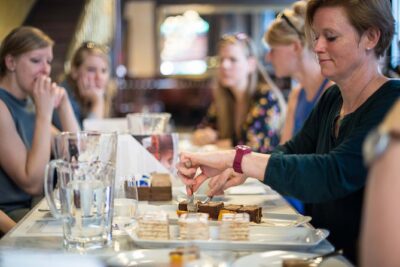 ★ 5.0Budapest Culinary & Wine WalkFrom $120397 reviews
 ★ 4.9Food Tour Market to Tavern: 14+ Tasters & WinesFrom $78375 reviews
 ★ 5.0Budapest Tipsy Food Tour with Wines, Small Group & Local GuideFrom $84234 reviews
Browse the lists this tour appears in