
Reviewed · FOOD & CULINARY TOURS
Budapest: Langos Making Class – Nr. 1 Hungarian Street Food
You can’t fake that langos crunch. This hands-on class shows you how Hungarian street food really works, from dough to frying to classic toppings. I love that you knead two kinds of dough from scratch, not just watch. I also like the smooth, professional setup in a proper studio kitchen near Oktogon. One thing to consider: it’s not a sit-and-judge-the-food class—your hands will get messy.
Langos is the kind of comfort food that explains Hungarian summer and festival culture fast, because it’s always eaten hot and freshly fried. The best part is that you learn why people top it the way they do, and you taste your own work with a glass of Hungarian wine. The possible drawback: the meal includes dairy (sour cream and cheese) and often bacon, so check your dietary needs before you go.
You’ll leave with more than full confidence—you’ll have a repeatable process for making langos at home, plus ideas for serving it like you’d find in Hungarian restaurants.
In This Review
- Key Things That Make This Langos Class Worth Your Time
- Langos: The Street Food That Explains Hungary Quickly
- Where You Cook in Budapest: Near Oktogon Square, In a Real Studio Kitchen
- The 2-Hour Flow: Welcome, Dough, Toppings, Frying, and Eating
- Classic and Potato Langos Dough: The Hands-On Part You’ll Remember
- Toppings and Choices: From Sour Cream and Cheese to Garlic Cream
- Frying Langos: Crunch, Timing, and Learning Through Doing
- Your Meal Includes Wine and Soft Drinks (Not Just Food)
- What You’ll Learn Beyond the Recipe: Customs and Ingredient Stories
- Price and Value: Is $81 Worth It?
- Who This Langos Class Fits Best (And Who Might Feel Miserable)
- Booking Smart: Timing, Hunger, and What to Bring
- Should You Book This Budapest Langos Making Class?
- FAQ
- How long is the Budapest langos making class?
- Where is the meeting point in Budapest?
- Is this class hands-on or watch-only?
- What food and drinks are included?
- What language is the instruction in?
- Is the class suitable for children?
- What if I need to cancel?
Key Things That Make This Langos Class Worth Your Time
- Two dough types from scratch: classic and potato, so you taste the difference and learn the method.
- Real restaurant-style handling: toppings, dough ideas, and serving habits explained during the cook.
- You fry the langos yourself: timing matters when you want that warm, crunchy exterior.
- Two big langos to eat: not samples—your class output becomes your meal.
- Wine and soft drinks included: 1.5 dl Hungarian wine plus mineral water and soft drinks.
- A central kitchen studio: well-equipped, not a basement setup, near Oktogon Square.
Still hungry? More markets, mains and tavern stops
- Countryside Half-day Gastro-Wine Tour from Budapest Meal & pickup★ 5.0 · 1,450 reviews
- Budapest Food Walking Tour: Eat, Sip & Explore Like a Local★ 4.8 · 1,027 reviews
- Budapest Centre Food Tour with 10+ Tastings, Wine & Street Food★ 5.0 · 810 reviews
- Budapest Guided Food Walking Tour with Drinks Included★ 4.8 · 472 reviews
Langos: The Street Food That Explains Hungary Quickly
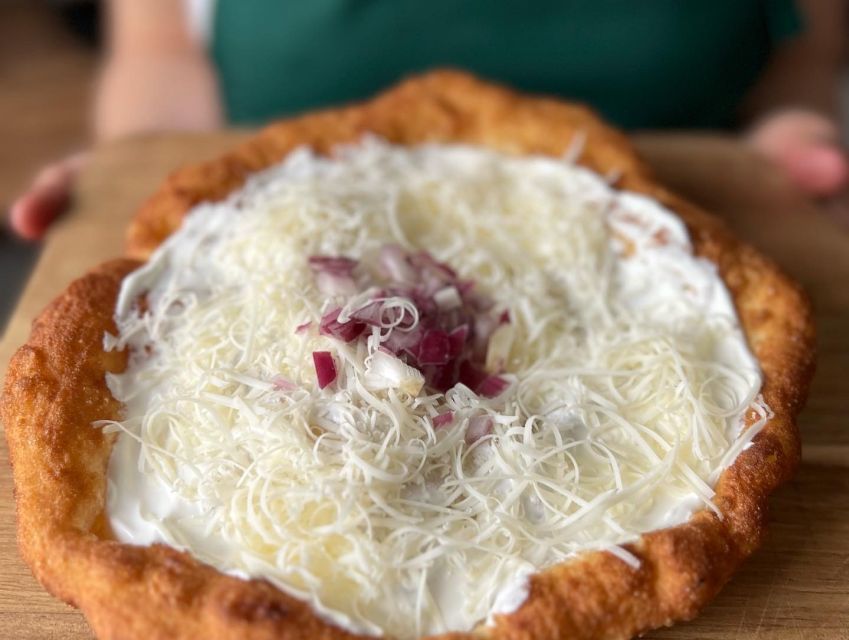
Langos is one of those foods that sounds simple until you see how it’s made well. It’s a deep-fried flatbread, eaten fresh and warm—ideally crunchy on the outside while still satisfying and soft inside. In Hungary, it isn’t just a snack; it’s part of summer nights, festival life, and casual street eating.
The class leans into that reality. You don’t just learn what langos is—you learn why it’s loved. You’ll hear about common topping combos, plus the classic approach that skips toppings and goes straight to garlic cream. Expect ingredients and customs discussions to show you how people choose flavor: sour cream and grated cheese, bacon, paprika, red onion, and other variations depending on the day and the mood.
And yes, you’ll understand the core truth fast: langos is best when it’s hot. That’s why the cooking part matters so much here. If your langos cools, it stops being the thing you came for.
Where You Cook in Budapest: Near Oktogon Square, In a Real Studio Kitchen
Meeting up is straightforward. You’ll join the class in the kitchen studio in central Budapest, near Oktogon Square. The building sits on the corner of Kiraly Street and Csengery Street, and you should use the doorbell when you arrive.
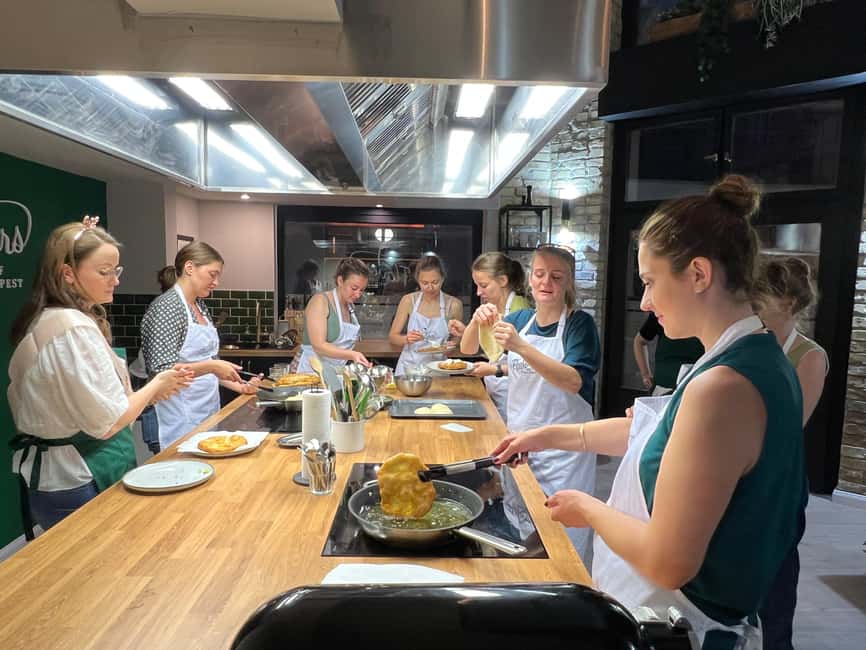
What I like about this setup is practical. It’s not described as a casual pop-up or a basement room. It’s a well-equipped kitchen studio designed for cooking. That matters when you’re learning frying and handling dough, because you want clean workflow, proper tools, and space to move.
If you’re arriving from sightseeing, this location is convenient because you’re not stuck cross-town. You can do a museum or a walk first, then head in hungry and ready to work. Also, since the class is in English, you won’t feel like you’re translating your way through the key steps.
One small tip: wear clothes you don’t mind getting a little dough dust or grease on. You’ll be making dough and then frying it—this is not an outfit-saving experience.
The 2-Hour Flow: Welcome, Dough, Toppings, Frying, and Eating
The class runs for about 2 hours, and the rhythm is built to keep you moving. You’ll start with an arrival moment: introduction and a welcome drink. Then you shift quickly into making.
A typical sequence looks like this:
- Arrival, introduction, welcome drink
- Make the dough and toppings
- Learn about ingredients, versions, and the customs (with interesting stories)
- Fry the langos
- Eat together
This structure is exactly what you want from a street-food class. You get an early setup that tells you what you’re doing and why. Then you build and cook while the concepts are still fresh. Finally, you sit down and eat what you made, which is how you actually lock in the method.
The biggest benefit of this pacing is momentum. You’re not waiting around for long explanations, and you’re not overwhelmed with cooking tricks all at once. You also get time to taste, compare, and adjust your understanding of dough and toppings.
Classic and Potato Langos Dough: The Hands-On Part You’ll Remember
This is the heart of the class: 100% hands-on cooking where you prepare two kinds of dough from scratch—classic and potato.
Why that matters: potato dough can change everything about texture and feel. While the class details the process and gives you recipes in English, the point for you as a traveler is bigger than one recipe. You’re learning dough behavior—how it handles, how it behaves before frying, and what kind of result it tends to produce.
During the dough and topping stage, you’ll also learn practical ideas for different langos versions and how to serve them the same way you’d see in restaurants. That means you’re picking up method plus presentation, not just cooking.
You’ll get all the ingredients, kitchen pots, equipment, and an apron, so you’re not scrambling for cooking basics. You’re also getting kitchen tips and tricks throughout, and the recipes are provided in English, which keeps the learning curve realistic during a short class.
If you love food as a craft, this is where the value really shows. You leave with a process, not just a full stomach.
More Budapest plates and glasses worth the walk


Toppings and Choices: From Sour Cream and Cheese to Garlic Cream
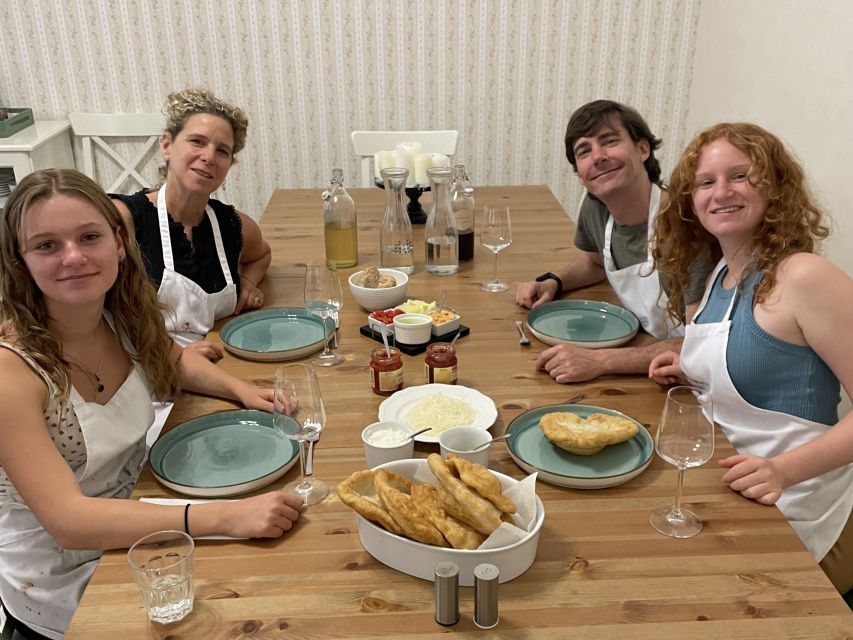
Langos toppings can be as simple or as dramatic as you want. The class works with a set approach so you can taste differences without getting lost in options.
You’ll learn about common topping combinations that include sour cream and grated cheese, bacon, paprika, and red onion. You’ll also cover the most popular “classic Hungarian” way some people eat it: without heavier toppings, just brushed with garlic cream.
Here’s what I think is useful for you: you’ll understand that toppings aren’t random. They’re part of the cultural pattern of what people expect while eating fresh fried food. Sour cream adds tang and cooling contrast to hot bread. Paprika brings a recognizable Hungarian flavor profile. Bacon and cheese turn it into a full, satisfying snack.
The class includes two big langos with different toppings. This is important because it gives you a direct comparison on your plate. You’re not just reading about toppings—you’re tasting them right after they come off the heat, while the bread is still doing its best crunchy thing.
Frying Langos: Crunch, Timing, and Learning Through Doing
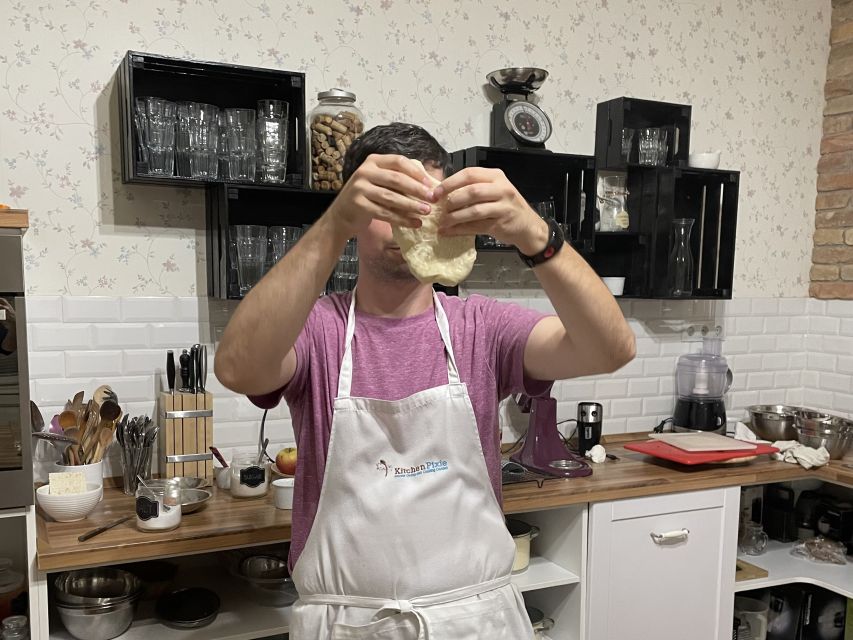
Deep-frying can look easy from the street. Up close, it’s all timing and heat control.
During the frying portion, you’ll actually fry the langos yourself. That part is a big deal for two reasons. First, you understand why the bread needs to be fresh and hot at serving time. Second, you learn how small handling differences can affect the final texture.
Even with strong guidance, this is still cooking. You’ll feel the heat. You’ll see how the dough changes as it fries. And you’ll learn the moment when it’s ready to take out—because that moment affects crunch and overall enjoyment.
The class also includes plenty of ingredient and version context before the frying step. That way, when you’re doing the frying, you’re not guessing what you’re trying to produce. You know what “good langos” should feel like.
Practical advice: be ready to follow instructions closely, and don’t multitask with your phone. Stay focused. The goal isn’t perfection for a photo; it’s good food that’s actually delicious right away.
Your Meal Includes Wine and Soft Drinks (Not Just Food)
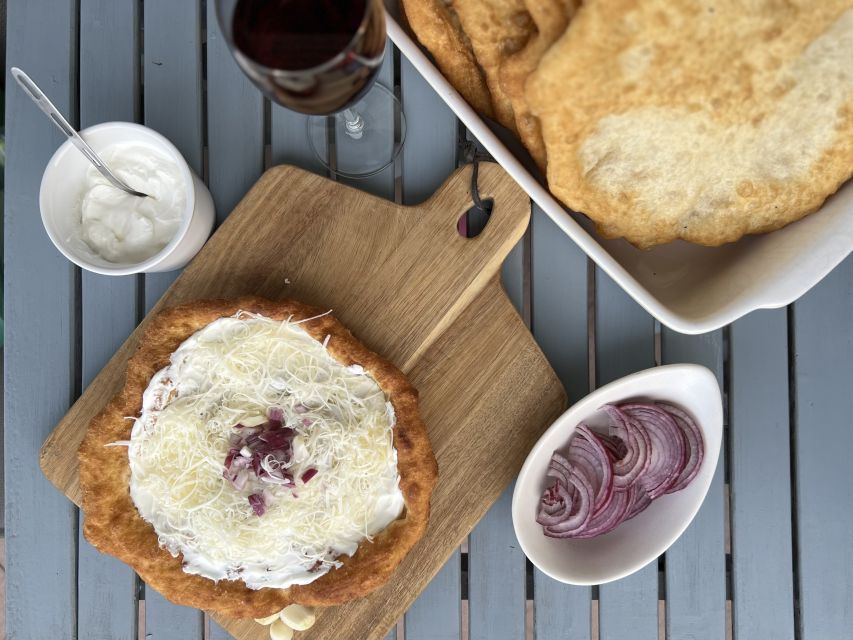
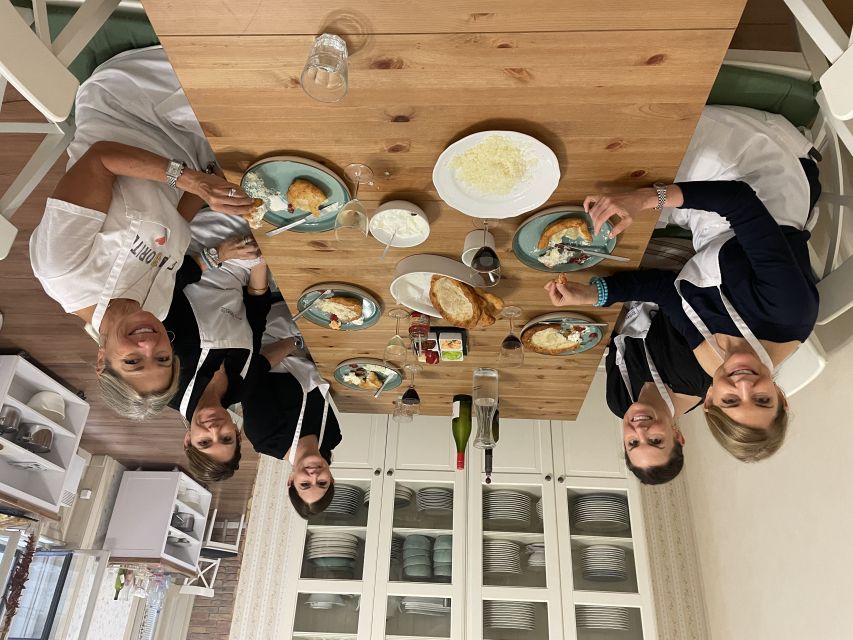
This class doesn’t stop at cooking. When you finish frying, you sit down and eat together.
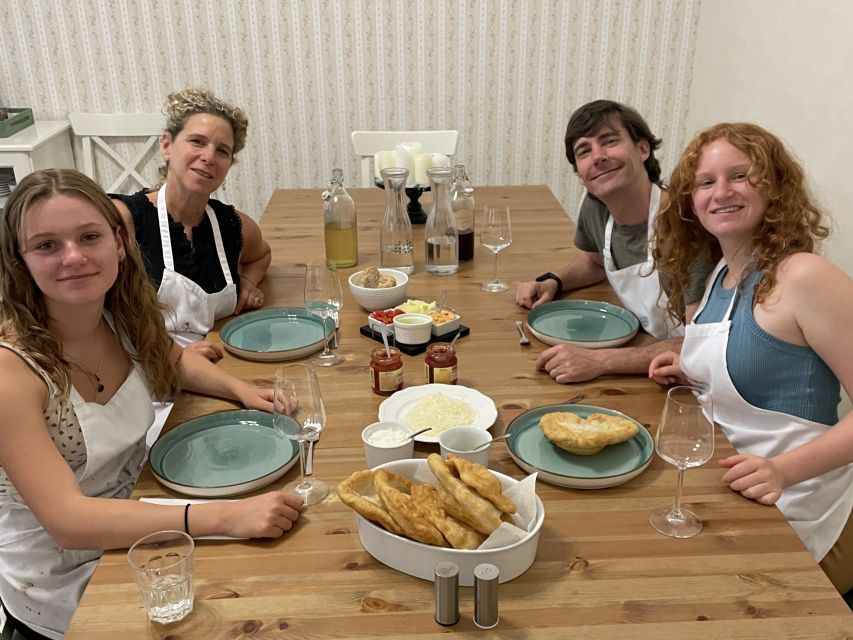
You’ll have two kind of big langos, each with different toppings. That’s your meal portion, not just a tasting. Alongside it, you get drinks: 1.5 dl Hungarian wine (red or white), plus soft drinks and mineral water.
The wine inclusion also makes sense in context. Hungarian street food is usually eaten in a casual, social way, not like a formal dinner. Getting a glass of wine ties the class closer to the everyday experience: eat hot food, talk, taste, and enjoy the flavors while everything is still warm.
If you don’t want wine, the data doesn’t say there’s an alternative substitution—so it’s worth checking directly when you book, especially if alcohol isn’t your thing.
What You’ll Learn Beyond the Recipe: Customs and Ingredient Stories
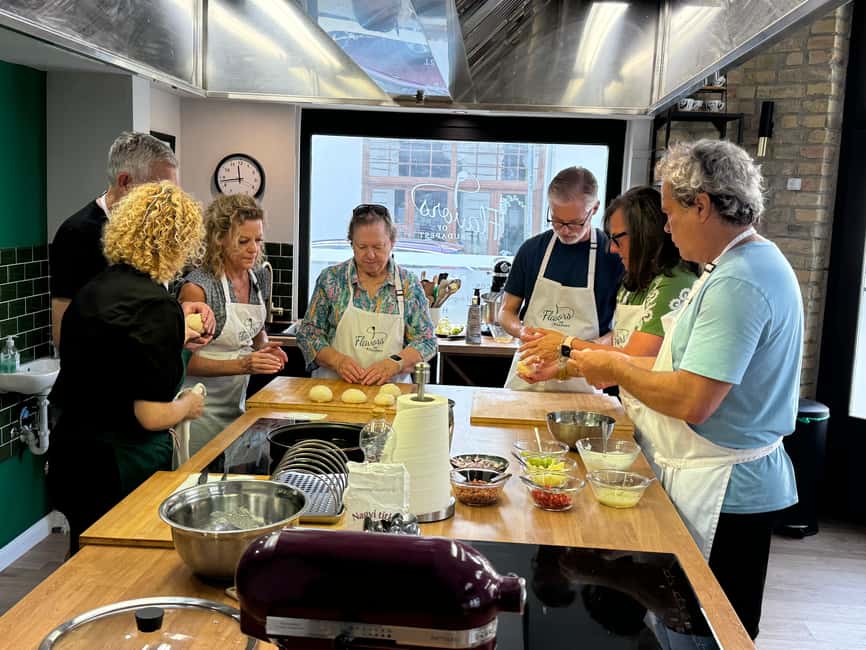
One reason food classes can feel flat is when they only teach technique. This one also adds the cultural layer: you learn about ingredients, different versions, customs related to langos, and some interesting stories.
That can sound like background noise, but in practice it helps you cook with confidence. When you understand why certain toppings are common, you’re more likely to recreate them correctly. And when someone explains customs around a food that shows up at festivals and in warm-weather moments, the recipe becomes part of a larger pattern you recognize while you’re sightseeing in Budapest.
You also get guidance on how to serve the langos in the same way restaurants do. For you as a traveler, that’s useful because it helps you order better later, too. Even if you don’t plan to cook at home right away, you’ll recognize the logic behind what you see on street food stands.
Price and Value: Is $81 Worth It?
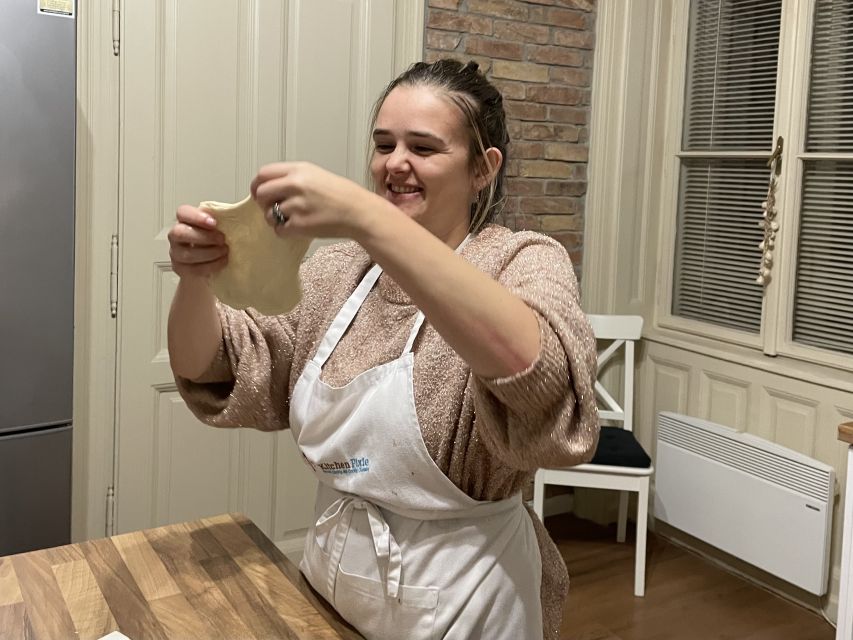
The price is listed at $81 per person, and value comes down to what’s included.
Here’s what you get in return:
- Two kinds of dough from scratch (classic and potato)
- Two big langos with different toppings
- Wine plus other drinks (1.5 dl Hungarian wine, soft drinks, mineral water)
- Ingredients, equipment, apron, and kitchen support
- Recipes in English
- Tips and stories about ingredients and customs
- Cooking in a central, well-equipped studio kitchen
So you’re not paying just for food. You’re paying for instruction, hands-on cooking, ingredients, and the meal itself, served right after frying. In a short 2-hour window, that’s a lot of actual output.
If you compare it to the cost of eating out plus guided instruction, it starts to look more fair—especially because you can take what you learn home. Still, it’s a special-interest activity. If you’re not into cooking or you already know you’ll just want to eat langos and move on, you might prefer a food tasting route instead.
My take: if you like rolling up your sleeves, this price makes sense. If you want a passive, sightseeing-only day, it might feel like too much effort for a quick snack.
Who This Langos Class Fits Best (And Who Might Feel Miserable)
This class suits best if you fall into one of these buckets:
- You love hands-on cooking and want to learn the process, not just consume food.
- You want a cultural food experience that teaches through doing.
- You like warm, fried, saucy comfort foods like langos and want to understand toppings and dough differences.
- You want a short activity that still feels meaningful.
It’s not suitable for children under 10, based on the activity info. Also keep in mind it includes typical ingredients like sour cream, cheese, and sometimes bacon, so people with dietary restrictions should plan carefully.
Another consideration: because it’s frying-based, this class isn’t for anyone who hates grease on their hands or gets stressed in hot, active kitchens. If you’re the type who gets anxious around cooking heat, go slow, follow instructions, and ask for guidance when needed.
Booking Smart: Timing, Hunger, and What to Bring
The class lasts 2 hours, and the schedule depends on starting times you choose. Because it’s in the center of Budapest, you can fit it into an itinerary without too much transit hassle.
For a smoother experience:
- Come hungry. You’ll cook and then eat what you make.
- Wear something comfortable and washable-ish.
- If you have dietary needs, message ahead. The class data doesn’t list allergy options, but you can ask what ingredients are used in the dough and toppings.
You’ll use the doorbell at the meeting building. That’s it—no complicated arrival rituals described. Just show up a few minutes early, get oriented, and you’ll be cooking fast.
Should You Book This Budapest Langos Making Class?
I’d book it if you want more than a quick street-food bite. This is a compact, practical cooking lesson that teaches you two dough styles, gets you to fry and eat two big langos, and adds the cultural context of how Hungarians actually think about this food. The central studio kitchen and the fact that it’s well organized and professionally presented makes it easier to enjoy, even if you don’t cook often.
I wouldn’t book it if you’re only in Budapest for a light taste and you hate cooking tasks. At $81, you’re paying for the hands-on experience, not for a casual stroll-and-snack.
If you do want to learn street food properly—and eat it hot right after frying—this class is a strong choice.
FAQ
How long is the Budapest langos making class?
The class lasts about 2 hours.
Where is the meeting point in Budapest?
You meet in the kitchen studio near Oktogon Square, in a building on the corner of Kiraly Street and Csengery Street. Use the doorbell when you arrive.
Is this class hands-on or watch-only?
It’s 100% hands-on. You prepare two kinds of dough from scratch (classic and potato), then fry the langos and eat them.
What food and drinks are included?
You’ll make and eat two large langos with different toppings. Drinks included are 1.5 dl Hungarian wine (red or white), soft drinks, and mineral water.
What language is the instruction in?
The instructor teaches in English, and the recipes are also provided in English.
Is the class suitable for children?
It’s not suitable for children under 10 years old.
What if I need to cancel?
You can cancel up to 24 hours in advance for a full refund. The listing also offers a reserve now, pay later option.
Eat Your Way Round Budapest




More Tour Reviews in Budapest





Eat Budapest: More Food Walks




Just Added: More Budapest Reviews
- Sightseeing flight over Budapest
★ 5.0 · 3 reviews - Budapest: Walking Tour with Chimney Cake & Polaroid Photos
★ 5.0 · 3 reviews - Self Guided Tour In Budapest With 100 Captivating Audio Stories
★ 5.0 · 3 reviews - Budapest Art Nouveau Walking Tour
★ 5.0 · 3 reviews - Hungary today: a no-taboo conversation
★ 5.0 · 3 reviews
Food & Culinary Tours, compared.
 ★ 5.0Countryside Half-day Gastro-Wine Tour from Budapest Meal & pickupFrom $991,450 reviews
 ★ 4.8Budapest Food Walking Tour: Eat, Sip & Explore Like a LocalFrom $731,027 reviews
Budapest Centre Food Tour with 10+ Tastings, Wine & Street FoodFrom $118810 reviews
★ 4.8Budapest Food Walking Tour: Eat, Sip & Explore Like a LocalFrom $731,027 reviews
Budapest Centre Food Tour with 10+ Tastings, Wine & Street FoodFrom $118810 reviews
 ★ 4.8Budapest Guided Food Walking Tour with Drinks IncludedFrom $69472 reviews
 ★ 5.0Budapest Food Tour: Market to Tavern with 14+ Tasters & WinesFrom $76434 reviews
 ★ 5.0Budapest Culinary & Wine WalkFrom $120397 reviews
 ★ 4.9Food Tour Market to Tavern: 14+ Tasters & WinesFrom $78375 reviews
 ★ 5.0Budapest Tipsy Food Tour with Wines, Small Group & Local GuideFrom $84234 reviews
Browse the lists this tour appears in