
Reviewed · BUDA CASTLE & FISHERMAN'S BASTION
Budapest: Hiking Tour in the Buda Hills, Hármashatár Hill
A day hike in Budapest that feels like it’s already countryside. This route up Hármashatár Hill threads medieval leftovers, rocky viewpoints, and the Cave of Tábor Hill—all with a live English guide and a city-close finish in the Hűvösvölgy valley.
I love that it mixes tough walking with real payoff: the royal hunting castle ruins area plus multiple lookout spots means you’re earning views, not just passing time. I also like how much history you get in plain language as you go, guided by Lilla’s focus on both natural sights and local stories.
One thing to consider: this is not a stroll. With 745 m elevation over 16 km and several ups/downs, you’ll need solid stamina and good footwear, and weather can nudge the plan.
Key highlights at a glance
- 16 km route with about 745 m elevation and repeated climbs/descents across 11 peaks
- Ruins of a medieval Royal Hunting Castle in Nyék, tied to a game reserve past
- Rocky viewpoints including Árpád Lookout, plus Lion Rock
- The Cave of Tábor Hill formed in dolomite rock
- Stops built for nature, including a bird-watching shelter
- Strong guide factor: Lilla organizes the trek well and shares history along the way
In This Review
- Why the Buda Hills Hike Feels Different From a Typical City Excursion
- Meeting at Húvösvölgyi út 78 and Getting Home Without Stress
- The Big Picture: 16 km, 745 m, and Why the “11 Peaks” Matter
- Nyék’s Medieval Royal Hunting Castle Ruins: History You Can Actually Walk Through
- Apáthy Rock, Árpád Lookout, and Lion Rock: Viewpoints That Pay Off
- Kecske Hill Stone Pit and the Bird-Watching Shelter: Nature Stops With Character
- Tábor Hill Cave in Dolomite Rock: A True Geology Moment
- Gückler Károly Lookout Tower and Gercse’s Medieval Church: Closing With Culture
- What You Get From Lilla: History in Motion, Not a Lecture
- Price and Value: Why This $29 Day Works for a Guided 7 Hours
- What to Pack for a 9 a.m. Start in the Buda Hills
- Who This Hike Fits Best (and Who Should Skip It)
- Should You Book This Budapest Buda Hills Hike?
- FAQ
- Where does the hike start?
- How do I get to the meeting point by public transport?
- What is the total distance and elevation gain?
- What time does the hike end?
- What major sights are included?
- Is the tour good for beginners?
- What should I bring for the day?
- Does the itinerary change with weather?
- Is the tour wheelchair accessible?
- Is the guide English-speaking?
Why the Buda Hills Hike Feels Different From a Typical City Excursion

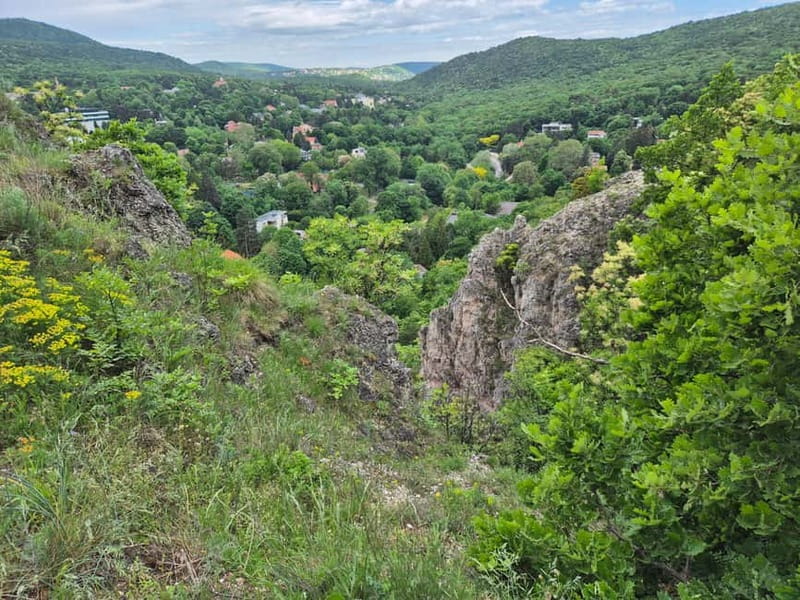
Budapest can trick you. From the center, you think you’re doing “a little outing.” But the moment you’re working your way into the Buda Hills, the air and pace shift fast. This hike is designed for that exact feeling: you stay near the city, yet you’re walking in proper hills and valleys instead of just sightseeing from one viewpoint to another.
The route is also built around variety. You’re not only doing views—you also hit historical remnants (a medieval hunting castle area and a medieval church), a geology stop (dolomite cave), and even a sports-flying history chat near a glider airport viewpoint. That mix is what makes a one-day hike worth planning for.
And you get a practical benefit: because the hike starts and ends in places with public transit, you don’t need a car to make the day work.
More of Castle Hill, turrets and the river below
- Budapest: Buda Castle Cave Tour★ 4.7 · 5,677 reviews
- Budapest: Buda Castle District Vampires and Myths Night Tour★ 4.6 · 3,830 reviews
- Budapest: Buda Castle Walk with Saint Stephen’s Hall★ 4.5 · 3,012 reviews
- Budapest: Buda Castle District Walking Tour★ 4.6 · 2,108 reviews
Meeting at Húvösvölgyi út 78 and Getting Home Without Stress
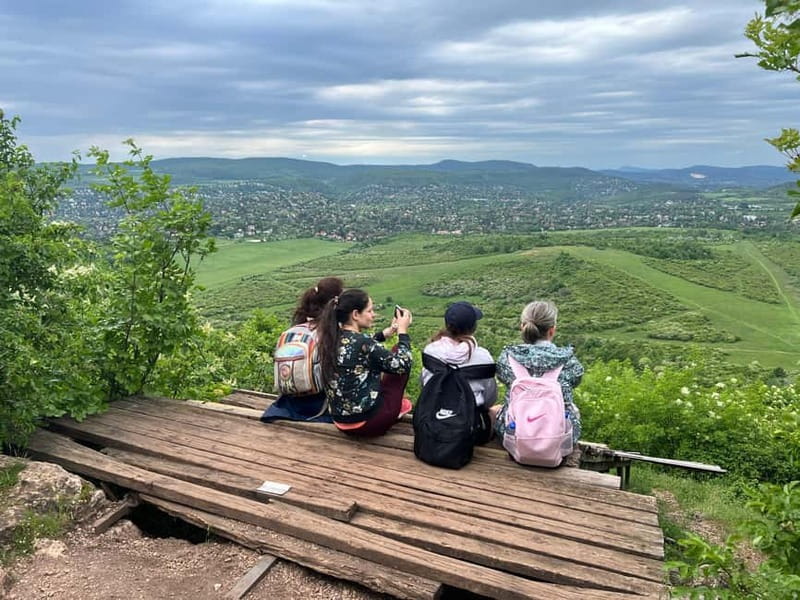
The meeting point is at Húvösvölgyi út 78 in Budapest’s 2nd district, with the start time set for 9 a.m.. Getting there is straightforward with public transport.
From the city, you can reach it using:
- Bus 29 or 129 to Szerb Antal utca
- Tram 56, 56A, 59B, or 61 to Nagyhíd
By the end, you finish around 5 p.m. at the Hűvösvölgy valley bus terminal (your exact finish time depends on the group’s pace). From there, you can return to the city center with the same buses/trams, and there’s also a shortcut if you parked nearby—about four stops to your car.
I like this kind of setup. It means you can show up for a hiking day without burning your time on logistics.
The Big Picture: 16 km, 745 m, and Why the “11 Peaks” Matter
This hike covers 16 km and climbs roughly 745 m. The route crosses 11 peaks along the way, within the broader Hármashatár Hill massif, which has 24 peaks in total.
Here’s the key point for planning: you don’t just climb once. You go up hills and down valleys several times. That “bounce” is what makes the elevation feel bigger than you might expect on paper.
So how fit do you need to be? The hike is clearly labeled as requiring good physical condition. If your idea of a good day is low-effort walking, this won’t match it. But if you can handle a long walk with steep sections, it’s a very doable challenge—and it’s close enough to Budapest that it feels like a real escape instead of a major expedition.
Nyék’s Medieval Royal Hunting Castle Ruins: History You Can Actually Walk Through
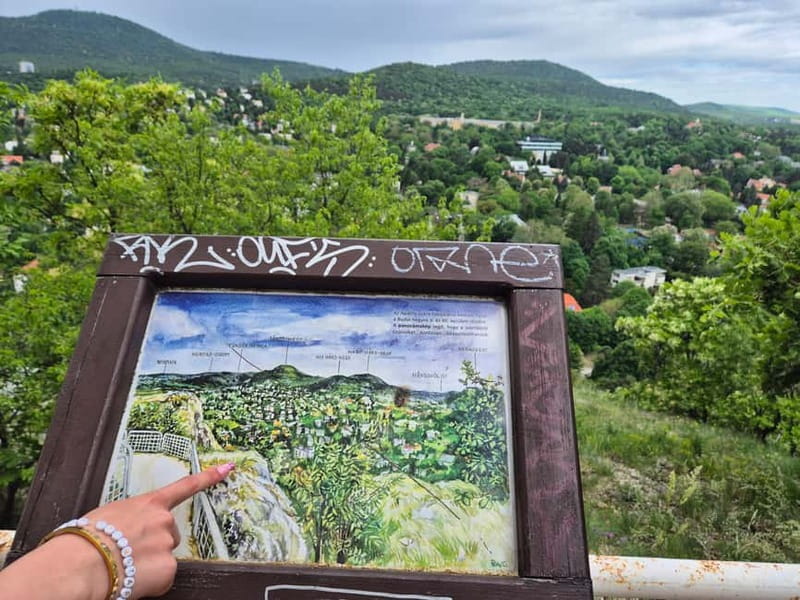
The trail begins in the northeast part of the Buda Hills with the ruins of a Royal Hunting Castle in Nyék. This is more than scenery. It ties into a medieval hunting tradition and the idea of a game reserve—so you’re walking through an area that once had a purpose beyond just living there.
What I like about starting with ruins: it sets context immediately. You’re not waiting until the end for the “story part.” As you move, you can look at the terrain and think about how people used these ridges and clearings for hunting and access.
One of the best parts of a guide-led hike is when the history doesn’t feel like a textbook read. With Lilla, the focus is on natural and historical sights during the hike, and that helps you connect what you see with why it mattered.
Apáthy Rock, Árpád Lookout, and Lion Rock: Viewpoints That Pay Off
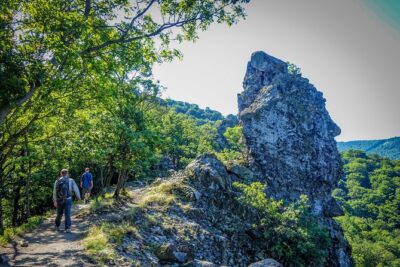
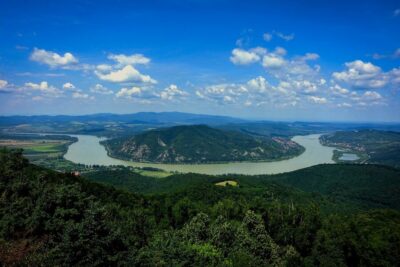
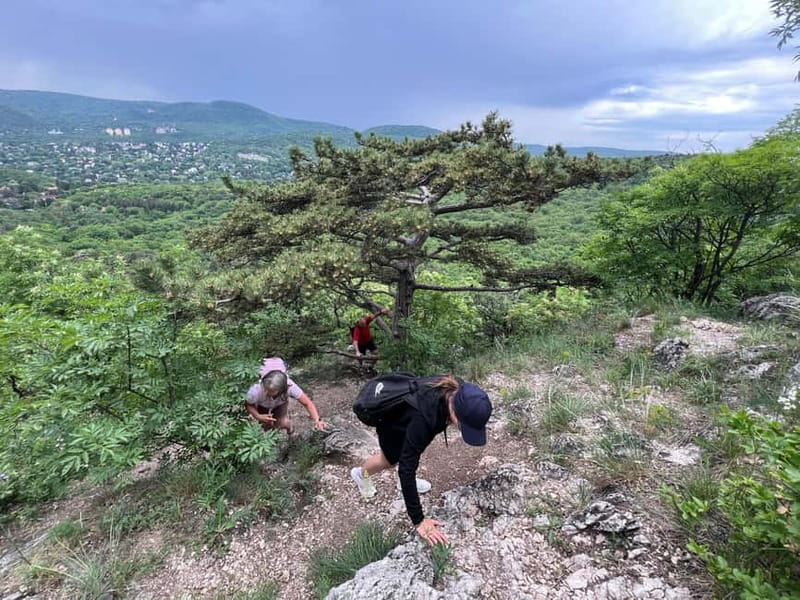
As you climb away from the Nyék area, you hit a sequence of rocky high points:
- Apáthy Rock
- Árpád Lookout
- Lion Rock
These stops matter because they break the walk into chunks. You get repeated moments to catch your breath, take in the wider panorama, and refocus before the next section of uphill grind.
The route’s design also helps you pace yourself. Instead of one long continuous climb, you get natural pauses. That’s one reason many hikers find this kind of day hike satisfying: effort builds, then you earn a payoff, then you go again.
If you’re the type who likes photos, you’ll want to keep your camera ready—these are the points where you’ll notice how close the hills can feel to the city, even while you’re in a quieter world.
More trails up in the Buda hills
Kecske Hill Stone Pit and the Bird-Watching Shelter: Nature Stops With Character
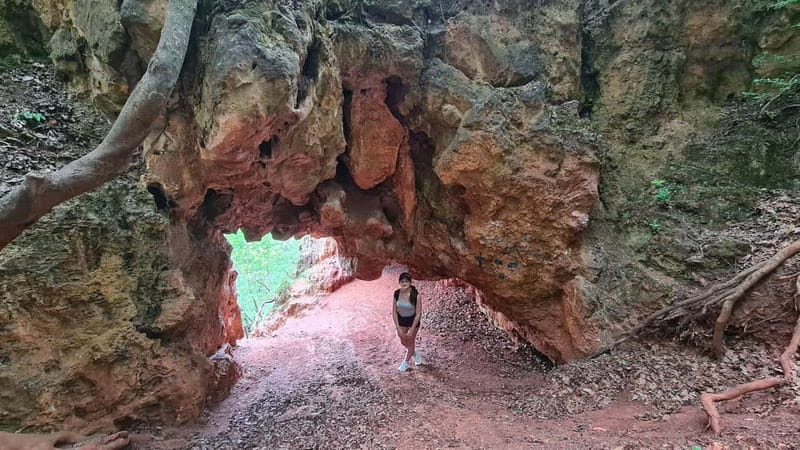
Next comes a geology-and-nature moment: Kecske Hill Stone Pit. You’ll climb up a rocky hillside and then descend into an abandoned stone pit area. This kind of spot changes the feel of the hike. The terrain turns more rugged and “worked,” like you’re walking through the traces of human activity in the hills.
Then you get a bird-watching shelter stop. This is one of those small additions that makes a difference. If you enjoy noticing wildlife, you’ll likely appreciate this break from pure effort.
In practical terms, these stops help with rhythm. The stone pit gives you variety in footing and terrain. The bird-watching shelter gives you a moment to slow down, observe, and reset before the next segment.
Tábor Hill Cave in Dolomite Rock: A True Geology Moment
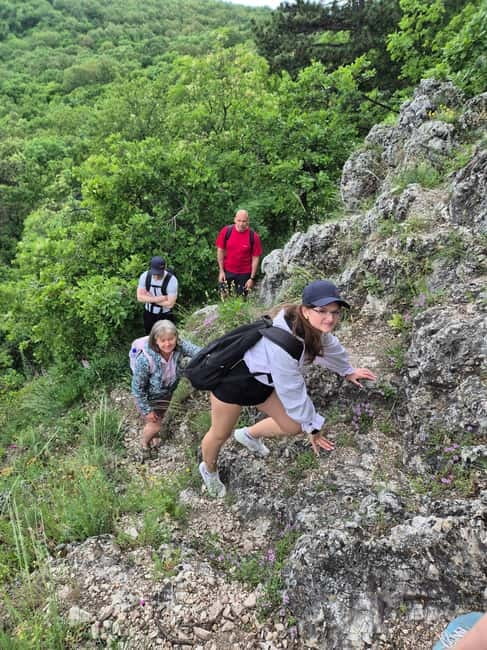
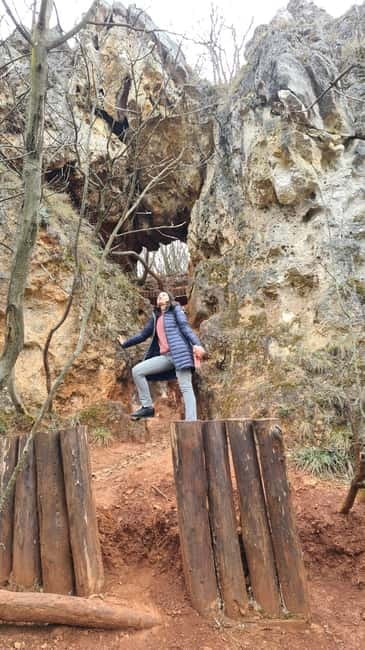
One of the standout highlights is the Cave of Tábor Hill, which formed in dolomite rock. This is a strong “why” for joining a guided hike: the walk becomes a way to reach a specific geological feature, not just another viewpoint stop.
Dolomite caves aren’t just interesting because they look cool. They’re a clue about how the region’s rock and water history shaped what you can see today. And because the cave is part of an active hiking route, you experience it in context—after climbing, after switching terrain types, after you’ve already been paying attention to the land.
To enjoy this part, plan around one thing: footwear matters. The hike is described as requiring good physical condition and comfortable shoes, and on a route like this, the cave stop is exactly where you’ll want stable traction so you don’t rush.
Gückler Károly Lookout Tower and Gercse’s Medieval Church: Closing With Culture
After the cave, the route continues to:
- Gückler Károly Lookout tower
- Medieval Church of Gercse
- Final descent back toward Hűvösvölgy
The lookout tower is the “last big view” feeling. It’s a good way to transition from the cave’s geology back into wide-open scenery. Towers also tend to reward the hiker brain—by the time you reach it, you’ve earned that sense of location and scale.
Then comes the Medieval Church of Gercse. This is a nice contrast to the rocky parts: a cultural site that brings the day full circle, from medieval hunting land to a medieval religious landmark.
It’s a strong finish pattern: nature and geology earlier, viewpoints in the middle, and a settled historical stop near the end—so you leave with more than just sore legs.
What You Get From Lilla: History in Motion, Not a Lecture
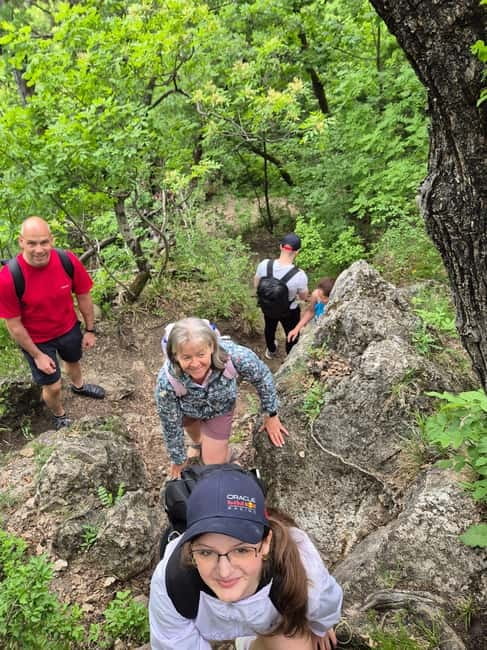
The guide experience is a big part of why this hike gets strong marks.
Lilla is repeatedly highlighted for organizing the trek well and for telling interesting stories as you move. That matters because this kind of route has enough going on—rocks, elevation, cave geology, medieval sites—so the guide’s job is to connect it all without turning it into a long talk.
From the reviews, the most praised elements are:
- Her ability to point out things along the way
- Clear, engaging historical context
- A thoughtful approach that makes a sporty trek feel manageable and enjoyable
I’ll also note a caution from a lower rating: planning and route choices don’t always feel perfect when weather or timing changes. That’s not unusual on mountain terrain near a city. When skies shift, a route may adjust, and timing can feel different depending on group pacing.
My practical advice: come ready for weather changes, and if you have timing needs, ask Lilla early how she’s thinking about pacing for your group.
Price and Value: Why This $29 Day Works for a Guided 7 Hours
At $29 per person for about 7 hours, this is one of those deals that makes sense if you want value without luxury.
Here’s where the cost feels justified:
- You’re getting an English-speaking live guide
- The day includes multiple distinct highlights: castle ruins, lookouts, a stone pit, a dolomite cave, and historical church territory
- The hiking distance and elevation are substantial, so you get real “time on feet” rather than a half-walk with a few stops
Even without transportation included, the meeting point is transit-friendly. That lowers the hidden cost of getting out there.
This is the kind of price where you should compare it to the alternative: if you tried to DIY all the specific highlights, you’d likely spend time figuring out access while missing the history and context that a guide provides.
What to Pack for a 9 a.m. Start in the Buda Hills
This hike asks you to bring your own supplies for the whole day. Plan like you’ll be out from morning into late afternoon.
Bring:
- Comfortable shoes
- Hat
- Food and drinks (for the full day)
- Sunscreen and water
- Rain gear (a raincoat helps)
If the forecast is mixed, treat it like a normal European hiking day: expect quick changes. A cap and sunscreen are useful even when you think it might be cool. And rain gear isn’t just for comfort—it also helps you feel more confident on rocky footing.
Also, one rule to remember: no smoking.
Who This Hike Fits Best (and Who Should Skip It)
This one is clearly aimed at people who want a serious walk.
Good fit if you:
- Like hikes with repeated ups and downs
- Want historical context while you hike
- Enjoy nature stops like bird-watching areas
- Can handle 16 km without needing frequent long breaks
Not a great match if you:
- Have low fitness or expect an easy stroll
- Use a wheelchair (it’s not suitable)
This is ideal for a short Budapest visit too. You can experience hills, caves, and medieval sites without leaving the city’s public-transit orbit.
Should You Book This Budapest Buda Hills Hike?
If you want a guided day that mixes challenge, geology (dolomite cave), and medieval sites without complicated planning, I’d book it—especially if you’re already the type who enjoys walking days and stops at viewpoints.
Book with confidence if you:
- Have decent stamina
- Bring water and snacks
- Wear proper shoes
- Are okay with the possibility that the route adjusts a bit with weather and timing
Skip it if you want something gentle or mostly flat. With 745 m of elevation and several terrain shifts, this is built to feel like work—in the good way.
FAQ
Where does the hike start?
The meeting point is at Húvösvölgyi út 78, Budapest (2nd district) at 9 a.m.
How do I get to the meeting point by public transport?
You can use bus 29 or 129 to Szerb Antal utca or tram 56, 56A, 59B, or 61 to Nagyhíd.
What is the total distance and elevation gain?
The hike is 16 km with about 745 m of elevation.
What time does the hike end?
You’ll finish around 5 p.m. at the Hűvösvölgy valley bus terminal, depending on the group pace.
What major sights are included?
The route includes ruins of a Royal Hunting Castle in Nyék, Árpád Lookout, Lion Rock, Kecske Hill stone pit, a bird-watching shelter, the Cave of Tábor Hill (dolomite rock), Gückler Károly Lookout tower, and the Medieval Church of Gercse.
Is the tour good for beginners?
It requires good physical condition. It is not suitable for people with low level of fitness, and it’s not a low-effort hike.
What should I bring for the day?
Bring comfortable shoes, food, drinks, water, hat, sunscreen, and rain gear.
Does the itinerary change with weather?
Yes. The program may change depending on weather conditions.
Is the tour wheelchair accessible?
No. It is not suitable for wheelchair users.
Is the guide English-speaking?
Yes, the live guide provides the tour in English.
More Tours in Budapest





More Tour Reviews in Budapest






More of Castle Hill



Just Added: More Budapest Reviews
- Sightseeing flight over Budapest
★ 5.0 · 3 reviews - Budapest: Walking Tour with Chimney Cake & Polaroid Photos
★ 5.0 · 3 reviews - Self Guided Tour In Budapest With 100 Captivating Audio Stories
★ 5.0 · 3 reviews - Budapest Art Nouveau Walking Tour
★ 5.0 · 3 reviews - Hungary today: a no-taboo conversation
★ 5.0 · 3 reviews
Buda Castle & Fisherman's Bastion, compared.
 ★ 4.7Buda Castle Cave TourFrom $195,677 reviews
 ★ 4.6Buda Castle District Vampires and Myths Night TourFrom $233,830 reviews
 ★ 4.6Buda Castle District Walking TourFrom $142,108 reviews
 ★ 4.33-Hour Grand City Tour and Castle WalkFrom $491,437 reviews
 ★ 4.5Buda Castle District Dark History, Legends and Vampire Night TourFrom $211,240 reviews
 ★ 4.9Buda Castle District Walking Tour with a HistorianFrom $63867 reviews
 ★ 4.6Classical Music Concerts in Matthias ChurchFrom $70792 reviews
 ★ 4.6Matthias Church Entry TicketFrom $25787 reviews
Browse the lists this tour appears in