
Reviewed · FOOD & CULINARY TOURS
Budapest: Guided Street Food Tour with Sweet Wine
Budapest’s food trail starts with a synagogue and ends with a full stomach. This 150-minute street food and sweet wine tour pairs local history with practical bites: I especially like the way you get District 7 context first, then move through four real eateries with priority service. One thing to think about before you go: the menu leans traditional, and while vegetarian options exist, there is no gluten-free or vegan accommodation.
I also like that the guide doesn’t just list dishes. You learn why Hungarian food and Jewish culture are tangled together, and you get insider hints for what to do next in the Jewish Quarter after you’re done eating.
The only real drawback for some people is alcohol pacing. You’ll get three alcoholic drinks plus shots, so if you’re not comfortable with wine + spirits, you’ll want to go in with a light approach and plan to slow down mid-tour.
In This Review
- Key highlights to watch for
- Kazinczy Street Synagogue: the why behind Hungarian-Jewish food
- District VII walk: nightlife streets plus a smart eating route
- Street-food stop: soup and Lángos where you learn the basics fast
- Four eateries in one night: from classic comfort to Jewish-Hungarian pastry
- The sweet wine and Pálinka part: alcohol that actually has a story
- Timing and group size: 150 minutes that don’t feel rushed
- Vegetarian options and diet limits: plan ahead, especially for gluten and vegan
- Price and value at $81: what you’re really paying for
- Who this tour suits best (and who should skip it)
- The guide factor: why names like Laura and Eszti matter
- Should you book the Budapest Street Food Tour with Sweet Wine?
- FAQ
- Where is the meeting point?
- How long is the tour?
- Is the tour in English?
- What food will I try?
- How many places will we eat at?
- What drinks are included?
- Are vegetarian options available?
- Can the tour accommodate gluten-free or vegan diets?
- Do I need to bring anything?
Key highlights to watch for
- Kazinczy Street Synagogue start that sets the Jewish food context before you eat
- District 7 walk showing the bohemian nightlife vibe in both gritty and glamorous corners
- Street-food hits like Lángos and soup where you learn what to order and why
- Priority entry at four eateries so you’re not stuck waiting while hungry
- Tokaji sweet wine, Pálinka, beer, and shots paired with classic dishes
- Vegetarian options available, with fewer choices if you avoid certain ingredients
Still hungry? More markets, mains and tavern stops
- Countryside Half-day Gastro-Wine Tour from Budapest Meal & pickup★ 5.0 · 1,450 reviews
- Budapest Food Walking Tour: Eat, Sip & Explore Like a Local★ 4.8 · 1,027 reviews
- Budapest Centre Food Tour with 10+ Tastings, Wine & Street Food★ 5.0 · 810 reviews
- Budapest Guided Food Walking Tour with Drinks Included★ 4.8 · 472 reviews
Kazinczy Street Synagogue: the why behind Hungarian-Jewish food
You meet in front of Kazinczy Street Synagogue, a fitting starting point because Hungarian cuisine here isn’t just about taste—it’s also about community history. A guide walks you through how Jewish culture and tradition influenced what people cooked and how they ate, which makes the later food stops feel connected instead of random.
This start matters because District 7 is more than a place to party. It used to be a Jewish neighborhood, and that background helps you notice the details around you as you walk. You’ll hear enough to understand the big picture without drowning in facts, and you’ll be ready to eat with context instead of guesswork.
The best part is how the tour uses this history to steer your appetite. After that quick introduction, you’re not wondering what’s next or why anyone cares about these dishes.
District VII walk: nightlife streets plus a smart eating route
After the synagogue intro, you head into District 7—Budapest’s former Jewish Quarter, now famous for nightlife and ruin bar culture. The route is designed to show you the contrast people talk about: parts that feel rough and lived-in, plus parts that look polished and playful.
What I like about the walking approach is that it’s paced for eating. You’ll move between stops without the “tight schedule sprint” feeling, and you’ll get time to absorb the area while your next bite is already planned.
A practical tip: wear shoes you trust. District 7 has enough uneven sidewalks and evening foot traffic that you’ll appreciate comfort more than style. Also, expect the group to linger a little at each stop while the guide explains what you’re eating and how locals think about it.
Street-food stop: soup and Lángos where you learn the basics fast
The tour leans into street food for a reason: it’s how locals grab flavor quickly. You’ll start sampling traditional Hungarian street-style bites in the Jewish Quarter atmosphere, and you’ll hear guidance that helps you order confidently.
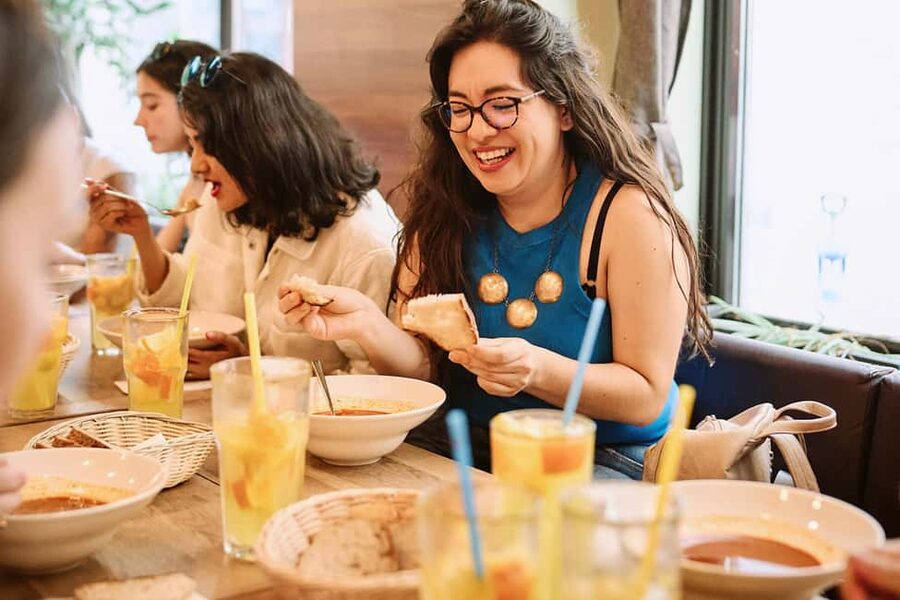
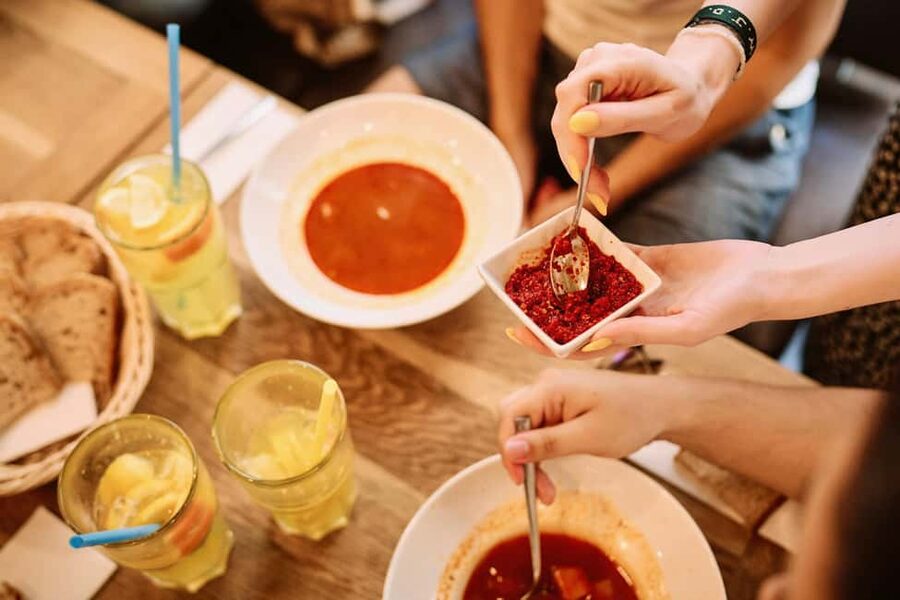
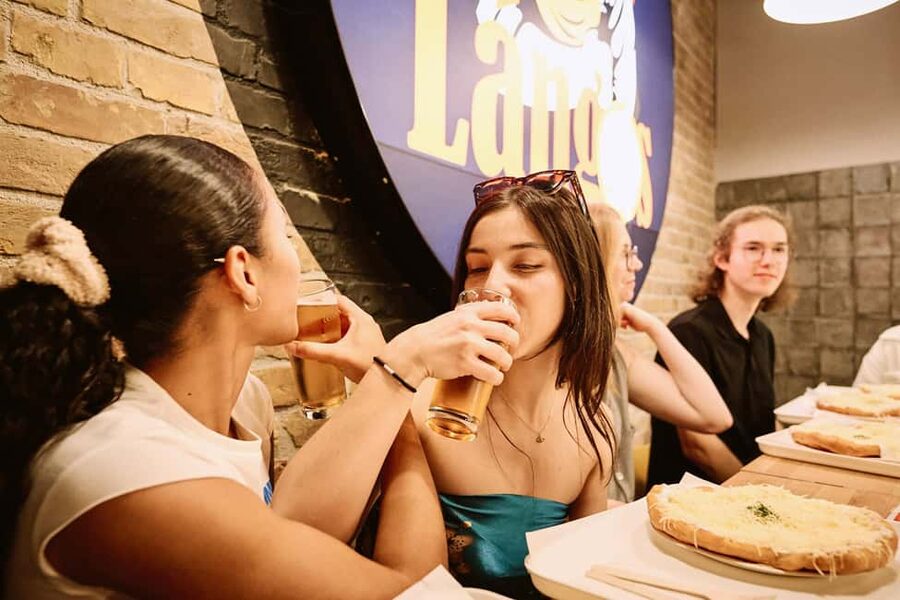
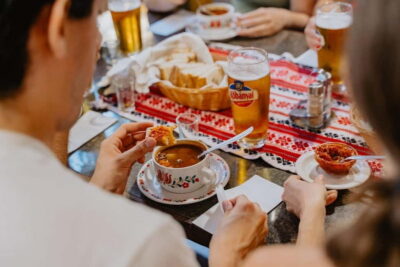
Two items are specifically called out: Hungarian soup and Lángos, a deep-fried flatbread. Even if you’ve had fried bread before, Lángos is its own experience—hot, chewy, and usually topped in ways that make it feel like comfort food with a spark.
This is also where the tour hits its most social vibe. You’re eating while walking energy is in the background, and the guide’s job is to keep the group moving without rushing the fun. If you’re the kind of eater who likes to understand what you’re chewing, this portion does a good job connecting the dish to local habits.
One consideration: street food portions are filling, and the tour keeps going. If you snack beforehand, you may run out of room later, so go in hungry.
Four eateries in one night: from classic comfort to Jewish-Hungarian pastry
You get priority service at four local eateries, which is a big deal for two reasons. First, it reduces waiting. Second, it keeps the tasting rhythm smooth—important when you’re trying multiple foods in a short window.
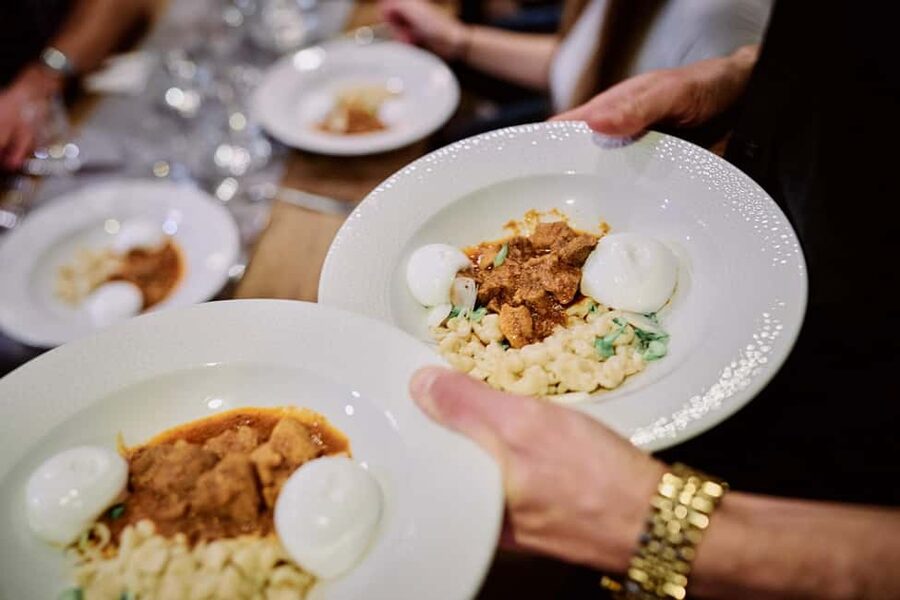
The tour includes a sit-down phase where you try Hungarian classics such as nokedli dumplings and Flódni, a Jewish-Hungarian pastry. Nokedli is one of those dishes that makes Hungary feel real: simple, hearty, and built for comfort. Flódni is different—it reflects the pastry traditions that traveled through Jewish communities, so it’s not the same type of dessert you’ll find everywhere.
If you’re a picky dessert person, keep this in mind. In the experiences I read, Flódni is memorable for many people, but some in groups didn’t love it. The good news is you’re not only eating dessert; the meal structure means you still get solid savory anchors like dumplings and other traditional dishes.
Also watch the way the guide explains each stop. The goal isn’t just to say ingredients. It’s to tell you what the dish is for—how it fits into meals, celebrations, or everyday comfort. That turns tasting into learning, without making the tour feel like homework.
More Budapest plates and glasses worth the walk


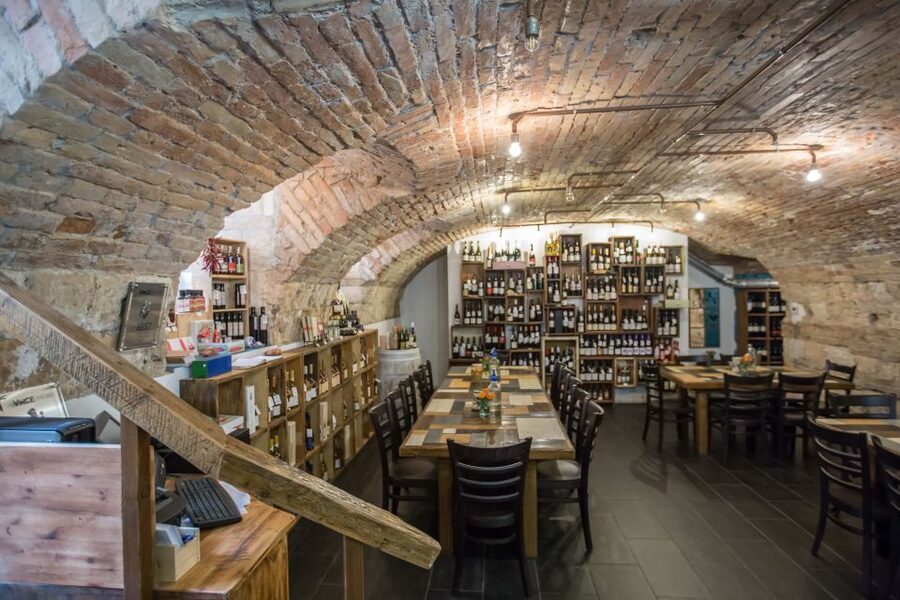
The sweet wine and Pálinka part: alcohol that actually has a story

This is a street food tour, but the drink program is one of the reasons it gets such high marks. You’ll try local options including sweet wine from Tokaji, plus Pálinka and beer, and the group also includes shots as part of the tasting set.
Tokaji sweet wine brings a different flavor profile than most wine you’ll see elsewhere. Even if you’re not a heavy wine drinker, this is the kind of pour that helps you understand why locals treat wine as more than a beverage.
Pálinka is Hungary’s fruit spirit, and it’s usually served with a strong character. The guide’s role here matters: you learn how it fits into Hungarian drinking culture and when it’s typically enjoyed, so it doesn’t feel random or purely party-focused.
A balanced note: if alcohol isn’t your thing, you can still enjoy the food and city walk. But you should know you’ll be offered multiple alcoholic drinks. Go slow at the beginning if you want to stay in control of your pace, and drink water between courses.
Timing and group size: 150 minutes that don’t feel rushed
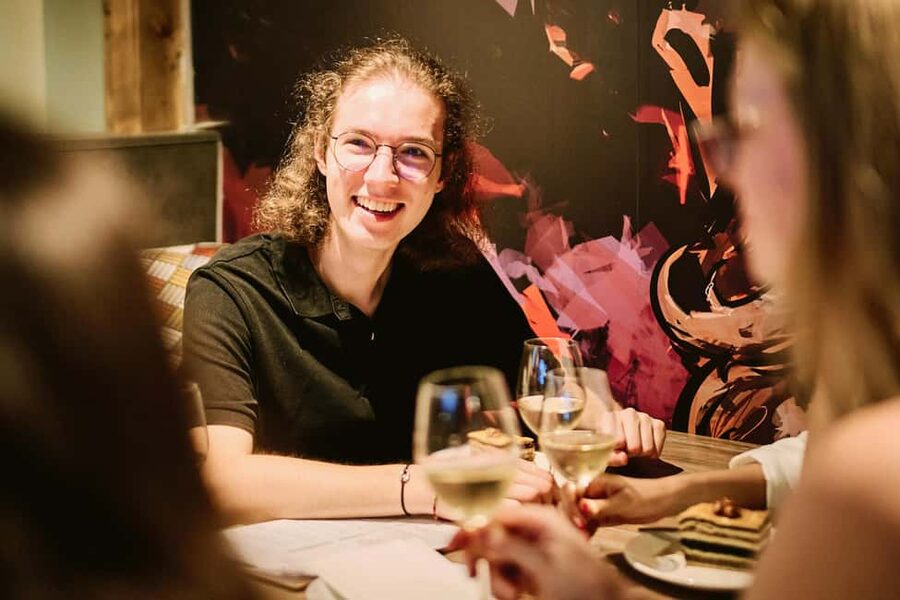
The tour runs about 150 minutes, which is long enough to feel like a real experience but short enough to keep your evening flexible. Many people use it as an early introduction to Budapest—especially before they branch out to ruin bars and nightlife nearby.
Group size can vary. I’ve seen accounts of smaller groups (like 6) and larger ones (around 18). The good sign is that the guide keeps the line moving even when a group is bigger, so you’re still tasting on schedule instead of waiting forever.
Here’s how to make the most of the time:
- Pace yourself so you can enjoy every stop, not just survive it.
- Come hungry, since the set menu adds up fast.
- Use the last stretch for questions. The guide often shares ideas for nearby sights and what to do after the tour.
This timing is also useful if you’re jet-lagged or short on days. It gives you a lot of Budapest in one night without requiring you to plan each meal stop yourself.
Vegetarian options and diet limits: plan ahead, especially for gluten and vegan

Vegetarian options are included, which helps if you avoid meat. Still, the tour specifically notes it can’t accommodate gluten-free or vegan diets right now. That’s the one area where you have to be honest with yourself before booking.
If you’re vegetarian, you’re likely covered, but the vegetarian menu may have fewer choices than the regular set. If you have any other restrictions, the best move is to inform the team in advance so they can guide you to what’s available.
If you’re gluten-free or vegan, this may not be the best fit based on the stated limitation. You can still explore Hungarian food on your own in ways that match your diet, but this particular tasting format may not work.
Price and value at $81: what you’re really paying for

At $81 per person, this tour is in the mid-range for a guided food experience. The value comes from packing a lot into a short time: four eateries, a set tasting route, priority service, and a full drink lineup.
You’re not paying only for the guide. You’re paying for the structure—so you don’t have to research which places will be open, what to order, or how to fit multiple dishes into one evening. Priority service also reduces friction, which is a hidden cost when you self-plan.
Then there’s the drink component. The tour includes three alcoholic drinks plus shots, including sweet Tokaji wine and Pálinka, along with beer. For many visitors, that alone makes the experience feel like more than just eating bread and soup.
In short: if you want a guided night that does the heavy lifting—food selection, timing, and historical context—this price can feel fair. If you only want one or two dishes and you don’t drink, the value may drop for you.
Who this tour suits best (and who should skip it)
This tour is a great match if:
- It’s your first time in Budapest and you want a guided way to learn District 7 quickly
- You want street food plus sit-down classics in one route
- You enjoy local drinks and want to try Tokaji sweet wine and Pálinka in context
- You like meeting people during a walking food night
It might be less ideal if:
- You need gluten-free or vegan options, since those aren’t accommodated here
- You dislike traditional Jewish-Hungarian dishes like Flódni and want a dessert style closer to apple strudel-style pastries (not guaranteed)
- You don’t want alcohol included in the set
Also, if you’re trying to keep your evening very sober or very calm, you may feel alcohol pacing more than food pacing. In that case, you’ll still be fine with an internal strategy—drink slowly and prioritize water.
The guide factor: why names like Laura and Eszti matter
This tour’s strongest ingredient seems to be the guide’s energy and storytelling. In the experiences I read, guides such as Laura, Eszti, Kitti, Nika, Peter, and Ray are repeatedly praised for staying organized, keeping the group engaged, and explaining both food and local context in a way that makes stops feel meaningful.
That matters because the menu is set. The tour lives or dies on how well the guide connects the dots—between synagogue history, Jewish Quarter streets, street food like Lángos, and the sit-down Hungarian classics.
If you’ve been on tours where you just stand in lines, this one feels different because the guide’s job includes turning each bite into a story you can remember later.
Should you book the Budapest Street Food Tour with Sweet Wine?
I think you should book this tour if you want a high-effort, low-planning night. You’ll eat a real range of Hungarian classics, get street food and sit-down meals in the same evening, and try a drink lineup that actually represents Hungary beyond generic beer.
If you have dietary limits, be strict with your checklist: vegetarian is supported, but gluten-free and vegan are not. And if alcohol is a hard no, you should reconsider, since drinks are built into the experience.
If you fall in the sweet spot—hungry, curious, and okay with a few pours—this is one of the easiest ways to start your Budapest trip. You’ll leave with fuller taste buds and a clearer sense of how District 7 became what it is today.
FAQ
Where is the meeting point?
You’ll meet in front of Kazinczy Street Synagogue, and the guide will be holding a yellow Carpe Diem Tours flag.
How long is the tour?
The tour lasts about 150 minutes.
Is the tour in English?
Yes, the live guide speaks English.
What food will I try?
You’ll taste traditional Hungarian street food and sit-down classics, including soup, Lángos, nokedli dumplings, and Flódni.
How many places will we eat at?
The tour includes priority service at four local eateries.
What drinks are included?
You’ll get three alcoholic drinks (including local wine, beer, and shots) plus traditional Hungarian drinks such as sweet wine from Tokaji and Pálinka.
Are vegetarian options available?
Yes, vegetarian options are included, though they may be fewer than on the regular menu.
Can the tour accommodate gluten-free or vegan diets?
No. Gluten-free or vegan accommodations are not currently available.
Do I need to bring anything?
Bring a passport or ID card.
More Tours in Budapest






More Tour Reviews in Budapest






Eat Budapest: More Food Walks





Just Added: More Budapest Reviews
- Sightseeing flight over Budapest
★ 5.0 · 3 reviews - Budapest: Walking Tour with Chimney Cake & Polaroid Photos
★ 5.0 · 3 reviews - Self Guided Tour In Budapest With 100 Captivating Audio Stories
★ 5.0 · 3 reviews - Budapest Art Nouveau Walking Tour
★ 5.0 · 3 reviews - Hungary today: a no-taboo conversation
★ 5.0 · 3 reviews
Food & Culinary Tours, compared.
 ★ 5.0Countryside Half-day Gastro-Wine Tour from Budapest Meal & pickupFrom $991,450 reviews
 ★ 4.8Budapest Food Walking Tour: Eat, Sip & Explore Like a LocalFrom $731,027 reviews
Budapest Centre Food Tour with 10+ Tastings, Wine & Street FoodFrom $118810 reviews
★ 4.8Budapest Food Walking Tour: Eat, Sip & Explore Like a LocalFrom $731,027 reviews
Budapest Centre Food Tour with 10+ Tastings, Wine & Street FoodFrom $118810 reviews
 ★ 4.8Budapest Guided Food Walking Tour with Drinks IncludedFrom $69472 reviews
 ★ 5.0Budapest Food Tour: Market to Tavern with 14+ Tasters & WinesFrom $76434 reviews
 ★ 5.0Budapest Culinary & Wine WalkFrom $120397 reviews
 ★ 4.9Food Tour Market to Tavern: 14+ Tasters & WinesFrom $78375 reviews
 ★ 5.0Budapest Tipsy Food Tour with Wines, Small Group & Local GuideFrom $84234 reviews
Browse the lists this tour appears in