
Reviewed · TOURS
Tiny Sculptures, Big Stories: Kolodko mini statue tour
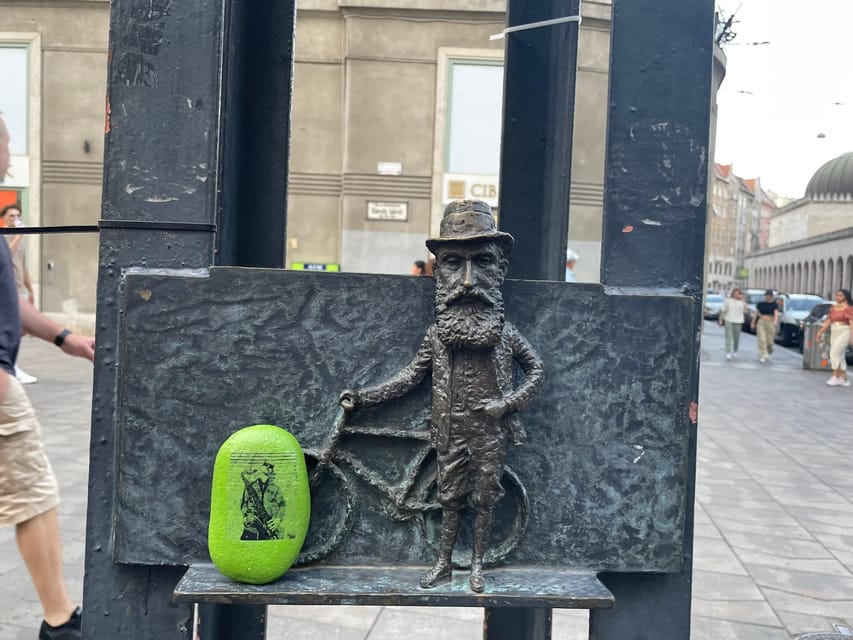
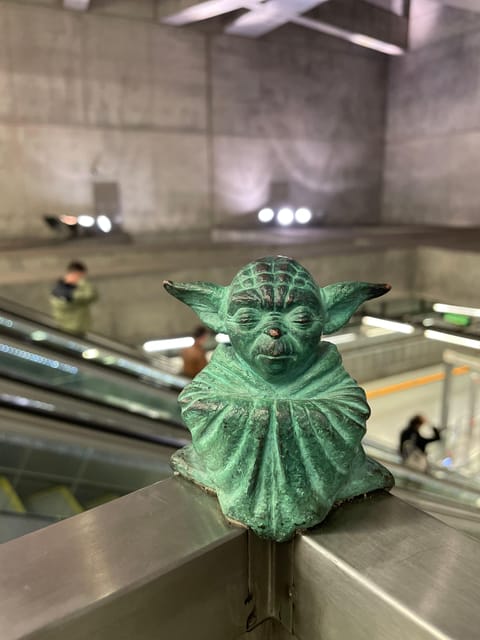
Tiny bronzes turn street corners into storybooks. This Kolodko mini-statue tour has you tracking Mihail Kolodko’s bronze legends across Pest and Buda, guided by ET to spots you’d never notice on your own.
I love how the tour stays interactive: ET has you actively spotting each tiny statue, then he ties it to the neighborhood’s ideas and myths in short, clear explanations. I also like the practical flow—most of the time you’re walking, but you also use public transport so you cover more ground without burning your whole afternoon.
The only real catch is visibility. Because these are small figures, they can be hard to spot in poor light or bad weather, so you’ll want a good eye and comfy patience.
In This Review
- Kolodko’s Bronze Punchline: Why This 2.5-Hour Tour Works
- Starting in the Right Place: New York Café to Buda-Side Finish
- How the Hunt Changes Your Eye: Spot First, Learn Second
- ET’s Budapest Street Sense: Using Public Transport Without Losing Time
- Pest Side Stories and the Danube Moment You’ll Remember
- Synagogue Stop: When Neighborhood Meaning Gets Personal
- Why $35 Feels Fair for This Kind of Tour
- What to Expect on the Ground: Walking, Searching, and Staying Warm
- Who This Tour Fits Best (and Who Might Skip It)
- Quick Comparison: What You’ll Gain vs. What You Might Not
- Should You Book Tiny Sculptures, Big Stories: Kolodko Mini Statue Tour?
- FAQ
- Where does the tour meet and where does it end?
- How long is the Kolodko mini statue tour?
- How much does it cost?
- What language is the guide speaking?
- Is it a small group?
- What is included in the tour price?
- Do we see landmarks like the Synagogue and Danube?
- Is public transport part of the experience?
- Is there free cancellation or pay-later booking?
Kolodko’s Bronze Punchline: Why This 2.5-Hour Tour Works
- A real treasure-hunt format with ET coaching you where to look before he explains what you’re seeing
- Small-group pacing (max 10) that keeps questions flowing and the vibe relaxed
- Stories tied to neighborhoods, not just a list of facts about Budapest
- Big landmarks in the mix, including a stop near the Synagogue and time around the Danube
- Public transport built in, with tickets covered, so the route feels efficient
- You’ll notice street level details long after the tour ends, thanks to the way ET teaches you to read the city
Still narrowing it down? A few more Budapest tours to weigh against this one.
- Budapest: City Highlights Sightseeing Cruise★ 4.6 · 43,981 reviews
- Budapest: Unlimited Prosecco, Beer and Aperol Spritz Cruise★ 4.8 · 37,304 reviews
- Budapest: Széchenyi Spa Day Ticket with Optional Upgrades★ 4.3 · 23,911 reviews
- Budapest: Nighttime or Daytime Sightseeing Cruise★ 4.2 · 21,062 reviews
Starting in the Right Place: New York Café to Buda-Side Finish
The experience meets at New York Café Budapest, right in front of the entrance. That’s a smart start point because it’s easy to find and it puts you close to the Pest-side streets where a lot of the Kolodko trail begins.
From there, you’ll work your way across the city and end on the Buda side at Szent Gellért tér. That finish matters. It’s a central area with an easy route back into the city, so you don’t feel stuck at the end like you’ve been dropped in the middle of nowhere.
Also, the tour runs about 2.5 hours. It feels full, but not exhausting—especially because the guide keeps the momentum going with quick stops and story beats.
How the Hunt Changes Your Eye: Spot First, Learn Second
Here’s what makes this tour click: you’re not treated like a passive audience. ET repeatedly gets you to look first for the tiny bronze figures before he layers on the meaning, so your brain stays engaged the whole walk.
ET is the kind of guide who can turn a 30-second glance into a whole little scene. People love the way he keeps stories short and sweet, but still connected to real places—street corners, building fronts, and the character of the neighborhoods you’re moving through.
A practical bonus: ET’s style is built for real conversation. Several tour participants describe asking questions about pop culture, local culture, and even politics. If you like guides who can go beyond the brochure, this format gives you plenty of openings.
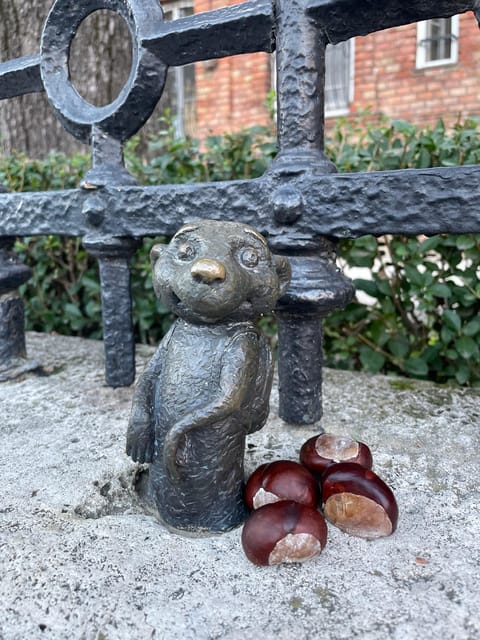
And yes, you will do some serious looking. Some sculptures are tiny or tucked where normal tourists won’t slow down. That’s exactly the point. By the end, you start seeing patterns in how the figures are placed—and you feel like an insider to the city’s small-scale street art world.
ET’s Budapest Street Sense: Using Public Transport Without Losing Time
Budapest is wide, and walking-only tours can make you feel like you’re spending half your day just getting from one landmark to the next. This tour fixes that by using public transport while keeping the story focus on the sculptures.
Public transport tickets are included, and ET handles the smooth bits so you’re not worrying about buying fares, figuring out which line goes where, or losing the group. You’re still on the ground enough to notice street level details, but the route stretches across more neighborhoods than a pure walking tour would.
From the feedback, the rhythm often looks like this: you walk between clusters of statues, then hop on a tram/metro or other train segment when it saves time. It’s an efficient way to cover Budapest without turning the afternoon into a transit headache.
If you’re the kind of traveler who likes smart logistics, this is a big deal. It keeps the tour from feeling like a scavenger hunt that never ends—because the transport legs are planned.
Pest Side Stories and the Danube Moment You’ll Remember
The experience starts on the Pest side and works toward the Buda side. That geographic shift isn’t just a route choice—it helps the tour feel like a journey through different moods of the city.
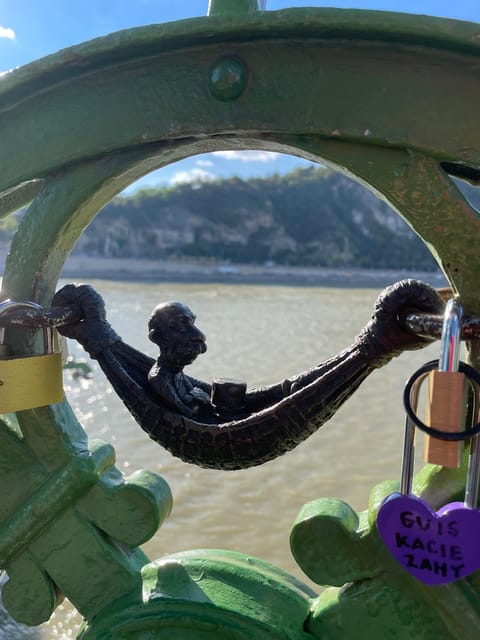
The tour also includes stops tied to recognizable city anchors, including time connected to the Danube. Even when the sculptures are tiny, placing them near bigger city reference points helps you “map” what you’re learning. You leave knowing not just what you saw, but where it fits in Budapest.
The Danube connection is especially useful for first-time visitors. After that first day, you’re better at reading the city at a glance—what belongs to Pest, what belongs to Buda, and how the neighborhoods layer their identity over time.



Synagogue Stop: When Neighborhood Meaning Gets Personal
One of the highlights listed is a Synagogue stop. That’s not just a checkbox moment. In Budapest, religious architecture often sits alongside daily life, and street art stories tend to reflect that same mix of tradition and modern commentary.
What you’ll get from ET here is context. He tends to connect the sculpture to the surrounding neighborhood’s tone—what people joke about, what they remember, and what they choose to pay attention to. Even if you already know the basics of the city, this kind of storytelling makes the area feel lived-in.
It’s also a good reminder that street art doesn’t float above real places. These tiny bronzes are planted in the city’s everyday routes, right where locals move, and that gives the legends extra weight.
Why $35 Feels Fair for This Kind of Tour
Let’s talk money honestly. At $35 per person for about 2.5 hours, you’re paying for an English-speaking guide, a small group (up to 10), and public transport tickets included. That package is more than a walking tour, because transport is part of the plan, not an add-on.
You’re also paying for the guide’s “translation” skill. The sculptures are small, and without someone teaching you how to see them, you could spend a day wandering and still miss most of what makes Kolodko’s work interesting. ET’s storytelling is what turns the hunt into a meaningful experience.
Is it expensive compared to a free self-guided stroll? Sure. But this isn’t meant to replace wandering. It’s meant to give you a head start, plus a story layer you can’t get from a map alone.
If you want value, look for tours like this when:
- you’re only in Budapest for a short time
- you want something fun after a few big-sight days
- you like quirky art and neighborhood stories
- you want an easy route using transport
What to Expect on the Ground: Walking, Searching, and Staying Warm
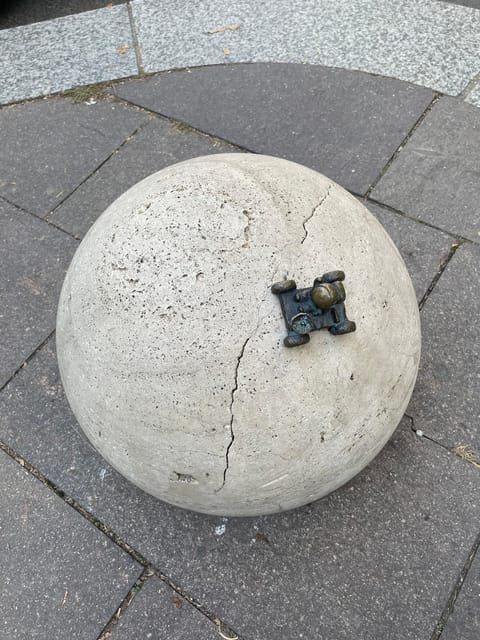
This is a tour where you move. You’re walking for a lot of the time, even though you also use public transport. So plan for the simple stuff: comfortable shoes matter, because you’ll be shifting your attention from your path to tiny details on the ground.
It also helps to expect weather challenges. One of the perks of the format is that it stays engaging even when conditions are cold or snowy, because the “hunt” keeps breaking up the monotony of bad weather walking.
If you don’t enjoy looking closely at small objects, you might find the hunt slower than you’d like. But if you like the feeling of finding something clever before someone else points it out, you’ll likely love it.
Who This Tour Fits Best (and Who Might Skip It)
This is a great choice for you if:
- you like street art and want the stories behind it, not just photos
- you enjoy interactive experiences where you’re encouraged to search and ask questions
- you want a mix of local culture with practical city navigation
- you prefer a small group and a guide who can adapt the route when needed
It may not be the best fit if:
- you want only major monuments and zero searching
- you have limited mobility and can’t handle a lot of on-foot time
- you need a very strict, clockwork itinerary with no wandering
The tour’s charm comes from being a little playful and a little discovery-based. It’s less like a lecture and more like walking with someone who knows how to read the city.
Quick Comparison: What You’ll Gain vs. What You Might Not
You won’t get a museum-style deep lecture. Instead, you get a city-walk experience where each statue acts like a clue.
What you will gain:
- a better sense of how Budapest’s street culture intersects with local stories
- an eye for details you’d otherwise miss
- a route plan that uses transport smartly so you can see more than just the closest sights
What you might not get:
- lots of time sitting down or long scenic stops (it’s still a walking hunt)
- guaranteed statue counts, since the experience depends on what’s easy to spot and where you’re moving that day
Should You Book Tiny Sculptures, Big Stories: Kolodko Mini Statue Tour?
If you like discovering cities by noticing the small stuff, this is a strong “yes.” For $35, you’re getting an English guide (ET), a small group setting, local folklore tied to Kolodko’s bronze figures, and public transport tickets so you can cover more neighborhoods without stress. The fact that the tour ends at Szent Gellért tér is also a nice touch—easy to keep exploring right after.
Book it if you’re in Budapest for a short stay, want an alternative to the usual landmark shuffle, or you simply enjoy art that feels playful, local, and slightly mischievous. I’d choose it early in your trip too, because it trains your eyes for the rest of Budapest.
FAQ
Where does the tour meet and where does it end?
You meet in front of the entrance of New York Café Budapest. The tour finishes at Szent Gellért tér on the Buda side.
How long is the Kolodko mini statue tour?
The tour duration is listed as 2.5 hours.
How much does it cost?
The price is $35 per person.
What language is the guide speaking?
The live tour guide speaks English.
Is it a small group?
Yes. The group is limited to up to 10 participants.
What is included in the tour price?
The tour includes local stories and public transport tickets.
Do we see landmarks like the Synagogue and Danube?
Yes. The listed highlights include a Synagogue and the Danube, along with Kolodko mini statues.
Is public transport part of the experience?
Yes. The tour uses public transport, and the ticket prices are included.
Is there free cancellation or pay-later booking?
You can cancel up to 24 hours in advance for a full refund. You can also reserve now and pay later to keep plans flexible.
More Tours in Budapest






More Tour Reviews in Budapest






Just Added: More Budapest Reviews
- Sightseeing flight over Budapest
★ 5.0 · 3 reviews - Budapest: Walking Tour with Chimney Cake & Polaroid Photos
★ 5.0 · 3 reviews - Self Guided Tour In Budapest With 100 Captivating Audio Stories
★ 5.0 · 3 reviews - Budapest Art Nouveau Walking Tour
★ 5.0 · 3 reviews - Hungary today: a no-taboo conversation
★ 5.0 · 3 reviews
Tours, compared.
 ★ 4.7Buda Castle Cave TourFrom $195,677 reviews
 ★ 4.1Big Bus Hop-On Hop-Off Tour by Open-top BusFrom $414,493 reviews
 ★ 4.1City Sightseeing Hop-On Hop-Off Bus Tour & ExtrasFrom $414,337 reviews
 ★ 4.6Buda Castle District Vampires and Myths Night TourFrom $233,830 reviews
 ★ 4.3Floating Bus Tour by Land and WaterFrom $283,342 reviews
 ★ 3.5Big Bus Budapest Hop-On Hop-Off Bus and Walking TourFrom $422,206 reviews
 ★ 4.6Buda Castle District Walking TourFrom $142,108 reviews
 ★ 4.83-Hour Orientation Walking Tour of Buda and PestFrom $411,834 reviews