
Reviewed · GUIDED
The beginner’s guide to Budapest – Budapest Sightseeing Tour
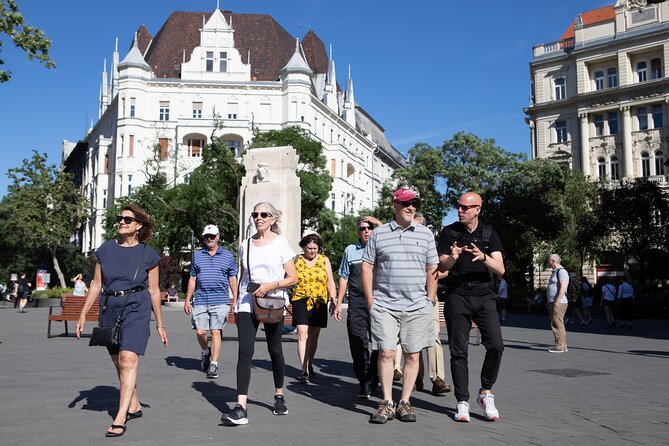
Budapest starts at the Opera. This 3.5-hour walk is a smart way to get your bearings fast, with public transport tickets included and a built-in break for coffee and cake. It’s designed for beginners, but you’ll still be on your feet and moving as a group.
I like the way the route mixes famous monuments with real-world local rhythms, so the city doesn’t feel like a list. Guides such as Ferenc, Leslie (László), and Fanni are part of the magic, bringing clear explanations and keeping a pace that works for questions.
In This Review
- Key highlights worth your attention
- Budapest in 3½ Hours: what you really get for your $94.63
- Start at the Hungarian State Opera: a classic way to begin
- Heroes’ Square and the stories behind the statues
- Andrássy Avenue: the grand boulevard that connects neighborhoods
- Széchenyi Baths: the biggest medicinal bath stop you’ll likely see
- Vajdahunyad Castle at City Park: a quick look with optional entry
- St. Stephen’s Basilica: the reliquary detail worth knowing
- Liberty Square (Szabadság tér): memorials with real-world meaning
- Parliament Building: seeing it now, choosing entry later
- Chain Bridge and the Danube memorial that hits hard
- Coffee, snacks, and transport tickets: the value math
- Guides and group pace: why the experience feels easy
- What to expect on your feet: the practical reality
- Who should book this Budapest sightseeing tour
- Should you book it? My take
- FAQ
- Where does the tour start?
- How long is the Budapest sightseeing tour?
- Is the tour in English?
- Are public transport tickets included?
- Which sites do not include admission tickets?
- Is there free cancellation?
Key highlights worth your attention
- Public transport included, so you’re not guessing how to ride tram/metro between big sights
- Coffee and cake at a local café plus snacks during the tour
- Small group size (max 15), which usually means more room for questions
- A handy souvenir map with extra recommendations
- Famous Budapest landmarks in one loop, covering both the Danube’s grand monuments and the more reflective memorials
- Major sights with a mix of included and not-included entries, so you can plan for what you want inside
More days smoothed over by a local
- Budapest: Parliament Building Entry Ticket and Audio Guide★ 4.5 · 3,844 reviews
- Budapest: Guided Pub Tour to Ruin Bars with Games & 6 Shots★ 4.7 · 1,641 reviews
- Budapest: Opera House Guided Tour★ 4.6 · 1,533 reviews
- Budapest Small-Group Guided Tour on MonsteRoller e-Scooter★ 5.0 · 1,517 reviews
Budapest in 3½ Hours: what you really get for your $94.63
This tour costs $94.63 per person, and for that price you’re buying three things that add up fast in a first visit: time, context, and convenience. The big value is not just the sights—it’s the fact that transport tickets are included, and you also get coffee/tea, snacks, a map, and a guided route that keeps you from bouncing around aimlessly.
The duration is about 3 hours 30 minutes, which is long enough to feel like you did something meaningful but short enough to work even if you’re jet-lagged. You’ll see a lot of Budapest’s most photographed spots, but the guide’s job is to explain what you’re looking at, not just point.
The one tradeoff: some entries are included at certain stops, while others are not. That’s not a deal-breaker, but it does mean you should decide ahead of time what you want to go inside versus just see from outside.
Start at the Hungarian State Opera: a classic way to begin
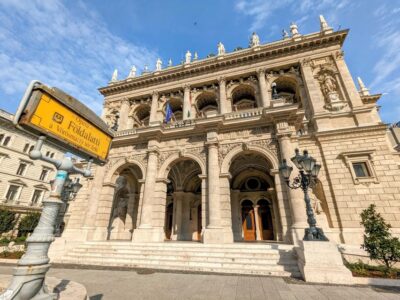
You begin at the Hungarian State Opera (Magyar Állami Operaház) on Andrássy út (Andrássy út 22). This is a great starting point because it sits on one of Budapest’s most important “big avenue” corridors—wide, elegant, and made for walking and viewing.
From here, you get a guided look at the building’s neo-Renaissance style, plus architectural context tied to Miklós Ybl, a major figure in 19th-century Hungarian architecture. Even if you’re not an opera person, the building is a strong introduction to how Budapest expresses national pride through design.
What I appreciate for first-timers: you’re not dropped into the city without direction. The route structure helps you understand where the major areas sit relative to each other, especially between the grand boulevard world of Andrássy út and the riverfront world of the Danube.
Heroes’ Square and the stories behind the statues
Your next stop is Heroes’ Square (Hősök tere), one of Budapest’s major public squares. The center of the complex features the Seven chieftains of the Magyars and other major figures from Hungary’s national story, plus the Memorial Stone of Heroes—often misnamed by visitors, but worth getting straight because names shape what you think you’re seeing.
You’ll spend about 20 minutes here, and that time matters. This square is the kind of place where a minute of looking can turn into five minutes of confusion if you don’t know what the symbols are trying to say. A good guide helps you read the layout and the messages embedded in the monument group.
If you like history but hate heavy lectures, this is a good compromise. It’s long enough to understand the symbolism, but short enough that you can keep the momentum of a walk rather than settle into a museum mindset.
Andrássy Avenue: the grand boulevard that connects neighborhoods
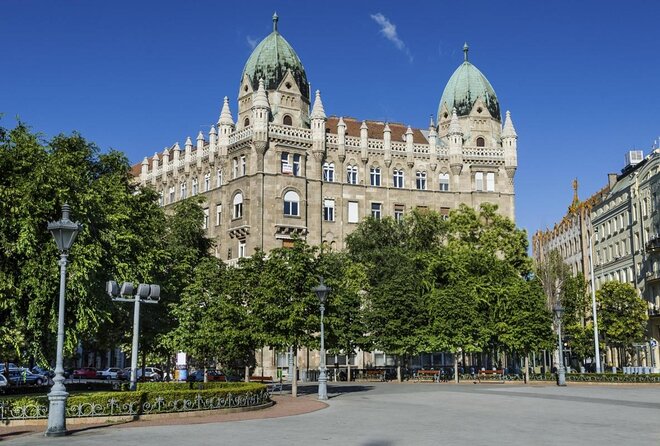
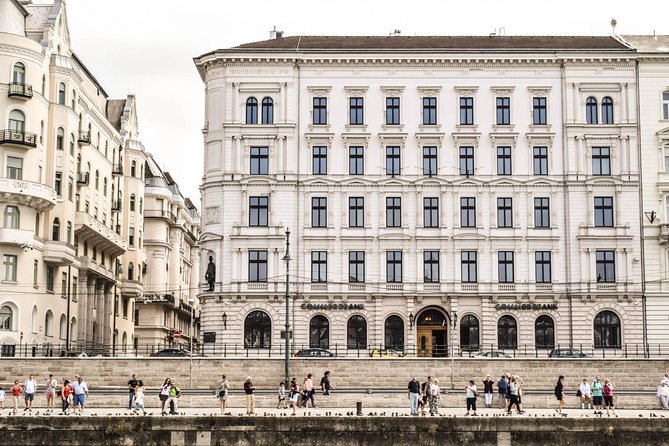
Then you move along Andrássy Avenue (Andrássy út), a boulevard dating back to 1872. The boulevard links Erzsébet Square with Városliget, and it’s lined with impressive Neo-Renaissance mansions and townhouses.
This stop is about 10 minutes, and it’s more about orientation than ticking a box. Andrássy út is one of those places where you can look at façades and instantly feel the difference between eras and social status in how the buildings were designed.
One useful detail here is that the avenue was recognized as a World Heritage Site in 2002. Knowing that helps you understand why the architecture is so carefully preserved and why the street feels like a “stage” for Budapest’s public image.


Széchenyi Baths: the biggest medicinal bath stop you’ll likely see
Next up: Széchenyi Medicinal Bath and Pool. This is listed as the largest medicinal bath in Europe, and it’s supplied by two thermal springs with temperatures around 74°C (165°F) and 77°C (171°F).
You’ll have about 15 minutes at this stop, and that’s a key reality check. You’re not here for a full spa session. Instead, this is the famous introduction—the chance to see the bath setting and understand why Széchenyi is such a defining Budapest experience.
If you’re wondering what to expect physically: it can be a bit of an “active sightseeing” moment. Bring practical footwear and be ready for the kind of outdoor-to-indoor transitions you get around thermal complexes. The tour also runs in all weather, so layers and an umbrella (when rain rolls in) are smart.
Vajdahunyad Castle at City Park: a quick look with optional entry
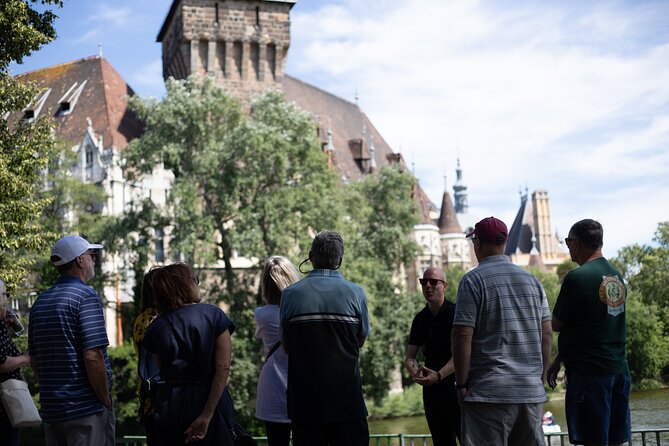
You’ll also stop near Vajdahunyad Castle (Vajdahunyad vára) in City Park. This castle was built in 1896 for the Millennial Exhibition celebrating 1,000 years of Hungary since the Hungarian Conquest of the Carpathian Basin in 895.
Time is tight here (about 10 minutes), and importantly, admission is not included. That means you may get more value by treating this as a photo-and-context moment unless you plan to pay to go further once you’re there.
The cool part is the story behind the structure. The castle isn’t just “pretty architecture”—it’s tied to a specific moment when Hungary was shaping how it wanted to present itself to the world.
St. Stephen’s Basilica: the reliquary detail worth knowing
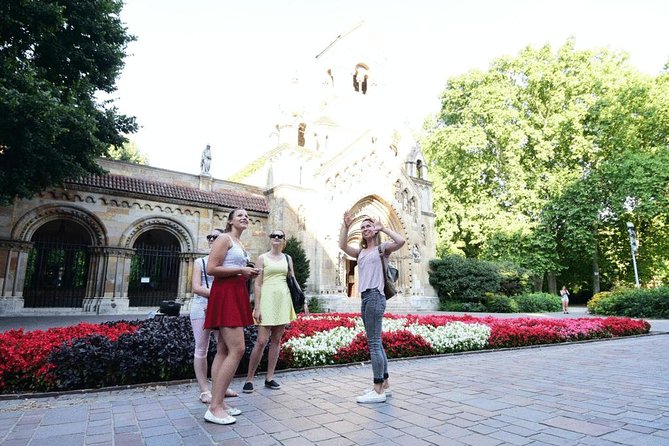
Next is St. Stephen’s Basilica (Szent István-bazilika). You’ll have about 15 minutes, and admission is not included, so treat it like an exterior and immediate-area visit unless you choose to add entry yourself.
The name comes from Stephen, the first King of Hungary (c 975–1038). The basilica is also known for a reliquary holding his right hand, which is the kind of detail that changes how you look at a church. Suddenly you’re not just staring at domes; you’re understanding why the place mattered religiously and politically.
This is a strong contrast stop after the baths and park-area architecture. It shifts you toward the spiritual center of the city, and it’s a good time to slow down for a moment and take in scale.
Liberty Square (Szabadság tér): memorials with real-world meaning
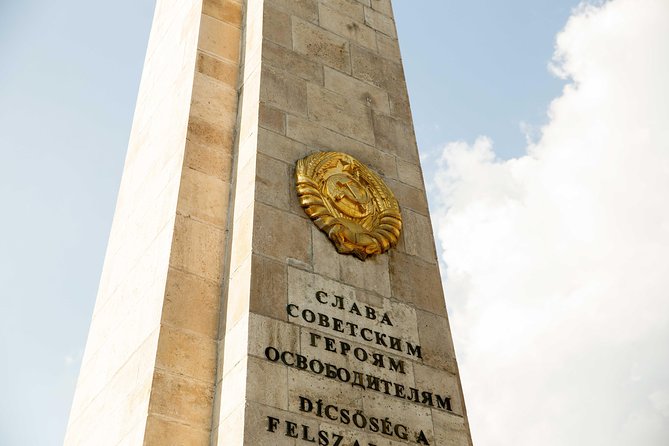
Your route then takes you to Liberty Square (Szabadság tér). The square is famous for two controversial memorials: one commemorating Hungarian Jewish victims of the Holocaust, and another for Soviet soldiers who liberated Budapest from the Nazis in 1945.
There’s also major civic architecture around it, including the United States Embassy and the historic-style headquarters of the Hungarian National Bank. That mix—diplomacy, finance, and memory—tells you a lot about how Budapest layers modern identity over past events.
You’ll spend about 20 minutes here, which is long enough to read the space without feeling rushed. This isn’t a “fun” stop in the traditional sense, but it is essential if you want the city to make sense beyond postcard views.
Parliament Building: seeing it now, choosing entry later
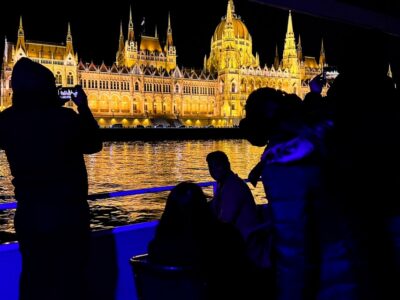
Next is the Hungarian Parliament Building (Országház). It’s one of Budapest’s most recognizable landmarks, and it serves as the seat of Hungary’s National Assembly.
You’ll get about 10 minutes, and admission isn’t included. That’s actually helpful. Parliament is one of those places where a quick exterior stop can still feel satisfying, and you can decide later if you want the deeper experience that usually requires extra time and entry planning.
As you look at it, pay attention to how it faces the river and dominates the skyline. The building is designed to project power and legitimacy, and understanding that makes the stonework feel more intentional than just impressive.
Chain Bridge and the Danube memorial that hits hard
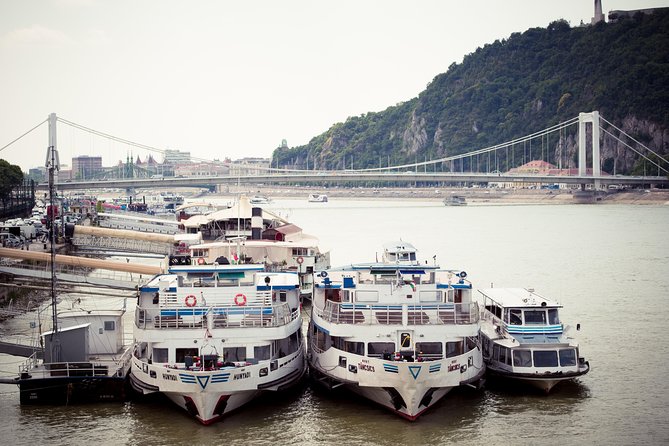
You’ll finish the “big landmark” sweep with the Széchenyi Chain Bridge, which spans the Danube between Buda and Pest. This stop is about 10 minutes, and it’s one of those moments where Budapest feels instantly cinematic.
Then comes the memorial stop: Shoes on the Danube Bank. This is a memorial to Jews massacred by fascist Hungarian militia belonging to the Arrow Cross Party during World War II. You’ll have about 10 minutes here, and the simplicity is the point—there’s little to distract you from the meaning.
Even if you’re not the type who seeks out dark history, this is worth pausing for. The memorial isn’t trying to decorate pain. It’s asking you to look directly at what happened and how a whole community was erased.
Coffee, snacks, and transport tickets: the value math
This tour includes a lot of small-but-costly things that add real comfort. You get coffee and/or tea, snacks, plus coffee and cake at a local café. You also receive a handy souvenir map and recommendations, which can be useful on the days right after your tour.
The public transport part is the hidden hero. When you’re new to Budapest, it’s easy to waste time figuring out which tram or metro line to take to connect distant sites. Having those transport tickets included lets you focus on enjoying the walking parts instead of managing payment and routes.
So yes, $94.63 is not cheap for a casual stroll. But if you’ve ever tried to piece together a first-day route on your own, you’ll see why this can feel like a bargain: you pay for a guided plan and the practical costs that otherwise slow you down.
Guides and group pace: why the experience feels easy
A big part of why this tour works for beginners is the way it’s paced. The group cap is 15 travelers, which helps you stay together without feeling like cattle.
In the feedback, guides like Ferenc, Leslie (László), and Fanni are praised for being engaging, patient with questions, and great at keeping a steady rhythm while still giving you time to look. For me, that balance is the difference between a tour that feels like a rushed highlight reel and one that helps you learn.
The route also helps you ask questions naturally. When you’re standing near a monument with a real visual context, the history clicks faster. And when you’re riding between stops, you get a chance to reset without breaking the flow.
What to expect on your feet: the practical reality
This is a moderate physical fitness activity, and you’ll want comfortable shoes. It’s not described as a hike, but you are walking and standing at multiple landmarks, including outdoor squares and river viewpoints.
Also remember: it operates in all weather conditions, so bring what your day needs. If rain is likely, a light rain jacket beats trying to stay dry with one thin umbrella. If it’s cold, layers matter because Budapest can feel chilly around open squares and the river.
Finally, it’s offered in English, and you’ll receive confirmation at booking. A mobile ticket is included, which is convenient for getting through checkpoints or meeting up quickly.
Who should book this Budapest sightseeing tour
Book it if you’re:
- Coming to Budapest for the first time and want a fast path to key sights
- Hoping to see both grand monuments and more reflective memorials in one plan
- The type who likes a guide to explain what you’re looking at, especially around national symbols
- Traveling with limited time and want a route that includes transport tickets, snacks, and café time
Consider skipping or adding extra time on your own if you:
- Already know Budapest well and only want in-depth museum stops (this is more walk-and-look than deep entry-to-entry)
- Want every single attraction inside buildings without paying extra, since some entries are not included (like Vajdahunyad Castle, St. Stephen’s Basilica, and the Parliament Building)
Should you book it? My take
I’d book this tour if you want a reliable first-day foundation. It gets you to the places that define Budapest, gives you practical help with transport, and adds comfort with coffee, snacks, and a map. You’ll leave with a clearer mental map of the city and a better sense of the stories behind what you saw.
I wouldn’t book it as your only plan. Use it to set your bearings, then pick the top 1–2 places you want to return to for a slower walk or an interior visit.
If your goal is to see a lot, learn enough, and avoid first-day confusion, this beginner-friendly tour is a solid choice.
FAQ
Where does the tour start?
The tour starts at the Hungarian State Opera in Budapest, at Andrássy út 22, 1061 Hungary.
How long is the Budapest sightseeing tour?
It runs about 3 hours 30 minutes (approximately).
Is the tour in English?
Yes, it’s offered in English.
Are public transport tickets included?
Yes. Public transport tickets are included in the tour.
Which sites do not include admission tickets?
Admission is not included for Vajdahunyad Castle, St. Stephen’s Basilica, and the Hungarian Parliament Building.
Is there free cancellation?
Yes. You can cancel for free up to 24 hours in advance of the experience start time for a full refund.
Budapest, Made Easy With a Guide




More Tours in Budapest




More Tour Reviews in Budapest






Just Added: More Budapest Reviews
- Sightseeing flight over Budapest
★ 5.0 · 3 reviews - Budapest: Walking Tour with Chimney Cake & Polaroid Photos
★ 5.0 · 3 reviews - Self Guided Tour In Budapest With 100 Captivating Audio Stories
★ 5.0 · 3 reviews - Budapest Art Nouveau Walking Tour
★ 5.0 · 3 reviews - Hungary today: a no-taboo conversation
★ 5.0 · 3 reviews
Guided, compared.
 ★ 4.5Parliament Building Entry Ticket and Audio GuideFrom $453,844 reviews
 ★ 4.7Guided Pub Tour to Ruin Bars with Games & 6 ShotsFrom $161,641 reviews
 ★ 4.6Opera House Guided TourFrom $331,533 reviews
 ★ 5.0Budapest Small-Group Guided Tour on MonsteRoller e-ScooterFrom $721,517 reviews
 ★ 5.0Adventure Caving Tour with GuideFrom $501,331 reviews
 ★ 4.6Guided Tour of the Parliament Building in SpanishFrom $411,240 reviews
 ★ 4.9Bar Crawl with a Local GuideFrom $441,112 reviews
 ★ 4.43-Hour Live Guided Sightseeing TourFrom $351,041 reviews