
Reviewed · BUDAPEST
Pest side stories with a Historian
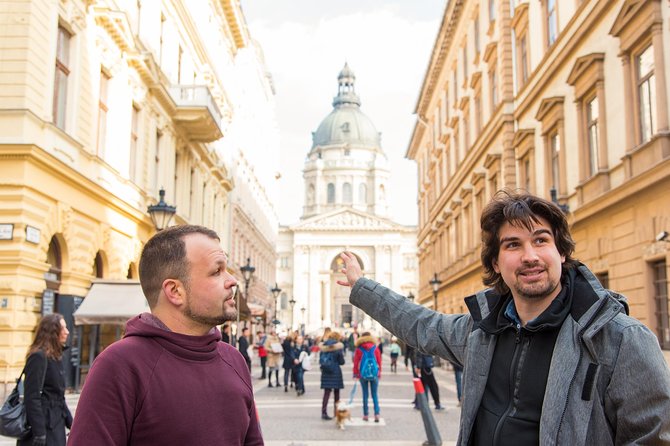
A few blocks in Pest can change your whole sense of Budapest. This walking tour uses a historian to connect landmarks on the ground—so the city’s story makes sense fast. You’ll see Elizabeth Square, Heroes’ Square, and more, while keeping things manageable with a small-group cap of 10.
Two big things I like here: you get a genuinely personal historian-guided route, and the tour includes practical add-ons like refreshments and metro tickets. One thing to plan for is the walking—this is a lot of ground in about three hours, so comfortable shoes matter, especially on warm afternoons.
In This Review
- Key highlights to look for
- Starting in Pest’s layers: Elizabeth Square to St. Stephen’s Basilica
- Heroes’ Square and the 1,100-year sweep you can feel
- Vajdahunyad Castle’s medieval look—and why 1896 matters
- Andrassy Avenue: the UNESCO walk you’ll actually understand
- Vorosmarty Square for shopping energy, then Millennium Underground
- What the historian guide does differently (and why small groups help)
- Price and value: why about $59 can be fair in Budapest
- Timing, meeting point, and how to make this tour feel easy
- Should you book this Pest side stories historian tour?
- FAQ
- How long is the Pest side historian walking tour?
- What is the price per person?
- Where do I meet the tour, and what time does it start?
- How many people are in the group?
- Is the tour offered in English?
- Which sights are included on the route?
- Do we enter St. Stephen’s Basilica?
- What’s included besides the guide?
- Can I cancel for a full refund?
Key highlights to look for
- Small group size (max 10) keeps the pace human and the questions flowing
- Historian storytelling ties each stop to what shaped Hungary over centuries
- Major landmarks in Pest including Heroes’ Square and Andrassy Avenue
- Free admissions for the listed sights, including optional Basilica entry
- Metro tickets + refreshments so you’re not rationing comfort mid-walk
- Oldest underground in Europe continent at Millennium Underground
Still narrowing it down? A few more Budapest tours to weigh against this one.
- Budapest: City Highlights Sightseeing Cruise★ 4.6 · 43,981 reviews
- Budapest: Unlimited Prosecco, Beer and Aperol Spritz Cruise★ 4.8 · 37,304 reviews
- Budapest: Széchenyi Spa Day Ticket with Optional Upgrades★ 4.3 · 23,911 reviews
- Budapest: Nighttime or Daytime Sightseeing Cruise★ 4.2 · 21,062 reviews
Starting in Pest’s layers: Elizabeth Square to St. Stephen’s Basilica
Your afternoon begins at the Kempinski Hotel Corvinus Budapest on Erzsébet tér (the start is 2:00 pm). From there, the route heads straight into a part of Pest that’s all about change over time—Elizabeth Square.
This square has worn many labels. It was once a market square, then it was known as Stalin Square, and it also served as a bus station. Today it’s a more youthful party area, with statues and sights you can’t help noticing once your historian points them out. The lesson here is simple: Budapest didn’t freeze in time. It kept getting rewritten, sometimes in dramatic ways.
Next comes St. Stephen’s Basilica (Szent István Bazilika), the largest church in Budapest. If the group wants to go in, you’ll enter; if not, you’ll still get the orientation you need to understand why this church matters in the city’s map and mindset. Either way, you’re standing in a place that carries big national symbolism, not just architectural beauty.
Why this first stretch works: it sets a baseline for the rest of the walk. You go from a square that shows political and social shifts, to a landmark that anchors identity. It’s a good start because it helps you read what you’re seeing instead of just passing it.
Heroes’ Square and the 1,100-year sweep you can feel
From the Basilica area, the tour moves to Heroes’ Square, which is one of the clearest “welcome to Budapest” introductions you’ll find in Pest. This is the kind of stop that can feel like a photo-op if you rush it. With a historian guiding you, it becomes a framework for understanding Hungary across roughly 1100 years.
Heroes’ Square does what good city introductions should do: it points your attention toward the major themes—statehood, identity, and the long chain of events that shaped the modern country. Expect a slower, more interpretive stop here (about 30 minutes on the tour schedule), with time to look at the statues and take in the monumentality without feeling dragged.
Possible consideration: the square is popular, so crowds can be part of the experience. Your advantage is that the tour is small-group, so your historian can keep you moving through the most meaningful angles rather than circling the same view.
Vajdahunyad Castle’s medieval look—and why 1896 matters
Next up is Vajdahunyad Castle, a stop that often gets overlooked when people speed through Budapest. Here, you’ll see a medieval-looking castle that was built in 1896—and you’ll learn why it was built in that style and what the 1896 date connects to.
Even without getting too technical, this stop is a great reminder that cities create “past” on purpose. It’s not just a random old structure; it’s a statement. You’re standing in a castle form that looks like it belongs in another era, yet it’s tied to a specific historical moment in the late 1800s.
On a walking tour, time matters, and this one gives you about 30 minutes. That’s usually enough to both see it properly from key viewpoints and absorb the story without feeling rushed.
Andrassy Avenue: the UNESCO walk you’ll actually understand
From Vajdahunyad Castle, you continue toward Andrassy Avenue, often described as the pride of Budapestians. This stretch is a UNESCO World Heritage site (it’s been protected since 2002), so you’re stepping into an urban corridor with a reputation—and a reason for it.
This is a “look up and notice” stop. The historian’s value here is connecting the grandeur you see in the street to the forces that shaped Pest into what it became. You’ll get about 30 minutes on this segment, which gives you a fair chance to take in the avenue’s scale and details while still keeping momentum.
What I’d suggest if you’re sensitive to heat: Andrassy Avenue can feel exposed depending on the day. I’d plan to drink water before you start each segment and take quick breaks when the guide naturally pauses.



Vorosmarty Square for shopping energy, then Millennium Underground
The tour then shifts to Vorosmarty Square (Vorosmarty ter), right in the heart of historical Pest. This stop has a commerce-focused vibe, with attention on high-end products—the kind of place that signals power, wealth, and everyday city life happening side by side.
You’ll spend around 15 minutes here. That’s short, but it fits the overall rhythm of the tour: quick orientation, then onward to something that flips the timeline again.
Then comes one of the most memorable parts of this walk: Millennium Underground. This is described as the oldest underground on the European continent. If you like transport history, you’ll feel a little nerdy thrill here—in a good way. You’re not just walking past a building; you’re watching Budapest show how it modernized mobility.
You’ll get about 30 minutes for this stop, which is important. The Underground is the kind of place where the details only click when someone frames what you’re looking at. With the historian handling the context, it stops being a name on a map and becomes a story you can point to.
What the historian guide does differently (and why small groups help)
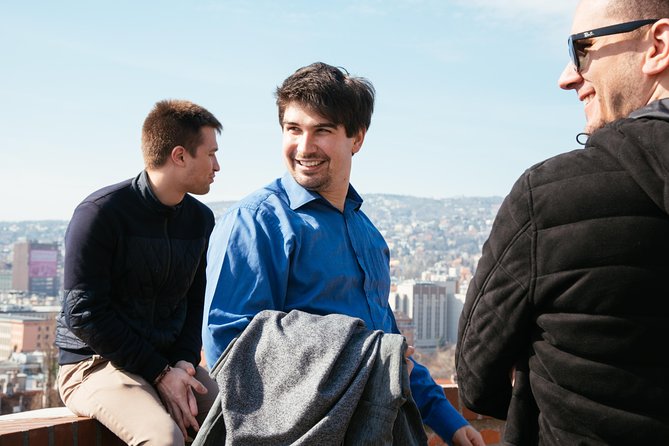
This tour’s reputation for good guiding isn’t random. The format is set up so the historian can actually teach rather than just move people from stop to stop. With a maximum of 10 travelers, you’re less likely to get lost in the crowd, and questions don’t feel like an interruption—they fit the flow.
You’ll hear stories and see connections between buildings and the bigger events behind them. Names of guides that have led this walk include Steven (often nicknamed Stephen) and Andrew/András, plus Greg—each bringing that history-to-street-story style that makes the city feel less like a list of monuments and more like a living timeline.
Pace is another strength. Yes, it’s a walking tour (you should expect steady movement for the full three hours). But the pace is designed to be manageable. On a hot day, that matters more than people think.
The real value: you’re not just collecting photos. You’re collecting understanding.
Price and value: why about $59 can be fair in Budapest
At $58.94 per person for about 3 hours, the price makes sense if you look at what’s included. You get:
- A historian guide
- Refreshments
- Metro tickets
- Mobile ticket
- Free admission for the listed sights
Budapest can be cheap for many things, but guided history isn’t always. Here, you’re paying for someone to connect the dots—plus you’re not spending extra time or money figuring out transport. The included metro tickets are a practical win, especially if you’re planning to continue your day in Pest right after.
And because the tour is capped at 10, you’re paying for attention, not just access.
Timing, meeting point, and how to make this tour feel easy
The tour starts at 2:00 pm. You meet at Kempinski Hotel Corvinus Budapest, Erzsébet tér 7-8, 1051. It ends at St. Stephen’s Basilica (or possibly another central Pest point close to where you started).
That end flexibility is useful. You finish near a major landmark, which makes it easy to keep exploring on your own rather than disappearing into the edges of the city.
Because most travelers can participate, this is a friendly choice for many visitors—but do your homework on comfort:
- Wear comfortable walking shoes
- Bring water (especially in warm weather)
- Don’t schedule a heavy “must-do” right before the tour, since it’s three hours of walking
Also note the tour is offered in English, and you’ll receive confirmation at booking.
Should you book this Pest side stories historian tour?
Book it if you want Budapest to make sense quickly. This is a solid pick when:
- You’re seeing Pest for the first time and want an organized intro
- You care about how political and cultural shifts show up in real streets and buildings
- You like tours where the guide explains, not just points
Skip it if you strongly dislike walking, or if you prefer slower sightseeing with lots of free time. Since this is built around multiple major stops in a few hours, you’ll be moving the whole way.
If you’re on the fence, here’s the simplest way to decide: if you’ll actually read plaques, look at statues, and enjoy historical context, this tour will feel like your best use of an afternoon.
FAQ
How long is the Pest side historian walking tour?
It’s approximately 3 hours.
What is the price per person?
The price is $58.94 per person.
Where do I meet the tour, and what time does it start?
You meet at Kempinski Hotel Corvinus Budapest (Erzsébet tér 7-8, 1051), and the tour starts at 2:00 pm.
How many people are in the group?
The tour has a maximum of 10 travelers.
Is the tour offered in English?
Yes, the tour is offered in English.
Which sights are included on the route?
Key stops include Elizabeth Square, St. Stephen’s Basilica, Heroes’ Square, Vajdahunyad Castle, Andrassy Avenue, Vorosmarty Square, and Millennium Underground.
Do we enter St. Stephen’s Basilica?
Entry is included if the group is interested; otherwise, you’ll still visit the area and learn about it.
What’s included besides the guide?
You get refreshments and metro tickets, and the tour uses a mobile ticket.
Can I cancel for a full refund?
Yes. You can cancel up to 24 hours in advance for a full refund.
More Tour Reviews in Budapest






Just Added: More Budapest Reviews
- Sightseeing flight over Budapest
★ 5.0 · 3 reviews - Budapest: Walking Tour with Chimney Cake & Polaroid Photos
★ 5.0 · 3 reviews - Self Guided Tour In Budapest With 100 Captivating Audio Stories
★ 5.0 · 3 reviews - Budapest Art Nouveau Walking Tour
★ 5.0 · 3 reviews - Hungary today: a no-taboo conversation
★ 5.0 · 3 reviews