
Reviewed · PRIVATE CITY TOURS
Herend Porcelain Factory, private Tour
Herend porcelain has a fan club that reaches from Victorian royalty to modern weddings. This private tour works because it shows you how the work is done (not just what it looks like), with a guided stop at the Herend Mini Manufactury plus time in the Herend Porcelain Museum. I love that the tour follows the process from kaolin clay to finished pieces, and I also like the practical payoff: you end with tea or coffee served in an actual Herend porcelain cup. The main drawback to consider is the price: at $400 per person, it’s best for people who truly want a guided, private day rather than a casual, cheap museum visit.
The experience is designed for a smooth, door-to-door day from Budapest, with hotel pickup and drop-off and a private group pace. You’ll get guided access to the factory sites, entrance fees included, and you skip the ticket line. Still, because the on-site portion is time-boxed, you’ll want to go in knowing what you care about most: production details, museum patterns, or shopping.
In This Review
- Key highlights you’ll feel right away
- Why Herend porcelain has royal fans worldwide
- Pickup in Budapest and the coach ride to Central Hungary
- Inside the Herend Mini Manufactory: from kaolin clay to decorated porcelain
- The Herend Porcelain Museum: patterns across about 180 years
- Tea or coffee from an original Herend cup, plus the shop payoff
- Price and what you’re actually paying for ($400 per person)
- Who this private Herend tour suits best (and who might skip it)
- Should you book the Herend Porcelain Factory Private Tour?
- FAQ
- FAQ
- How long is the Herend Porcelain Factory private tour?
- Where do you pick up passengers in Budapest?
- What parts of the Herend experience are included?
- Is lunch included in the tour price?
- Is the tour private, and who is it guided by?
- Are entrance fees included, and can you skip the ticket line?
- What should I bring with me?
Key highlights you’ll feel right away
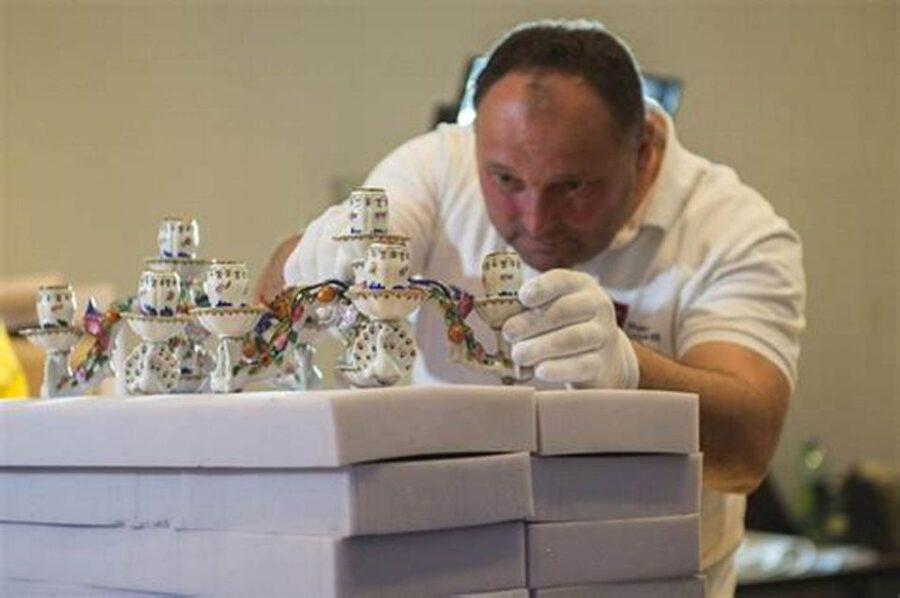
- Mini Manufactury, step-by-step production: see how kaolin turns into porcelain and how craftspeople shape, decorate, and paint.
- Short factory film before you start: a quick story of Herend from 1826 to today sets the context fast.
- Herend Porcelain Museum overview: get a clear picture of the product range over roughly 180 years.
- Tea or coffee in a Herend cup: a small ritual that makes the visit feel like more than a walkthrough.
- Shop time with worldwide delivery options: if you’re tempted, delivery with insurance is available.
Your own guide and your own timing in Budapest
- Private Budapest TukTuk Tour: Custom Route, Hotel Pickup★ 5.0 · 1,307 reviews
- Budapest Essentials Private Tour Highlights and Hidden Gems★ 5.0 · 861 reviews
- Budapest Private Luxury Sightseeing Tour with Guide and Transport★ 5.0 · 442 reviews
- Private Budapest City tour with Classic Russian Jeep or G-Wagon!★ 5.0 · 386 reviews
Why Herend porcelain has royal fans worldwide
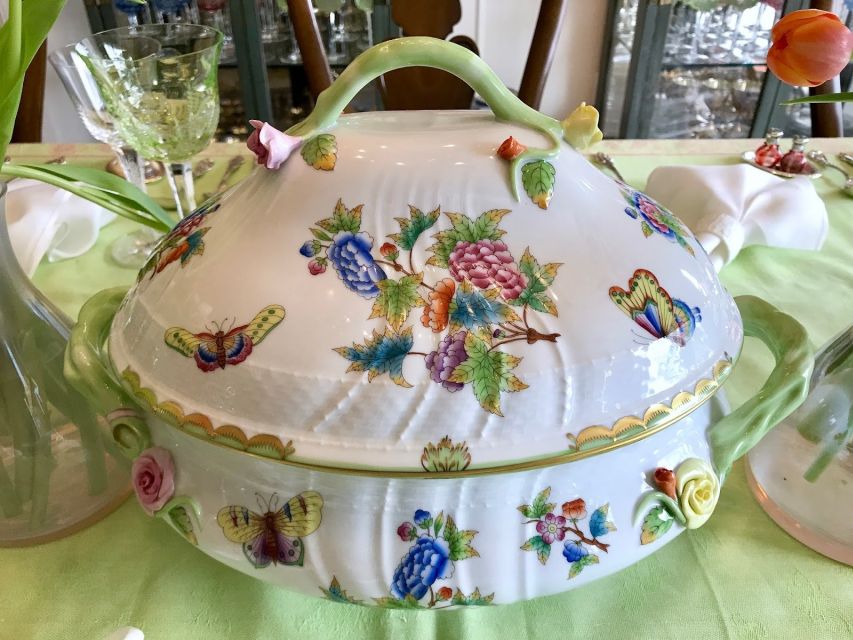
Herend porcelain isn’t famous just because it’s pretty. It’s famous because it became a style of power and prestige for generations. The factory’s story links to many high-profile names, including Queen Victoria, Hungarian King Franz Joseph and his wife Queen Elisabeth (often called Sisi), Alexander von Humboldt, Nicholas II of Russia, and even Lady Diana. When a brand follows that kind of trail, you can expect obsessive craft and strong pattern identity.
Two details in particular help you understand why collectors care. First, one of the most famous patterns is named after Queen Victoria, so you’re not only looking at decoration—you’re looking at a named design legacy. Second, a Herend tableware set featuring the new Victoria pattern was gifted by the Hungarian Government as a wedding present for Kate and William. That’s a useful way to judge value: Herend didn’t just hit markets; it stayed in the cultural conversation.
On this tour, that prestige isn’t treated like a lecture. Instead, it acts like a map. You’ll see how the patterns you recognize from photos are tied to an actual workflow, which makes the museum sections and finished items feel more grounded.
Pickup in Budapest and the coach ride to Central Hungary
This is a true day-trip setup with hotel pickup and drop-off. You start in District V and use a bus or coach for the road portion. The schedule is built to move you efficiently from the city to Central Hungary and back without you having to think about transport, tickets, or timing.
What I like about this kind of arrangement is simple: porcelain factories are not usually located next to major train stations, and you don’t want a stressful scramble on a tight day. With a driver handling transfers and a tour guide running the day, you can treat the trip as a focused outing.
The only “watch-outs” are the obvious ones. You’re in a private-group format, but it’s still a 7-hour day, so you won’t have endless time to wander. Also, since lunch is not included, plan to eat before you go or be ready to handle lunch on your own outside the scheduled tea/coffee moment.
Inside the Herend Mini Manufactory: from kaolin clay to decorated porcelain
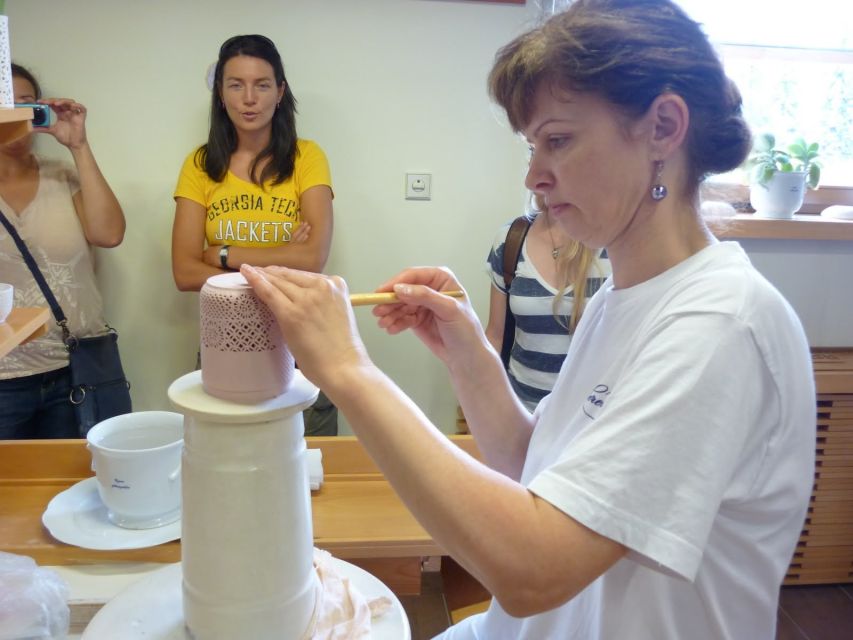
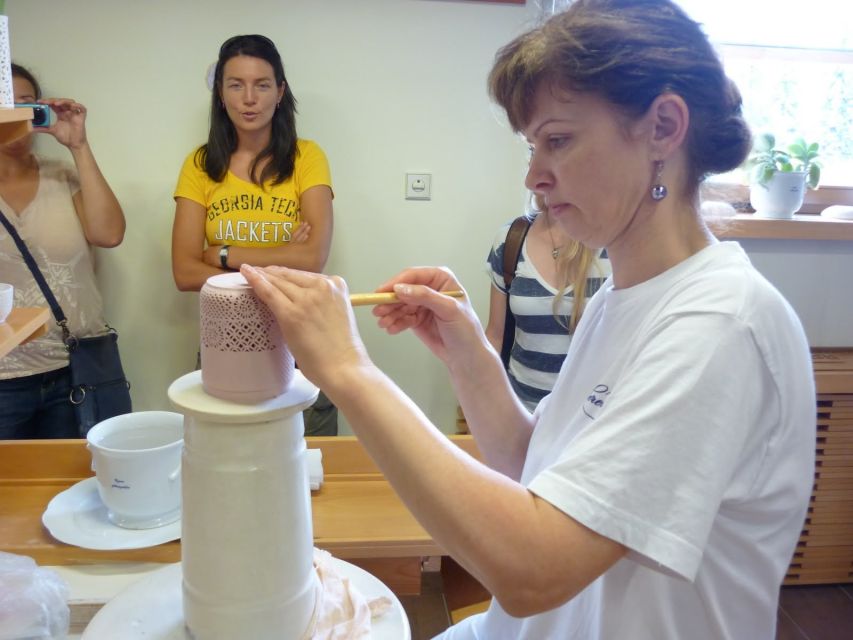
If you like the idea of art meets science, the Mini Manufactury is the main reason to choose this tour. Here, you get the fascinating process of how a heavy mass of kaolin clay becomes fragile porcelain. That alone is worth the trip, because so many museum visitors only see finished objects behind glass.
The tour begins with a short movie that places the factory story in time, from 1826 to the present day. It’s a smart warm-up. Before you see hands working, you get a framework for why the factory became what it is.
Then comes the step-by-step part. You follow how craftsmen:
- shape the porcelain form
- decorate it
- paint the details
This is the kind of production explanation that helps you read a finished piece. For example, once you’ve seen that painting is part of the process (not just a label on the final item), you start noticing why some patterns look crisp and others look softer, and why specific design work takes time.
A private guide also matters here. In a group setting, people often miss the “how” because they’re busy snapping photos. With a private group, the pacing can feel more natural, and you’re less likely to feel rushed during the most interesting segments of the workshop.
One practical tip: if you’re bringing a camera, be ready to switch between watching the process and capturing details. The tour is guided, so listen first, then shoot. Otherwise you’ll end up with photos that don’t match the steps you heard.
The Herend Porcelain Museum: patterns across about 180 years
After the Mini Manufactury, you move into the Herend Porcelain Museum, where you get an overall picture of the colorful product range across roughly 180 years. This stop is valuable because it ties together what you just saw.
In the workshop, you’re focused on craft steps. In the museum, you’re focused on design identity. The museum helps you place patterns in context, including the famous Victoria connection. Once you’ve seen the production side, the museum becomes easier to interpret. You can look at a style and think in terms of technique and labor rather than “pretty object.”
The scale here is also part of the story. The Mini Manufactury has the capacity to produce more than 16,000 various forms, around 4,000 patterns, plus free variation. That means the factory system can generate an enormous number of combinations. The tour data even frames it as being equivalent to 64 million different products. Even if you never want that many items, it explains why Herend can keep producing designs that look both classic and consistent.
The museum stop is also where you can “calibrate.” If you’re a serious collector, you’ll likely identify patterns you care about. If you’re buying for a gift, it helps you choose something that looks right in person, not just on a screen.
The main consideration: museum time is still limited in a 7-hour private schedule. If you’re the type who wants to read every display label slowly, you might wish for extra time. For most people, though, the guided overview strikes a good balance between depth and momentum.
Out to the Hungarian Sea for the day



Tea or coffee from an original Herend cup, plus the shop payoff
The tour ends in a way that turns a factory visit into a complete experience: you finish with a cup of tea or coffee from an original Herend porcelain cup. It’s a small moment, but it works. You go from watching the making of delicate ceramics to actually using one. That physical connection is exactly what makes craft-focused tours feel worth it.
Then there’s the shop. You’ll have time to browse, and the experience includes notes on delivery. Delivery with insurance is available worldwide, which matters if you’re traveling and don’t want to risk packing fine porcelain in a suitcase.
This is also where you decide whether this is a once-in-a-lifetime purchase or something you’ll regret not doing. A $400-per-person tour can feel heavy if you’re not planning to buy anything, but the tea/coffee cup plus the guided access and production viewing are part of what you’re paying for. If you do want porcelain, the shop stage can be practical because you can see items in a way that’s hard to replicate later.
If you do plan to buy, consider how you’ll transport it. The tour doesn’t include lunch, but it does focus on the cup and the shop. So treat the shop as a potential add-on, not something you do without thought.
Price and what you’re actually paying for ($400 per person)
Let’s talk value, because $400 per person is not pocket change. The key is that this price covers more than entry to one building.
You’re paying for:
- hotel pickup and drop-off in Budapest (District V)
- private transfers with a driver
- a tour guide and guided access
- entrance fees
- tea or coffee
- skip-the-line convenience
So the $400 is really paying for a whole-day experience without you managing logistics. If you’re traveling with limited time, and you want the factory steps explained clearly, the guided private format can feel more economical than trying to stitch together public transport plus waiting plus translations on the fly.
On the other hand, if you’re purely browsing and you don’t care about production details, a factory museum visit can be easier to do independently. In that case, the cost would be hard to justify.
The sweet spot is this: you’re a craft person, a design person, or you want to buy with confidence. If Herend porcelain is on your radar because of patterns, craftsmanship, or gifting, the tour is likely a strong match.
Who this private Herend tour suits best (and who might skip it)
This is ideal for:
- people who love process as much as objects (kaolin to porcelain, shaping, decoration, painting)
- anyone who wants an organized day without transport hassles
- collectors or gift buyers who want a guided overview before purchasing
- art-and-design travelers who enjoy patterns with real provenance (Queen Victoria, Victoria pattern, the royal legacy)
It may not be ideal if:
- you’re on a strict budget and just want quick museum time
- you’re uninterested in porcelain production and only want the final look
- you want a long, slow wander with zero schedule pressure
The private-group pace makes a difference. Even if you don’t know much about porcelain now, the guide framing helps you notice things that you’d otherwise miss. And if you do know a lot, the production focus gives you that satisfying sense of learning how the finished look is built.
Should you book the Herend Porcelain Factory Private Tour?
Book it if you want a guided, no-stress day where you see the real production steps and then get a museum overview that connects patterns to craft. The tea or coffee served from a Herend cup adds a memorable close, and the shop with worldwide insured delivery can make a purchase feel safer.
Skip or reconsider if you’re mainly looking for low-cost sightseeing or you’re short on funds and would rather spend your time elsewhere in Budapest. This tour is a luxury craft experience, and it’s priced like one.
FAQ
FAQ
How long is the Herend Porcelain Factory private tour?
The duration is 7 hours.
Where do you pick up passengers in Budapest?
Hotel pickup is included, with pickup from District V.
What parts of the Herend experience are included?
You’ll visit the Herend Porcelain Museum, experience the production at the Herend Mini Manufactury, and finish with tea or coffee from an original Herend porcelain cup.
Is lunch included in the tour price?
No. Lunch is not included.
Is the tour private, and who is it guided by?
It’s a private group tour with a live tour guide. The languages listed are English, Spanish, German, Italian, and French.
Are entrance fees included, and can you skip the ticket line?
Yes. Entrance fees are included, and the tour offers skip-the-ticket-line convenience.
What should I bring with me?
Bring your passport or ID card.
If you’d like, tell me your travel month and whether you’re more museum-focused or factory-focused, and I’ll help you decide if this schedule fits your day in Budapest.
More Tour Reviews in Budapest






Out to Lake Balaton





Private Budapest, Your Pace






Just Added: More Budapest Reviews
- Sightseeing flight over Budapest
★ 5.0 · 3 reviews - Budapest: Walking Tour with Chimney Cake & Polaroid Photos
★ 5.0 · 3 reviews - Self Guided Tour In Budapest With 100 Captivating Audio Stories
★ 5.0 · 3 reviews - Budapest Art Nouveau Walking Tour
★ 5.0 · 3 reviews - Hungary today: a no-taboo conversation
★ 5.0 · 3 reviews
Private City Tours, compared.
 ★ 5.0Private Budapest TukTuk Tour: Custom Route, Hotel PickupFrom $991,307 reviews
 ★ 5.0Budapest Essentials Private Tour Highlights and Hidden GemsFrom $116861 reviews
 ★ 5.0Budapest Private Luxury Sightseeing Tour with Guide and TransportFrom $483442 reviews
 ★ 5.0Budapest Private Full Day City Sightseeing Tour Walking or by CarFrom $181299 reviews
 ★ 5.0Private city tour by vanFrom $181273 reviews
 ★ 4.9Private City Tour with a Vintage Russian JeepFrom $318246 reviews
★ 5.0Budapest Private City Tour With a Vintage Russian JeepFrom $261198 reviews
★ 4.9Private City Tour with a Vintage Russian JeepFrom $318246 reviews
★ 5.0Budapest Private City Tour With a Vintage Russian JeepFrom $261198 reviews
 ★ 4.7Private City Tour with Local GuideFrom $222186 reviews
Browse the lists this tour appears in