
Reviewed · TOURS
General sightseeing tour
A tour like this helps Budapest click fast. You start on the old metro, then sweep through big landmark after big landmark with a guide who keeps the story clear.
I like that this is private—it’s only your group—and the pace is flexible enough to linger when something grabs you. I also love the mix of iconic viewpoints and real city texture, from the historic Millennium Subway to the terrace at Buda Castle. One thing to consider: you’ll rely on public transport part of the way, and a couple of stops (like Matthias Church inside) cost extra and have dress expectations.
In This Review
- Key Highlights Worth Planning For
- Getting Your Bearings: What This 4-Hour Private Route Really Does
- Meeting Point, Pickup, and How Transportation Works
- Millennium Subway and Andrassy Avenue: Budapest’s Oldest Metro Moment
- Heroes’ Square: Big Architecture, Clear Symbolism
- Millennium Monument and the Unknown Heroes
- City Park, Vajdahunyad Castle, and Anonymus
- Passing Szechenyi Baths: Thermal Baths You Can See Without Tickets
- Buda Castle and the Royal Palace Terrace View
- Fountain of King Matthias and Sandor Palace Guards
- Fisherman’s Bastion: Danube Panorama With Context
- Matthias Church: Walk Around Gothic Exteriors (and Optional Inside)
- Szechenyi Lanchid (Chain Bridge) Workaround During Renovation
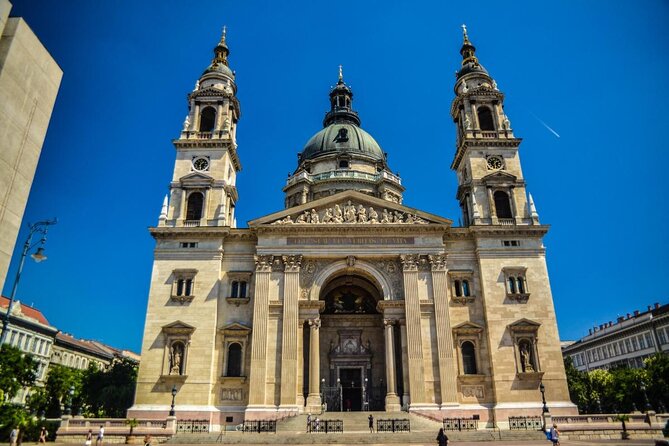
- St. Stephen’s Basilica Finish: Optional Inside on Your Own
- Price and Value: Is $108.26 per Person Worth It?
- Tips to Make the Day Feel Easy, Not Chaotic
- Who Should Book This Tour (and Who Might Skip It)
- If You Should Book: My Simple Decision Guide
- FAQ
- How long is the Budapest highlights private tour?
- Is this a private tour?
- Is hotel pickup and drop-off included?
- What’s included versus not included?
- Where do we meet, and where does the tour end?
- Can we enter Matthias Church?
- Is free cancellation available?
Key Highlights Worth Planning For
- Millennium Subway (line 1, built 1896): ride the city’s early metro and connect it to Andrassy Avenue
- Heroes’ Square + Millennium Monument: Hungary’s 1000-year commemoration in one memorable walk
- Vajdahunyad Castle setting in City Park: architecture play inside an actual park you’ll want to explore
- Buda Castle panoramic terrace: a structured stop for city views, not just a photo pause
- Fisherman’s Bastion over the Danube: postcard views with context on what you’re looking at
- Chain Bridge workaround: during the noted renovation window, you’ll use public transport instead of walking it
Still narrowing it down? A few more Budapest tours to weigh against this one.
- Budapest: City Highlights Sightseeing Cruise★ 4.6 · 43,981 reviews
- Budapest: Unlimited Prosecco, Beer and Aperol Spritz Cruise★ 4.8 · 37,304 reviews
- Budapest: Széchenyi Spa Day Ticket with Optional Upgrades★ 4.3 · 23,911 reviews
- Budapest: Nighttime or Daytime Sightseeing Cruise★ 4.2 · 21,062 reviews
Getting Your Bearings: What This 4-Hour Private Route Really Does
This is a classic Budapest “highlights with a guide” route, but it’s built around smart moments. In four hours, you get history, photos, and viewpoints, without turning the day into a museum marathon.
The big value is the guide’s job: to connect places that look beautiful to what they actually mean. You’ll hear why Heroes’ Square matters, what the Millennium Monument is commemorating, and how the Royal Palace and the Danube viewpoints fit into Budapest’s story. With a private setup, you’re not stuck in the same line as a big mass of people moving as one.
Also, the route is practical for short stays. You’re not trying to cover everything in Budapest—you’re choosing the places that give you the clearest first impression.
Meeting Point, Pickup, and How Transportation Works
You’ll meet at Szent István tér 4, 1051 Hungary. The tour ends in a different location (the plan includes a finish near Saint Stephen’s Basilica), so keep that in mind when you arrange your next meal or ride.
Pickup is available if you want it. The guide meets you at your hotel reception desk or right in front of your accommodation. Drop-off back at your hotel is possible too, with no extra fee, and it’s done by public transport or car depending on the selected option.
Two logistics notes matter:
- Public transport tickets are not included. You’ll need to cover those yourself.
- The tour uses a mix of walking plus public transport (including a bus to the Castle area).
This matters because Budapest’s viewpoints are spread out. If you’re expecting a purely walkable route, you might feel surprised by the transit segments—but that’s also what keeps the 4-hour timeline realistic.
Millennium Subway and Andrassy Avenue: Budapest’s Oldest Metro Moment
The tour starts with a stop to admire the Millennium Subway, Budapest Metro line 1, built in 1896. Even if you’ve never thought about metro systems, this is a cool way to get oriented. It’s not just transit—it’s part of the city’s growth.
While you’re in that area, you’ll also see Andrassy Avenue, a roughly 2-mile historic thoroughfare. This is one of those places where Budapest feels “European capital” fast. Wide avenue, grand buildings, and the sense that the city planned big from the start.
Why I think this opening works for visitors: it immediately connects modern sightseeing to historical development. You’re not starting with a monument and calling it a day. You’re starting with infrastructure—then you roll right into the commemorations.
Practical tip: expect some time in transit and on foot before the first major square. Wear shoes you can walk in comfortably.
Heroes’ Square: Big Architecture, Clear Symbolism
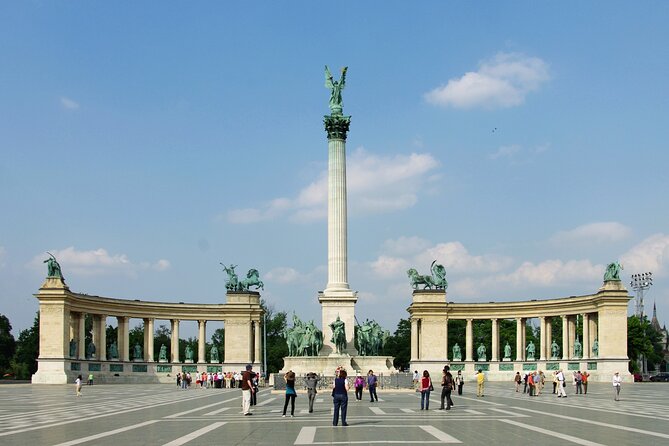
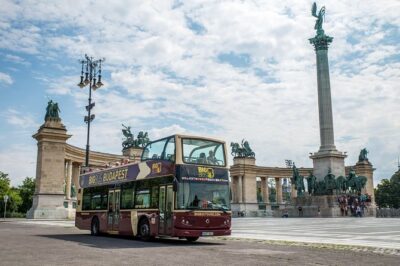
Next up is Heroes’ Square, the largest square in Budapest. The centerpiece is the Millennium Monument, and flanking it are the Arts Hall and the Fine Arts Museum.
Heroes’ Square can look overwhelming at first—too much stone, too many figures, too many directions. That’s exactly why having a guide helps. You’re not just staring at statues; you’re learning how the display is meant to communicate Hungarian identity and leadership across centuries.
You’ll spend about 10 minutes here, including time to take it in at a comfortable pace. It’s enough time to understand what you’re looking at and still move on without the tour turning into a traffic jam of sightseeing.


Millennium Monument and the Unknown Heroes
Right in the same Heroes’ Square area, you’ll get a closer look at the Millennium Monument. This one commemorates 1000 years of Hungarian history.
In front, there’s the grave of the unknown heroes—a detail that adds weight to the sightseeing photos. Around the monument, you’ll see statues of major kings and leaders, set into the colonnades.
This is a good moment to slow down just a bit, because it changes the vibe from postcard to meaning. Even if you’re not a history buff, the composition and symbolism are hard to ignore once someone points them out clearly.
City Park, Vajdahunyad Castle, and Anonymus
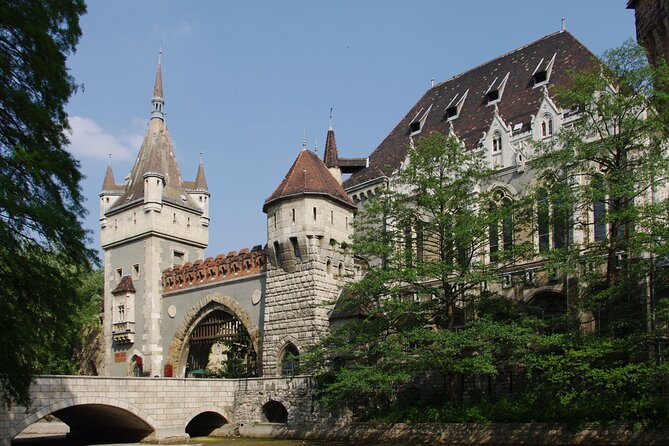
From Heroes’ Square you move toward Vajdahunyad Castle, located in Budapest City Park, which is described as the oldest public park in the world. That matters because the setting isn’t random. The castle is romantic, but it also feels like it belongs in a public space where people truly spend time.
You’ll cross a bridge to reach an island on the lake. The courtyard area uses copies of buildings representing different periods and Hungarian architectural styles. So instead of one single building to admire, you’re looking at a mix—more like a study model presented in a picturesque way.
The tour then includes a short stop at Anonymus Szobor, a statue in the inner courtyard. Anonymus is described as the first history writer of Hungary, living in the 12th century. That’s a quick but interesting cultural stop that adds an extra layer beyond castles and monuments.
Durations here are brief—about 15 minutes for the castle area and 5 minutes for Anonymus—so don’t expect a long sit-down. Treat it as a scenic reset before the higher-altitude viewpoints.
Passing Szechenyi Baths: Thermal Baths You Can See Without Tickets
You’ll pass by the main building of Szechenyi Baths, described as the largest thermal bath of Europe. From outside, you can see the outdoor pools and people swimming in warm water.
This is a smart “low-cost” stop for many visitors. You get the atmosphere and the scale without committing to a ticketed bath visit during a short tour window.
If you want to plan your own bath time later, this stop can help you decide whether Szechenyi is the right vibe for you. Seeing the outdoor pools gives you a quick sense of whether you want the full soak day.
Buda Castle and the Royal Palace Terrace View
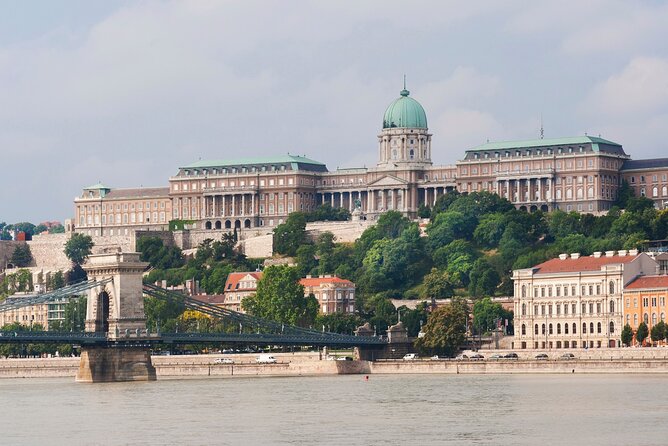
Now we shift to Buda Castle. You’ll travel there by public bus, then explore the panoramic terrace of the Royal Palace. This is the tour’s big viewpoint anchor.
The Royal Palace terrace gives you a structured look across Budapest—especially toward the Danube area. It’s the kind of place that makes the whole city feel connected, like you’ve finally stepped back and seen the geography.
You’ll have about 45 minutes here. That’s plenty for photos, but also enough time to just look without feeling rushed.
One realistic consideration: the Castle area involves walking and possible stairs/changes in elevation. If you’re not used to that, pace yourself early.
Fountain of King Matthias and Sandor Palace Guards
After Buda Castle, the route includes:
- Fountain of King Matthias (about 10 minutes)
- A move to Sandor Palace, where you’ll see the palace of the president with guards in historical uniforms (about 15 minutes)
- Entrance here isn’t included.
These stops are short, but they’re visually memorable. The King Matthias fountain gives you a clean architectural-and-art break from the larger palace scale. Then Sandor Palace adds a “watch the ceremony” feel, even if you’re mostly observing from the outside.
This combination works well because it keeps the day from getting too heavy. You go from terrace panorama back to details you can actually enjoy even if the weather isn’t perfect.
Fisherman’s Bastion: Danube Panorama With Context
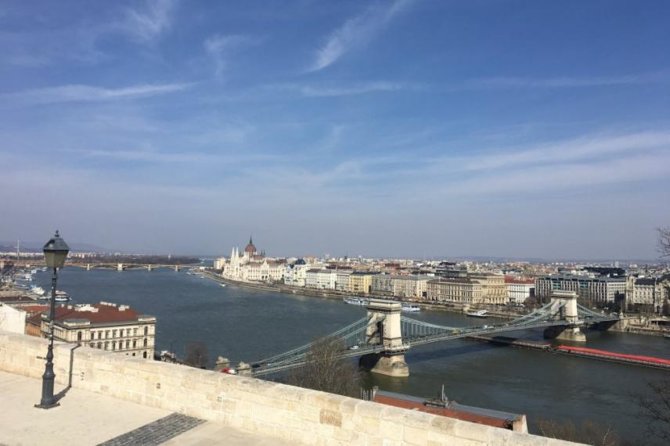
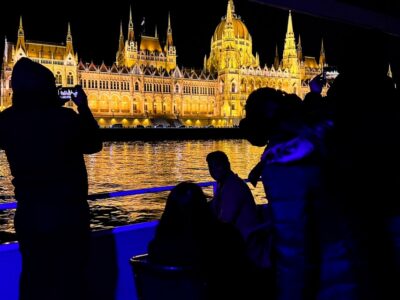
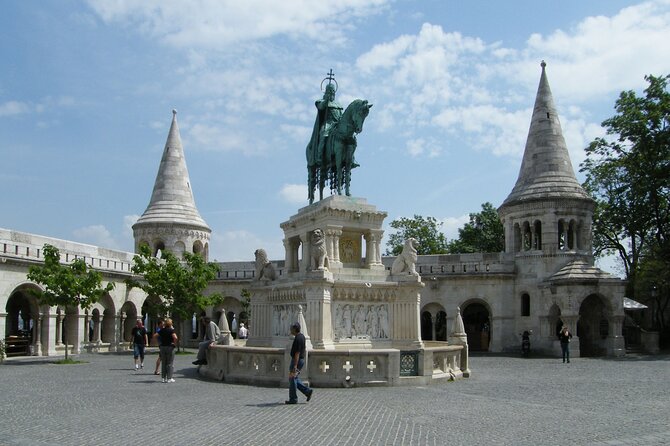
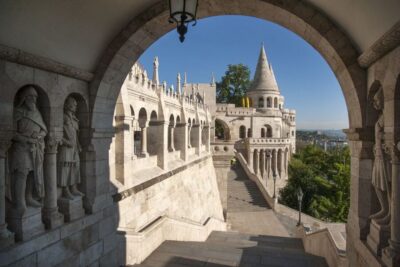
Next is Fisherman’s Bastion, one of the most beautiful places in Budapest. You’ll get about 15 minutes to admire the panorama over the river Danube and toward Hungarian Parliament building.
Here’s what makes this stop valuable beyond the photos: it’s one of those locations where you can connect the dots from earlier sightseeing. You can see how Buda’s viewpoints relate to the civic center over in Pest.
Important note: the tour doesn’t describe this as an entry-ticket stop. You’re there for views and surrounding atmosphere rather than a long interior visit.
Matthias Church: Walk Around Gothic Exteriors (and Optional Inside)
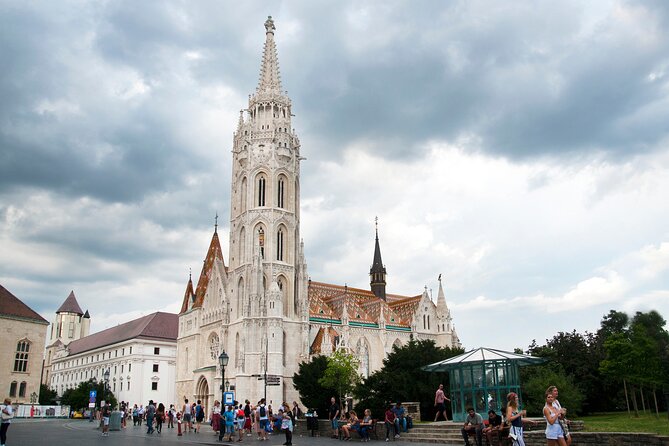
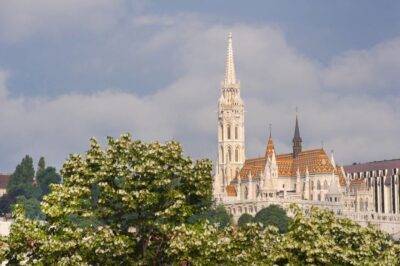
The tour then focuses on Matthias Church, described as Gothic and built in the Middle Ages. You’ll walk around it for about 15 minutes, and a short visit inside is possible on request.
If you want to go inside, there’s an extra fee: 5 EUR per person, paid separately for the entrance ticket. That means you should decide early if you care about interior details, because you’ll need to match the tour timing to that request.
One more practical detail from the tour notes: church areas require covering legs and shoulders. If you show up in summer shorts and a bare-shoulder top, you may get blocked. Bring something light you can throw on.
Szechenyi Lanchid (Chain Bridge) Workaround During Renovation
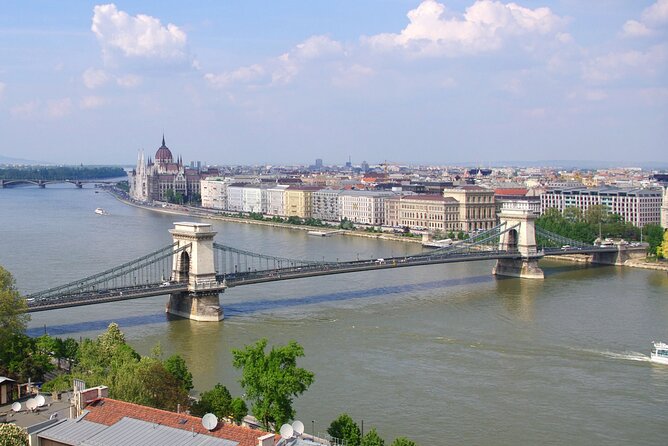
The tour includes a stop by Szechenyi Lanchid, the iconic Chain Bridge. But there’s a twist: the bridge is noted as under renovation from 2021 to 2022, so instead of walking on it, you’ll use public transport to get to the Castle of Buda.
The reason this matters: you’re still getting a look and a planned transfer, but you won’t necessarily do the classic slow walk across the bridge during the renovation window described.
If you’re sensitive to transport changes, this is one reason you might want to plan around the tour schedule rather than assuming you’ll follow a one-size-fits-all Budapest postcard path.
St. Stephen’s Basilica Finish: Optional Inside on Your Own
The tour has an option to finish in Pest Downtown in front of St. Stephen’s Basilica (Szent Istvan Bazilika). You’ll get about 10 minutes here.
You can also visit the church inside on your own after the tour. The option isn’t described as including a guided inside visit—so expect it to be self-paced if you choose it.
This finish is convenient because it puts you back on the Pest side, closer to lots of restaurants and evening plans.
Price and Value: Is $108.26 per Person Worth It?
At $108.26 per person for about 4 hours, you’re paying for more than just seeing monuments. You’re paying for:
- a professional, licensed guide
- hotel pickup and drop-off (by public transport or car depending on the option)
- a private format where it’s only your group
That private part matters in Budapest because the city is spread out. A guide also saves you from the common mistake of wandering between landmarks without understanding what you’re seeing. Here, the stops are arranged to give you both the sights and the story.
What’s not included is also important:
- public transport tickets
- Matthias Church inside if you request it (5 EUR/person)
So the real value equation is: if you want a fast, structured orientation to Budapest’s big hitters, this is a solid deal for the time. If you’re trying to spend the day mostly self-guided, you might get similar views cheaper—but you’ll lose the historical context and smooth routing.
Tips to Make the Day Feel Easy, Not Chaotic
A few small choices will make this tour work better for you:
- Bring church-friendly clothing. Shoulders and legs should be covered for church areas.
- Expect walking on uneven ground and stairs. Castle districts and courtyards aren’t flat like a modern mall.
- Plan your transport budget. Since public transport tickets aren’t included, add a little extra money just in case.
- Decide on Matthias Church inside ahead of time. It’s an optional extra and costs 5 EUR/person.
- Keep your phone charged. This route is built for viewpoints—your battery will feel it.
Also, the tour runs in all weather conditions. You’ll want a light rain layer if the forecast looks iffy.
Who Should Book This Tour (and Who Might Skip It)
This tour is a great fit if:
- you have a short stay and want the top Budapest highlights
- you like learning while you walk, especially with clear, practical guidance
- you want private pacing without having to plan routes and ticket details
It may not be ideal if:
- you’re hoping for a deep museum day with long indoor time
- you hate using public transport during a sightseeing plan
- you’re strongly focused on a single site (like only thermal baths or only churches) and want more time there
The route is designed for getting oriented and leaving with a mental map of where things sit.
If You Should Book: My Simple Decision Guide
Book it if you want a first-pass Budapest day that covers the classics and gives you meaning behind the views. This is especially true if you’re the kind of person who’ll take photos anyway, but also wants to understand why Heroes’ Square and Buda Castle matter.
Skip or swap to a different plan if you’re already comfortable navigating Budapest on your own and you’d rather spend your time inside fewer places.
One last thought: guides such as Dominik, Dalia, and Noemi show up in the experience descriptions with the same theme—friendly professionalism and the ability to adjust pace. If you care about that personal touch, this is the right style of tour for you.
FAQ
How long is the Budapest highlights private tour?
It runs for about 4 hours.
Is this a private tour?
Yes. It’s a private tour/activity, so only your group participates.
Is hotel pickup and drop-off included?
Yes. The guide can pick you up from your hotel or accommodation, and drop-off is also possible if you want it, with no extra fee.
What’s included versus not included?
Included are a professional, licensed tour guide and hotel pickup/drop-off. Not included are public transport tickets and optional paid entries like Matthias Church inside.
Where do we meet, and where does the tour end?
You meet at Budapest, Szent István tér 4, 1051 Hungary. The tour ends in a different location, with the plan including a finish in the Pest Downtown area near St. Stephen’s Basilica.
Can we enter Matthias Church?
A short visit inside is possible on request, but the entrance ticket costs 5 EUR per person, paid separately. Otherwise you’ll walk around the church.
Is free cancellation available?
Yes. You can cancel for a full refund up to 24 hours in advance of the experience start time.
More Tours in Budapest




More Tour Reviews in Budapest






Just Added: More Budapest Reviews
- Sightseeing flight over Budapest
★ 5.0 · 3 reviews - Budapest: Walking Tour with Chimney Cake & Polaroid Photos
★ 5.0 · 3 reviews - Self Guided Tour In Budapest With 100 Captivating Audio Stories
★ 5.0 · 3 reviews - Budapest Art Nouveau Walking Tour
★ 5.0 · 3 reviews - Hungary today: a no-taboo conversation
★ 5.0 · 3 reviews
Tours, compared.
 ★ 4.7Buda Castle Cave TourFrom $195,677 reviews
 ★ 4.1Big Bus Hop-On Hop-Off Tour by Open-top BusFrom $414,493 reviews
 ★ 4.1City Sightseeing Hop-On Hop-Off Bus Tour & ExtrasFrom $414,337 reviews
 ★ 4.6Buda Castle District Vampires and Myths Night TourFrom $233,830 reviews
 ★ 4.3Floating Bus Tour by Land and WaterFrom $283,342 reviews
 ★ 3.5Big Bus Budapest Hop-On Hop-Off Bus and Walking TourFrom $422,206 reviews
 ★ 4.6Buda Castle District Walking TourFrom $142,108 reviews
 ★ 4.83-Hour Orientation Walking Tour of Buda and PestFrom $411,834 reviews