
Reviewed · TOURS
Explore Budapest from the Local’s Perspective – Public Transportation Tour
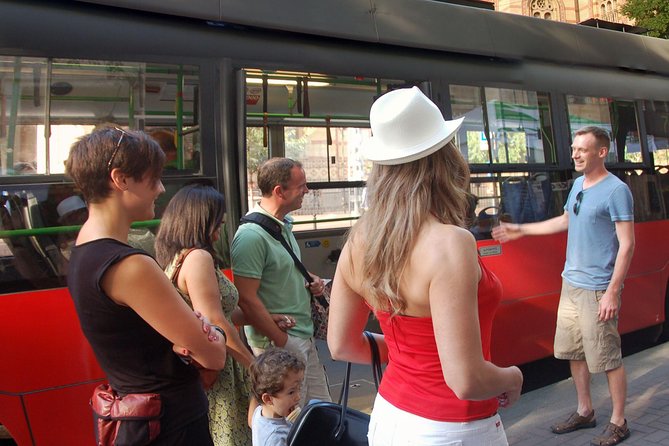
Budapest gets easy when you ride like locals. This 3-hour public transportation tour pairs an expert guide with a 24-hour transit pass, so you’re not just sightseeing—you’re learning how to move through the city efficiently and cheaply. I like the practical focus on using the network (tram, metro, and more) and the way the route lands on big hits like the Chain Bridge and the Royal Palace area. One possible drawback: you’ll cover a lot of ground in a short time, and it’s not a slow sit-down tour—expect walking and stairs, especially around the Buda side.
I also like the “leave with tools” approach. You get a rider’s booklet (a simple manual for Budapest public transport), a route map, and small extras like a notebook and souvenir pen—helpful for planning after the tour. A guide such as Miklós is the type who actually explains what you’re seeing and how to ride, not just points and dates. The good news: it’s a private experience for your group, so you can ask real questions without being shouted over.
In This Review
- Key takeaways before you go
- Why a 24-Hour Budapest transit pass is the real star
- Pickup, language, and the small things that reduce stress
- Andrássy Avenue: start on a grand boulevard, then learn how transit fits it
- Heroes’ Square: where the big national symbols meet practical transit
- Vajdahunyad Castle and the museum cluster near the park
- City Park Ice Rink: a classic public-space stop
- Jászai Mari tér and Margaret Bridge: transit hubs with atmosphere
- The ring road tram lines (Nagykörút): learn the city by watching flow
- Nyugati pályaudvar: the Western Railway Station as a hub
- Deák Ferenc tér: the big “how to move around” junction
- Elizabeth Square and the young, social side of Pest
- Buda Castle area vs. Gellért Hill: choose your climbing level
- Gellért Hill panorama and bridges back to the flow
- Kálvin tér: where the tour threads you back into central Budapest
- What you actually learn about using Budapest like a local
- Who this tour is best for (and who should skip it)
- Should you book this public transportation tour?
- FAQ
- How long is the Budapest public transportation tour?
- What does the tour cost?
- Is pickup included?
- Is the tour in English?
- Does the tour include a public transportation pass?
- What’s included with the tour besides the guide and transit pass?
- Is food included?
- Are there any admission fees mentioned for stops?
- Is this a private tour?
- Do I need to cancel at least 24 hours in advance to get a full refund?
- Is the tour appropriate for children?
Key takeaways before you go
- 24-hour transport pass included so the tour doesn’t end when it ends
- You practice the city’s rhythm using public transit, not just standing at stops
- Major sights fit the route including Heroes’ Square and the Buda Castle area
- Heroes’ Square museum façades and City Park sights help you orient fast
- Danube views from bridges and Gellért Hill make the “getting there” worth it
- Printed help plus a guide means you’ll know what to do next day, too
Still narrowing it down? A few more Budapest tours to weigh against this one.
- Budapest: City Highlights Sightseeing Cruise★ 4.6 · 43,981 reviews
- Budapest: Unlimited Prosecco, Beer and Aperol Spritz Cruise★ 4.8 · 37,304 reviews
- Budapest: Széchenyi Spa Day Ticket with Optional Upgrades★ 4.3 · 23,911 reviews
- Budapest: Nighttime or Daytime Sightseeing Cruise★ 4.2 · 21,062 reviews
Why a 24-Hour Budapest transit pass is the real star
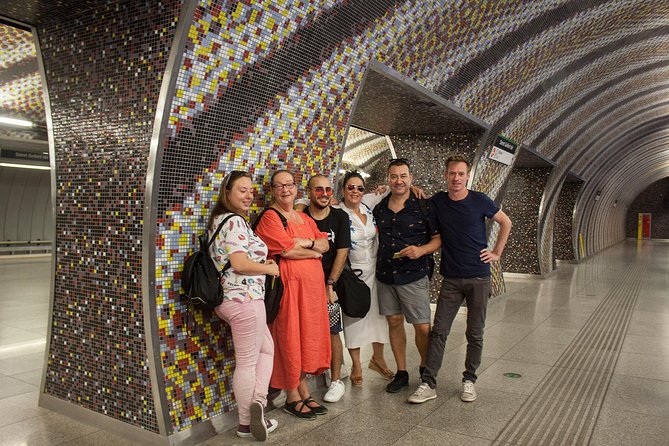
Most walking tours show you where to go. This one also helps you figure out how to get there again. The included 24-hour pass matters because Budapest is one of those cities where the best plan is often: don’t overthink it—ride the rails.
In practical terms, your tour day becomes a training session. You’ll learn how to use the system in the areas the route focuses on: central transport hubs like Deák Ferenc tér and big transfer zones around the ring road. That’s the kind of knowledge that pays off the next day when you’re heading to a museum, a ruin bar, or just trying to get out of the city center without losing an hour.
Price-wise, $118.58 per person can feel steep if you compare it to a basic sightseeing tour. But here you’re paying for an expert guide, pickup from your accommodation, and the pass plus transit instruction. That combination is what turns the cost into value, especially if you’ll use public transport more than once during your stay.
Pickup, language, and the small things that reduce stress
The tour is offered in English, runs about 3 hours, and includes pickup from your accommodation. You just share your address in the requirements box, and you’ll meet your guide at your place.
This pickup detail sounds minor, but it’s huge if you arrive jet-lagged or you’re still learning street names. Instead of walking to the first stop on your own, you start with a local in your ear.
You’ll also get a mobile ticket and a rider’s booklet. That matters because Budapest’s transit system is efficient, but it’s still a system. Having a simple manual and route map makes it easier to keep things straight while you’re bouncing between modes (tram to metro, and so on).
Andrássy Avenue: start on a grand boulevard, then learn how transit fits it
Your journey begins on Andrássy Avenue, a boulevard dating back to 1872 with Neo-renaissance façades and fine shops, cafés, theaters, and embassies. It’s also a UNESCO-listed World Heritage Site, which helps you see right away that Budapest isn’t only about one pretty building at a time—it’s about whole stretches of the city planned with style.
For you, the value is orientation. This avenue is a visual “spine” of the city, so once you can place it, the rest of Budapest starts clicking. And since this is a transit tour, you’ll learn how the main sight corridors connect to the public transport lines nearby.
If you’re the kind of person who likes to understand cities by movement rather than by a checklist, this start works well.
Heroes’ Square: where the big national symbols meet practical transit
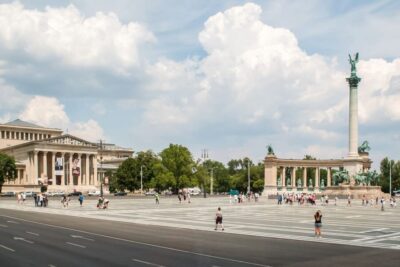
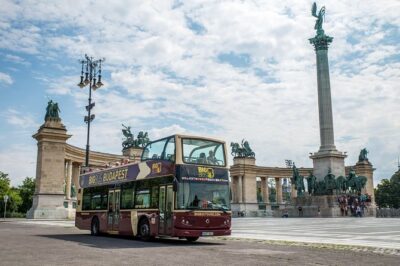
Heroes’ Square is your first major landmark stop. It’s famous for the statue complex of the Seven chieftains of the Magyars and other Hungarian national leaders, plus the Memorial Stone of Heroes. It’s the kind of place where photos are easy, but what’s more useful is how it anchors your mental map of Pest.
From here, you’re also close to a cluster of arts and architecture highlights, so the guide can connect history to what you’re actually seeing, not just recite a timeline. The area is also a natural “decision point” for travelers—people either head to museums or drift toward the Danube. This tour keeps you moving with a plan.
The stop is free and short (about 15 minutes), so it’s not built for museum marathons. Think of it as a quick orientation + viewpoint setup.



Vajdahunyad Castle and the museum cluster near the park
Next you’ll move toward City Park, including Vajdahunyad Castle. The castle is known for its design inspired by landmarks from different parts of the Kingdom of Hungary, especially Hunyad Castle in Transylvania. It was built for the Millennial Exhibition in 1896.
Even if you don’t go inside, you’ll still get something out of this stop: a sense of how Budapest celebrates Hungarian identity through architecture. And since the tour is about learning the city, this helps you understand why City Park is such a hub for events and sightseeing.
Right near Heroes’ Square, you’ll also be in the orbit of the Museum of Fine Arts and the Budapest Hall of Art. The Museum of Fine Arts is an eclectic-neoclassical building (built 1900–1906) and holds a large international collection. The Budapest Hall of Art focuses on temporary contemporary exhibits and has amenities like a café that looks out over the square.
Practical note: this section is where you’ll notice the difference between seeing a building and experiencing the interior. The tour gives you the context to decide if you want to return later on your own.
City Park Ice Rink: a classic public-space stop
You’ll also pass the City Park Ice Rink, a public rink opened in 1870. It’s among the oldest in Europe and still one of the city’s great public-space ideas: recreation and sightseeing in one place.
This is another “quick look” stop. If you’re visiting outside ice season, you still gain something—local knowledge about where people go when they want a scenic walk that feels like it belongs to Budapest, not to a brochure.
Jászai Mari tér and Margaret Bridge: transit hubs with atmosphere
You’ll then hit Jászai Mari tér, a spacious public transport hub and social spot at the foot of Margaret Bridge. The square is named after Mari Jászai, an important Hungarian actor, which adds a human story to a place that otherwise could feel purely functional.
From there, Margaret Bridge follows—a three-way bridge connecting Buda and Pest and linking Margaret Island to the banks. It’s one of Budapest’s older bridges too, which gives the guide an easy chance to connect modern commuting to older city structure.
For me, this is where transit tours feel smarter than standard walking tours. Bridges and squares are not just scenery. They’re the places where locals actually cross and regroup.
The ring road tram lines (Nagykörút): learn the city by watching flow
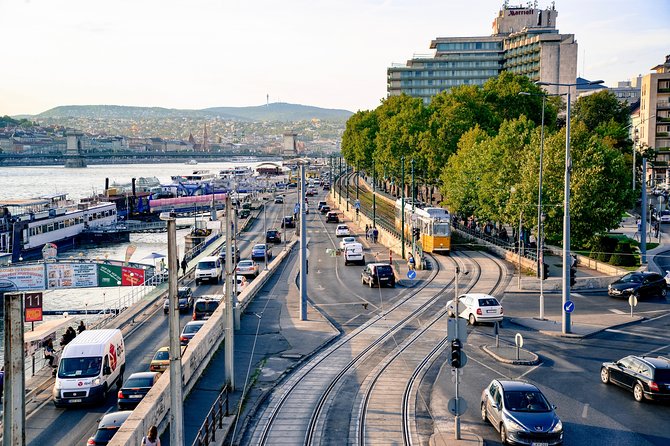
One of the tour’s most useful segments is riding the ring road tram corridor—Nagykörút. This is where two of the busiest tram lines run, with headways as tight as every couple minutes during rush hours. There’s also a local legend that it’s the busiest tram line in the world.
What you should take from this isn’t the myth. It’s the pattern. When you ride along Nagykörút, you see how Budapest moves. The ring road is like a moving outline of the city, and once you understand it, you can plan trips with fewer transfers and less guesswork.
Also, because you’re on a tram line that carries millions of passengers, you’ll get a real sense of where transit “works” in daily life—not just on tourist routes.
Nyugati pályaudvar: the Western Railway Station as a hub
Then you arrive at Budapest’s Western Railway Station, known as Nyugati (Nyugati pályaudvar). It’s one of the three main railway terminals in the city. It’s well connected by tram lines and metro, which makes it a practical hub if you’re planning any longer-distance travel during your stay.
What’s valuable for you is the surroundings: this area is a busy meeting point with restaurants, bars, and diverse stores. The tour doesn’t treat it like a dead-end station. It treats it like a gateway—exactly how a city transit hub should function.
This stop also reinforces something important: Budapest transit isn’t isolated modes. Trains, trams, and metro lines overlap and feed into each other.
Deák Ferenc tér: the big “how to move around” junction
Deák Ferenc Square is named for Ferenc Deák, called The Wise Man of the Nation. But you’ll love it for a more modern reason: it’s one of the city’s central transfer points.
Three metro lines converge here under the square, and trams and buses also start or pass through the area. This is the place you come to when you want options. The guide’s role is to show you what those options mean in real life—what you should take for where you’re going and how to avoid unnecessary switching.
If you’ve ever felt lost in public transit, this is the section that fixes that feeling fast.
Elizabeth Square and the young, social side of Pest
From Deák Ferenc tér, you’ll spend a short time at Elizabeth Square (nearby), a park area known for drawing young people and for staying active into late hours. Drinks are sold at the grassy area, and the square often fills up well past midnight.
This isn’t the moment for cultural lectures. It’s more like a pulse check. You’re seeing how transit intersects with social life—where people wait, meet, and move on.
Buda Castle area vs. Gellért Hill: choose your climbing level
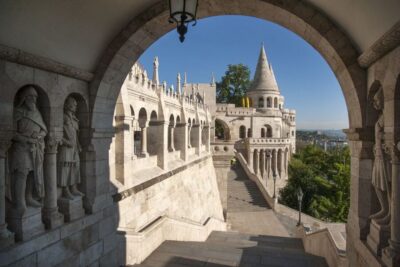
The tour shifts toward the Buda side and includes time for the Buda Castle area. There’s also a mention of a funicular option tied to getting around the area, especially if you want to reduce the steep climb.
This part is a big reason to do a guided transit tour instead of winging it. Budapest’s hills can take the wind out of your legs if you’re not ready. With the guide’s routing and mode choice, you get the views without turning the day into a stair workout.
You’ll also reach Szent Gellért Square, which features water-themed design, including wavy benches that represent Danube waves. It’s a visual payoff right at a transport stop.
And then, you’ll be in the orbit of the Gellért Thermal Baths area near Hotel Gellért. Even if you don’t go in, it helps to know where these major landmarks sit, because it affects how you plan the rest of your days.
Gellért Hill panorama and bridges back to the flow
Gellért Hill is your main viewpoint moment. At 235 meters high, it’s known as one of the best panorama points over Budapest. The hill is named after Bishop Gellért, tied to a dramatic story from around 1000 AD. The tale includes a brutal end for the bishop, when opposing pagans rolled him down the hill into the Danube in 1046.
You get the practical travel value here: once you learn where the best viewpoints are, you can plan sunrise, sunset, or simply a break from walking. And since this is built into a transit route, you’re not wasting time backtracking.
Then you cross Liberty Bridge (Szabadság hid), a bridge that links you back toward the next central stop. It’s one of the easiest ways to keep the Danube in your line of sight while staying efficient.
Kálvin tér: where the tour threads you back into central Budapest
Your last stop includes Kálvin Square (Kálvin tér), a major intersection and transport hub in the city center. It’s named after John Calvin due to the large Reformed Church nearby. The square is served by tram, bus, and trolleybus routes, which makes it another “you can go anywhere from here” location.
This closing section is practical. Instead of dropping you in a museum-heavy dead zone, you leave near a major hub where your next ride is easy to plan.
What you actually learn about using Budapest like a local
This is where the tour’s reputation makes sense. It’s not only about where to take pictures. It’s about how to ride.
You’ll practice multiple means of transportation—guided through in a way that makes the system feel manageable. There’s also a sense of confidence that builds as you move: you start to realize that Budapest’s transit network is more logical than it looks on a map.
In the included rider’s booklet and route map, you also get a fallback. If you’re the type who likes to double-check, that safety net matters. The goal is simple: you should finish the tour knowing the main transfer points and how to reach key sights without stress.
Who this tour is best for (and who should skip it)
This tour is a great fit if you:
- Want to see major landmarks without spending your whole day in taxis
- Like learning how to navigate cities by public transport
- Plan to keep using transit during the rest of your trip
- Prefer a guide who explains the system, not just the scenery
It might be less ideal if you:
- Want a slow-paced, museum-first day
- Don’t want to walk on hilly streets
- Are hoping for food to be included (it’s not)
Should you book this public transportation tour?
If you’re spending more than a day or two in Budapest and you want to get your bearings fast, I think it’s a strong booking. The combination of pickup, a 24-hour pass, and a guide-focused on how to ride turns sightseeing into usable local skill. That’s the kind of value that keeps paying off after the 3 hours are over.
But if your priorities are mostly indoor museum time and minimal movement, you may prefer a different style of tour where the schedule is built around longer stops. For an efficient, local-style introduction to Budapest by transit, though, this one makes a lot of sense.
FAQ
How long is the Budapest public transportation tour?
It runs for about 3 hours.
What does the tour cost?
The price is $118.58 per person.
Is pickup included?
Yes. Pickup is offered from your accommodation. You’ll need to provide your address in the requirements box.
Is the tour in English?
Yes, it’s offered in English.
Does the tour include a public transportation pass?
Yes. You receive a 24-hour pass for Budapest’s public transportation system.
What’s included with the tour besides the guide and transit pass?
The tour includes a notebook, souvenir pen, a map showing the tour route, a rider’s booklet/manual for Budapest public transport, and a local guide.
Is food included?
No. Food and drinks are not included.
Are there any admission fees mentioned for stops?
The itinerary notes that stops like Heroes’ Square, Jászai Mari tér, Margaret Bridge, Nyugati, Deák Ferenc Square, Elizabeth Square, and others are admission ticket free in the tour outline.
Is this a private tour?
Yes. It’s described as a private tour/activity, with only your group participating.
Do I need to cancel at least 24 hours in advance to get a full refund?
Yes. Free cancellation is available, and you must cancel at least 24 hours before the experience’s start time for a full refund.
Is the tour appropriate for children?
Children must be accompanied by an adult.
More Tours in Budapest





More Tour Reviews in Budapest






Just Added: More Budapest Reviews
- Sightseeing flight over Budapest
★ 5.0 · 3 reviews - Budapest: Walking Tour with Chimney Cake & Polaroid Photos
★ 5.0 · 3 reviews - Self Guided Tour In Budapest With 100 Captivating Audio Stories
★ 5.0 · 3 reviews - Budapest Art Nouveau Walking Tour
★ 5.0 · 3 reviews - Hungary today: a no-taboo conversation
★ 5.0 · 3 reviews
Tours, compared.
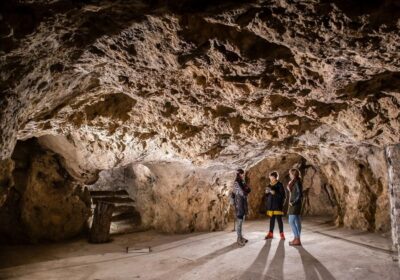 ★ 4.7Buda Castle Cave TourFrom $195,677 reviews
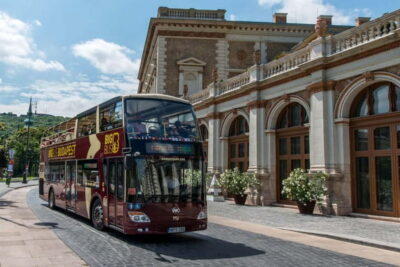 ★ 4.1Big Bus Hop-On Hop-Off Tour by Open-top BusFrom $414,493 reviews
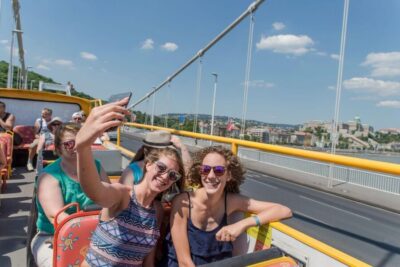 ★ 4.1City Sightseeing Hop-On Hop-Off Bus Tour & ExtrasFrom $414,337 reviews
 ★ 4.6Buda Castle District Vampires and Myths Night TourFrom $233,830 reviews
 ★ 4.3Floating Bus Tour by Land and WaterFrom $283,342 reviews
 ★ 3.5Big Bus Budapest Hop-On Hop-Off Bus and Walking TourFrom $422,206 reviews
 ★ 4.6Buda Castle District Walking TourFrom $142,108 reviews
 ★ 4.83-Hour Orientation Walking Tour of Buda and PestFrom $411,834 reviews