
Reviewed · TOURS
Café Wandering: An Excursion through Budapest’s Belle Epoque
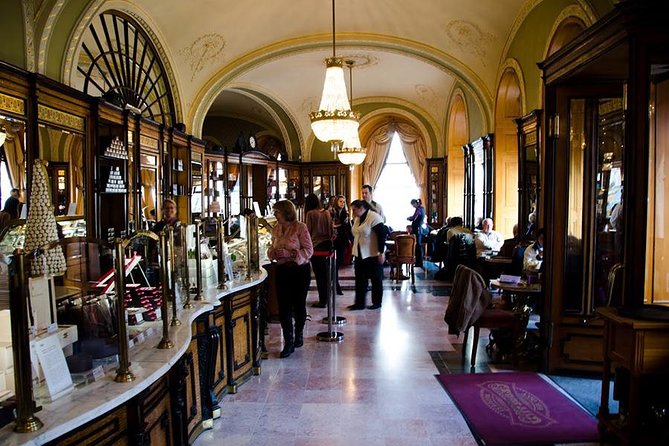
Budapest’s cafés read like architecture books. This 3-hour walk links Belle Époque buildings with café house culture, so you’ll spot design choices and hear the stories behind them. I especially like the stop inside Café Gerbeaud, with its long-running Imperial-era atmosphere, and the dramatic way the route builds toward the Kazinczy Street Synagogue. One drawback to plan for: most cakes and coffees along the way are not included in the $123 price.
You’ll go with an English-speaking art historian guide in a small group (max 8), which keeps the pace human and the commentary specific. It’s also a smart way to see more than one neighborhood without making you lug a plan around your phone.
In This Review
- Key highlights worth penciling in
- Why Budapest’s Belle Époque cafés feel like living museums
- Price and what you get in a 3-hour small-group walk
- Getting oriented at Vörösmarty tér and Café Gerbeaud
- Tram across the Danube corridor to Central Café and Restaurant 1887
- Café Astoria: classic coffeehouse grandeur in plain sight
- Művész Coffee House and the artist-life angle
- New York Palace Café and the feeling of a bigger world
- Museum Cafe’s Asian motifs and why designers used them
- Urania Café on Rákóczi street and the film-theater connection
- Kazinczy Street Synagogue: ending with Art Nouveau meaning
- Architecture-reading tips you can use immediately
- What kind of traveler this fits best
- Should you book Café Wandering?
- FAQ
- How long is the Café Wandering tour?
- Where does the tour start?
- What language is the guide?
- Is the group size limited?
- Is refreshments included in the price?
- What kind of guide will I have?
- Does the tour include tram travel?
- Does the tour include the Kazinczy Street Synagogue?
- What is the cancellation policy?
Key highlights worth penciling in
- Café Gerbeaud’s iconic interior and how it shaped Imperial Budapest social life
- Central Café and Restaurant 1887 and the feeling of Habsburg-era dignity
- Café Astoria with classic coffeehouse grandeur you can see with your own eyes
- Museum Cafe’s lavish walls, including design motifs drawn from Asia
- Urania Café on Rákóczi street, tied to the city’s film-theater legacy
- Kazinczy Street Synagogue, an Art Nouveau finish to a café-themed route
Still narrowing it down? A few more Budapest tours to weigh against this one.
- Budapest: City Highlights Sightseeing Cruise★ 4.6 · 43,981 reviews
- Budapest: Unlimited Prosecco, Beer and Aperol Spritz Cruise★ 4.8 · 37,304 reviews
- Budapest: Széchenyi Spa Day Ticket with Optional Upgrades★ 4.3 · 23,911 reviews
- Budapest: Nighttime or Daytime Sightseeing Cruise★ 4.2 · 21,062 reviews
Why Budapest’s Belle Époque cafés feel like living museums
Budapest does not just have pretty buildings. It has buildings that hosted real conversations. This tour is built around that idea: café culture as an engine for art, politics, literature, and public debate during the late 19th and early 20th centuries.
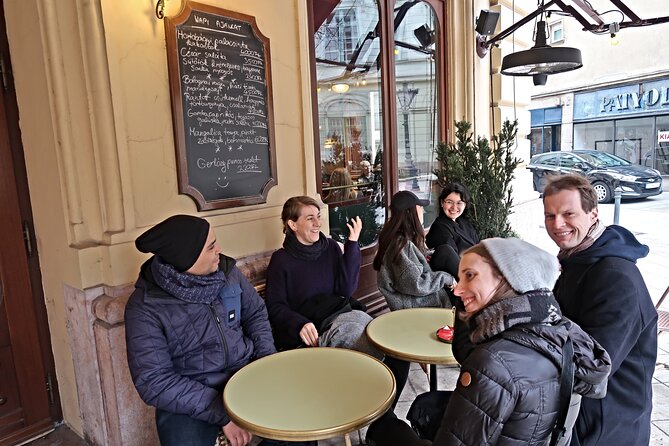
What makes the experience work is the combination. You’re not only looking at façades and interiors. You’re also learning how cafés functioned like informal salons, where artists and writers gathered, and where new ideas traveled as easily as coffee and pastries. That context turns decoration into evidence.
And yes, it’s visual. Hungarian architecture from the 1800s and early 1900s shows up in grand rooms, painted surfaces, and room-scale design. You’ll start recognizing styles faster after a couple of stops, because the guide connects what you see to what the city was trying to do—signal power, sophistication, and cosmopolitan taste.
Price and what you get in a 3-hour small-group walk
The cost is $123 per person for 3 hours with a live guide. That’s not cheap, but it’s also not random. You’re paying for (1) a guided path across major café landmarks, (2) an art historian’s interpretation, and (3) time-efficient sightseeing that doesn’t require you to research each place on your own.
Two things affect value here:
- The group stays small (up to 8 participants), so questions don’t get swallowed by a crowd.
- Refreshments are not included. If you drink coffee or order cake, you should expect extra spending.
If you tend to skip paid tours because you’re trying to save money, this one can still make sense if you like architecture + storytelling. If you’re mainly after casual photo stops, you might find it a bit structured for what you want.
Getting oriented at Vörösmarty tér and Café Gerbeaud
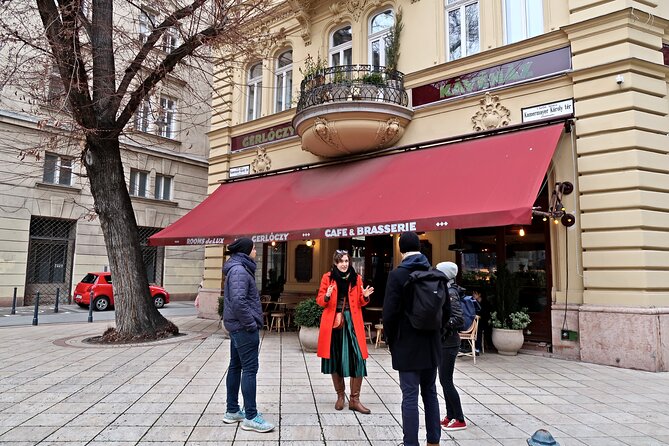
You meet at Café Gerbeaud at Budapest Vörösmarty tér 7-8 (1051). It’s a strong starting point because Gerbeaud is not a quick “look-in” place. It’s a landmark that signals how the city imagined itself during the period when cafés acted like cultural headquarters.
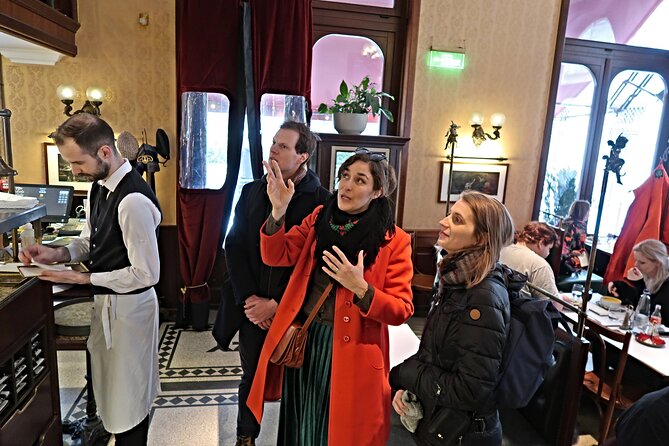
Your guide—an academic-type profile that can include professors, doctoral students, historians, journalists, art critics, and published authors—sets the tone immediately. You learn how to read the room: not just as decoration, but as social design. Who was it for? What did the setting communicate? Why did it matter that visitors and locals treated the café as a central hub?
Even if your Hungarian history knowledge is light, you’ll understand the logic fast: this is where elegance becomes a public language. One of the standout points from real-world feedback was that a guide named Kota was excellent, which matters here because a tour like this lives or dies on interpretation, not just location.
Tram across the Danube corridor to Central Café and Restaurant 1887
From Gerbeaud, you take the tram along the Danube to the next café stop. That transit bit is more than a ride. It helps you feel the geography of the city’s core, and it breaks up the museum-like pace so you don’t get “everything is inside” fatigue.
Then you reach Central Café and Restaurant 1887, described as dignified and representative of café house culture at the peak of Habsburg economic and cultural power. The practical takeaway: the guide pushes you to look at the entire experience—decor, meals, desserts, and drinks—as one historical package, not separate features.
This is where many people start spotting a pattern: certain cafés use grandeur to create credibility. The room becomes a social filter. You might find yourself mentally comparing textures, wall finishes, and how seating is arranged for lingering—small details that actually explain why café culture became such a powerful tradition.
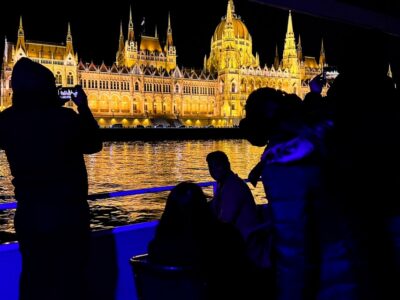


Café Astoria: classic coffeehouse grandeur in plain sight
Next comes Café Astoria, known for evoking the grandeur of classic European coffee houses. What I like about this stop is how approachable it is visually. Even if you’re not an architecture person, you can still notice the sense of ceremony in the interior styling.
The guide’s role here is to connect those visuals to the Budapest “Imperial” mood people associate with the late 1800s. It’s not about making you memorize dates. It’s about helping you see how a café’s design can project stability and taste—something people wanted during a period when the city’s cultural identity was being shaped in public spaces.
One practical note: you’ll likely spend enough time to actually look around rather than rushing through. That’s key. Interiors like this reward slow attention.
Művész Coffee House and the artist-life angle
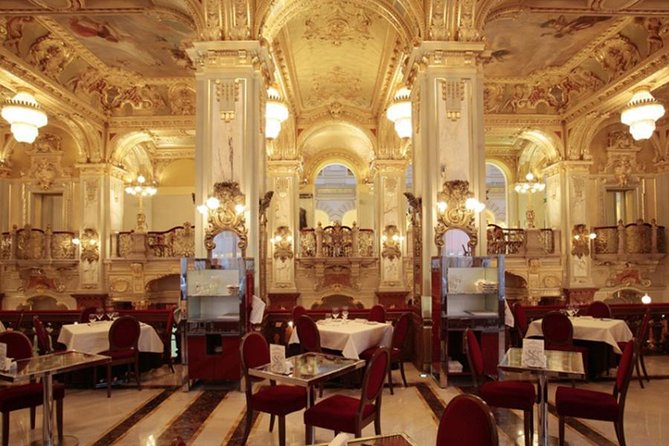
After Astoria, the tour continues toward Művész Coffee House (an artist-focused stop). This is where the café theme becomes more than architecture. The story shifts toward who used these spaces and why, and you start seeing cafés as stages for creative life rather than just places to refuel.
You’ll hear how cafés supported intellectual communities—poets, artists, and writers—so the “why” behind the décor becomes clearer. If you like cultural history, this part is a good payoff: it explains the human side of grand rooms.
This is also a decent moment to reset your expectations. Think of it like a guided walk with mini chapters. Each café is one chapter, and the guide makes sure you’re not stuck in one long lecture.
New York Palace Café and the feeling of a bigger world
New York Palace Café appears on the route as a guided-tours stop. Here, the name alone hints at ambition, and the guide’s narration helps connect that ambition to the broader café-and-city story.
Even without extra assumptions, you can treat this stop as a shift in tone. Earlier cafés feel tied to Imperial and Habsburg-era power, while New York Palace leans into a cosmopolitan, “showpiece” vibe. The point for you: café interiors often reflect what their designers wanted the public to believe about the city—modern, connected, and culturally current.
If you’re the type who likes architecture because it reveals values, you’ll likely enjoy this portion.
Museum Cafe’s Asian motifs and why designers used them
One of the highlights is the Museum Cafe, where you’ll examine Asian motifs and elements employed by designers. This is a fascinating stop because it shows how design can borrow symbols from far away—then repackage them for local audiences.
Why it matters: those motifs aren’t random decoration. They reflect taste trends of the era and the way Europe consumed exotic imagery. A good guide helps you move beyond “cool patterns” into “what does this communicate?”
When you see those elements while hearing historical context, the experience turns into visual literacy. You start recognizing that café interiors were also part of a global conversation, even when you stayed inside Budapest.
Urania Café on Rákóczi street and the film-theater connection
The walk also includes Urania Café on Rákóczi street. It’s described as housing the oldest film theater in the city, and it’s known for lectures given by prominent intellectuals before large audiences.
That combination—café space + lectures + film history—gives the tour an extra layer. This isn’t only about cafés as places for talk. It also shows cafés as venues for public knowledge and cultural programming, where audiences gathered and ideas spread.
Practical tip: if you enjoy environments where culture mixes with everyday life, you’ll like this section. It helps you see how the city’s intellectual energy wasn’t limited to museums and lecture halls.
Kazinczy Street Synagogue: ending with Art Nouveau meaning
The finale is the Kazinczy Street Synagogue, described as a fascinating Art Nouveau orthodox synagogue. It’s a strong ending because you’re no longer stuck in café interiors. You’re finishing with architecture that forces your eyes to work—ornament, style, and a sense of theatrical structure.
It also gives the whole tour a satisfying arc. You started with café rooms shaped for social life. You end with a building shaped for community presence and expression. If you’ve been paying attention to how designs communicate identity, you’ll feel the connection.
Architecture-reading tips you can use immediately
Here’s how I’d make the most of this kind of tour, using what you’ll see along the way:
- Look at the room as a social tool, not just decoration. Notice where people naturally linger.
- Pay attention to materials and lighting cues. They often signal whether a space wants you to feel intimate or ceremonial.
- Watch for design borrowed from elsewhere, like the Asian motifs at the Museum Cafe. Those patterns can carry social meaning from the era of their popularity.
- Use the tram segment as a “reset.” It breaks up the interior-heavy pattern so you can absorb stops better afterward.
If you do this, the 3 hours feel less like a checklist and more like a guided way to understand how Budapest expresses identity through design.
What kind of traveler this fits best
This tour is especially well-suited for:
- People who enjoy architecture plus storytelling, not just sightseeing
- Visitors who like café culture as a window into literature and art life
- Anyone who wants a guided interpretation from someone with an academic or critical background
- Travelers who prefer small-group pacing (max 8)
If you’re mainly after free time to wander or you dislike guided walks, it may feel too structured. And if you don’t plan to spend much on drinks or cake, remember that the tour cost doesn’t include refreshments at the cafés.
Should you book Café Wandering?
Book it if you want a high-signal, design-focused walk through Budapest’s Belle Époque identity, with an art historian guide and an ending that hits hard visually. The $123 price is easiest to justify when you value interpretation and you’re the type who actually looks at interiors.
Skip it if you only want quick photos, dislike structured routes, or expect the ticket price to cover café spending. Also, if you’re arriving for a short visit and want just one “big hit,” this is a better choice when you’re open to multiple stops rather than a single monument.
If you fit the first group, you’ll probably leave with two things: a stronger sense of Budapest’s architectural language, and a clearer idea of how cafés helped shape culture in the city.
FAQ
How long is the Café Wandering tour?
The tour lasts 3 hours.
Where does the tour start?
The meeting point is Café Gerbeaud, Budapest Vörösmarty tér 7-8 1051.
What language is the guide?
The live tour guide speaks English.
Is the group size limited?
Yes. The group is small, limited to 8 participants.
Is refreshments included in the price?
No. The cost of refreshments, cakes, and coffees selected at the cafés visited is not included.
What kind of guide will I have?
The guides are described as art historians and can include professors, doctoral students, historians, journalists, art critics, and published authors.
Does the tour include tram travel?
Yes. You’ll take the tram along the Danube to reach the Central Café and Restaurant 1887.
Does the tour include the Kazinczy Street Synagogue?
Yes. The tour concludes at the Kazinczy Street Synagogue.
What is the cancellation policy?
You can cancel up to 24 hours in advance for a full refund.
More Tours in Budapest



More Tour Reviews in Budapest




Just Added: More Budapest Reviews
- Sightseeing flight over Budapest
★ 5.0 · 3 reviews - Budapest: Walking Tour with Chimney Cake & Polaroid Photos
★ 5.0 · 3 reviews - Self Guided Tour In Budapest With 100 Captivating Audio Stories
★ 5.0 · 3 reviews - Budapest Art Nouveau Walking Tour
★ 5.0 · 3 reviews - Hungary today: a no-taboo conversation
★ 5.0 · 3 reviews
Tours, compared.
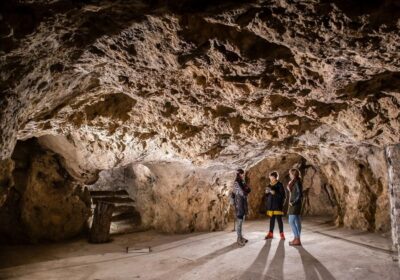 ★ 4.7Buda Castle Cave TourFrom $195,677 reviews
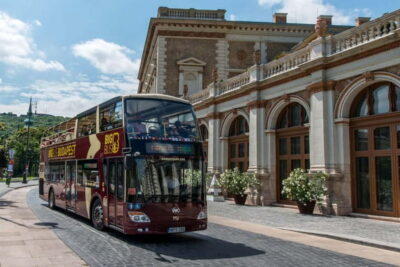 ★ 4.1Big Bus Hop-On Hop-Off Tour by Open-top BusFrom $414,493 reviews
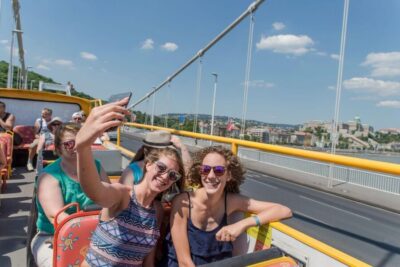 ★ 4.1City Sightseeing Hop-On Hop-Off Bus Tour & ExtrasFrom $414,337 reviews
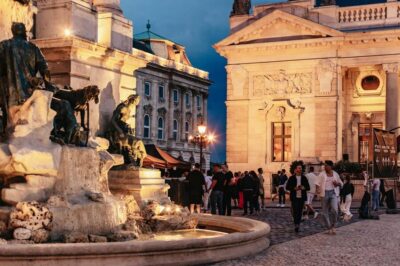 ★ 4.6Buda Castle District Vampires and Myths Night TourFrom $233,830 reviews
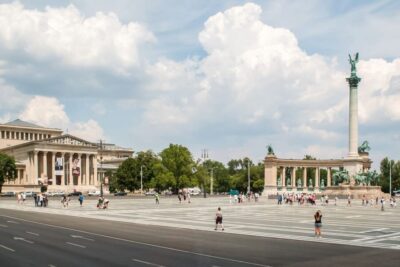 ★ 4.3Floating Bus Tour by Land and WaterFrom $283,342 reviews
 ★ 3.5Big Bus Budapest Hop-On Hop-Off Bus and Walking TourFrom $422,206 reviews
 ★ 4.6Buda Castle District Walking TourFrom $142,108 reviews
 ★ 4.83-Hour Orientation Walking Tour of Buda and PestFrom $411,834 reviews