

Reviewed · DANUBE RIVER CRUISES
Budapest’s TOP Sights Evening Cruise & Welcome Drink
Danube night lights without a long walk. This 1-hour evening cruise lets you glide past Budapest’s biggest landmarks on the Danube, with onboard narration and a welcome drink to start your night. You’ll also get time at the Panorama Terrace for photos when the city is lit up.
I love how easy it is to jump in and start: you meet at Shoes on the Danube Bank, then the boat runs a smooth roundtrip back to the same pier. I also like the onboard comfort details like WiFi, a restroom, and A/C, so you can focus on the sights instead of logistics.
One thing to consider: timing matters. If you go before it’s properly dark, the reflections and daylight can soften the full lit-up effect, and photos can be trickier.
In This Review
- Key highlights you should care about
- Shoes on the Danube Bank to a Warm Boat: Getting Oriented Fast
- Price and Value for a 1-Hour Danube Tour at Around $23
- The Welcome Drink: What You Actually Get and How to Avoid Confusion
- Panorama Terrace Photo Time: Getting the Best Shot Without a Photo Mission
- Hungarian Parliament Building at Night: That Red Dome From the Danube
- Margaret Bridge: A Bridge With World War II Scars
- Matthias Church and Its Colorful Details You Can Spot From the Water
- Buda Castle: UNESCO Views Without the Hill Climb
- Gellért Hill, Citadella Fortress, and the Liberty Statue
- Gellért Spa, Liberty Bridge, and the City’s Motion
- Budapest University of Technology and Economics: A Quick Pass That Still Means Something
- Museum of Contemporary Arts and the National Theater: What to Expect
- Kossuth Museum Ship: A Free Add-On Before or After
- Onboard Audio: How to Use It (So You Don’t Miss the Point)
- Who This Cruise Fits Best
- Should You Book Budapest’s TOP Sights Evening Cruise?
Key highlights you should care about
- Shoes on the Danube Bank is the meet-up point, with an easy same-pier roundtrip
- Welcome drink plus coffee/tea or soft options are part of the experience
- Panorama Terrace gives you a better angle for night photos
- GPS-synced audio helps you follow what you’re seeing along both river banks
- Photo-friendly landmark run includes Parliament, Matthias Church, Buda Castle, and more
- Free Kossuth Museum ship stop can be added before or after the cruise
Not sure which sailing? Line up a few more on the Danube
- Budapest: City Highlights Sightseeing Cruise★ 4.6 · 43,981 reviews
- Budapest: Unlimited Prosecco, Beer and Aperol Spritz Cruise★ 4.8 · 37,304 reviews
- Budapest: Nighttime or Daytime Sightseeing Cruise★ 4.2 · 21,062 reviews
- Budapest: By Night Sightseeing Cruise with Welcome Drink★ 4.3 · 15,533 reviews
Shoes on the Danube Bank to a Warm Boat: Getting Oriented Fast
Start at Shoes on the Danube Bank (1054). It’s a big, recognizable spot, and that matters, because a lot of Budapest tours fail at the first five minutes. Here, the meeting point is clear, and the staff on the dock focus on helping you get checked in and sorted.
Once you’re onboard, the vibe is practical. This is a group cruise, and the boat has the basics that make an evening outing easier: restroom on board, WiFi, and air-conditioned comfort. There’s also background music, so you’re not sitting in silence while the audio runs.
The boat size is limited to a maximum of 150 passengers, which is one reason the experience can feel relaxed. On days when you’re not crammed in, you can move toward the side with the best view and take photos without feeling like you’re fighting shoulder-to-shoulder crowds.
Price and Value for a 1-Hour Danube Tour at Around $23
At $23.11 per person, this is priced like a true city “starter night” activity: see major sights, get a drink, and stay out of the walking-map maze. You’re not paying for a long sightseeing day. You’re paying for concentration—one short ride that puts a lot of landmarks in front of you.
For the money, the value comes from the mix of:
- A welcome drink (with soft options plus alcoholic choices depending on your selection)
- Coffee and/or tea
- Onboard amenities like A/C, WiFi, and a restroom
- A structured narration so the sights aren’t just random buildings along the river
If you’re deciding between a quick cruise and something more complex, this one is often the better trade: you get the iconic Danube views without committing to a full evening of transit and extra ticket lines.
Just keep your expectations aligned with the price. This is a group tour, not a private, guided-by-design moment where you linger at each stop. You’ll see a lot, but you’ll see it from the water.
The Welcome Drink: What You Actually Get and How to Avoid Confusion
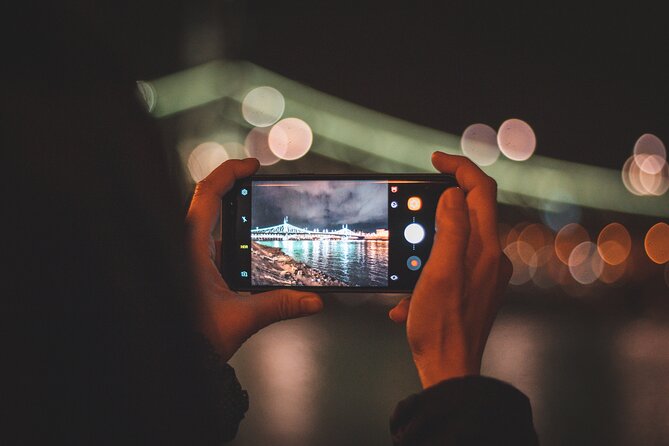
Your ticket experience includes a welcome drink. Depending on the exact selection available that night, it can include alcoholic beverages and soft drinks, along with coffee and/or tea.
One practical tip: pay attention to how the drink is handled at the start. Some people report getting drink coupons/tokens after check-in before the program begins. If you haven’t checked in at the designated time, you may have to ask at the bar later to sort it out. The quickest way to avoid that hassle is simple: arrive early enough to complete check-in before boarding.
On top of the included welcome option, there are bars onboard, so you can purchase extra drinks if you feel like extending the vibe.
Panorama Terrace Photo Time: Getting the Best Shot Without a Photo Mission
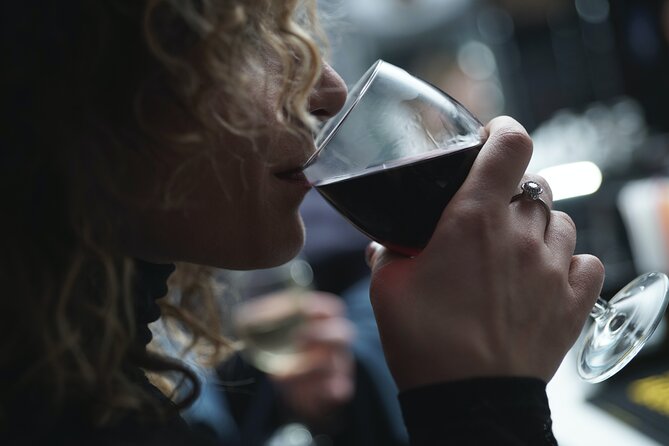
Budapest at night is one of those “you have to see it” things. The cruise helps because it puts the city’s lighting in your line of sight while you’re still comfortable inside.
The boat includes a Panorama Terrace where you can step out (or reposition) for better angles. This is where night photos feel easiest, especially for wide views like the Danube curve, the domes, and the castle hill silhouette.
Two photo reality checks:
- Reflection is real. On a lit boat, the cabin lights can reflect in windows and make pictures harder. If your photos look washed out, move toward the viewing side and reduce time spent shooting through reflective glass.
- If it’s not dark yet, the lights won’t pop. If you’re chasing maximum “lit-up Budapest,” choose the later departure time slot you can manage.
If you’re traveling with someone who loves photos but hates complicated logistics, this is a good compromise: short time, strong views, fewer decision points.
More time out on the Danube
Hungarian Parliament Building at Night: That Red Dome From the Danube
One of the headliner sights is the Hungarian Parliament Building. From the Danube, it looks even more dramatic than on postcards because you see the scale in context—especially with the river framing the structure.
A few details to help you notice what you’re looking at:
- It was completed in 1904
- The architecture blends Gothic Revival and Renaissance Revival styles
- The red dome is about 96 meters tall
- It’s the largest building in Hungary and one of the largest parliament buildings in the world
On the cruise, you’re not walking up to the doors. You’re taking in the building as part of a night panorama. That’s the point. The Danube gives you a wide, balanced view, and the narration keeps you oriented so you know which landmark you’re seeing as it passes.
Margaret Bridge: A Bridge With World War II Scars
Next up is the Margaret Bridge, finished in 1876. It connects Buda and Pest, spanning the Danube, and it’s named after Princess Margaret, who lived on Margaret Island centuries ago.
What makes this bridge more than just a crossing:
- It was heavily damaged during World War II Allied bombing
- It was rebuilt later in a simplified design
From the river, you can see the bridge’s role in the city’s layout: it’s not isolated scenery. It’s part of how Budapest stitches its sides together.
If you like architecture stories, the bridge is a quick, easy moment. If you don’t, it’s still useful because it acts like a landmark “marker” that keeps you tracking the cruise route.
Matthias Church and Its Colorful Details You Can Spot From the Water
You’ll pass by the Matthias Church (also known as the Church of Our Lady). Even without getting out of the boat, it’s one of those buildings your brain recognizes fast once you know what to look for.
Here’s what matters visually:
- The church history reaches back to the 13th century
- It began in Romanesque style in the early 1200s
- It was rebuilt in Gothic style in the 14th century
- Its design mixes Gothic, Renaissance, and Baroque elements
- The roof is known for a distinctive patterned tile look
- Stained glass windows add bursts of color
This is also a site connected to Hungarian royal moments—royal weddings and coronations.
On the cruise, narration plus timing helps you make sense of it: you’ll get a quick “this is why it matters” moment while you’re still getting that wide-angle view from the water.
Buda Castle: UNESCO Views Without the Hill Climb
The cruise also sets you up to enjoy the silhouette of the Buda Castle (Royal Palace). It’s a complex that has been rebuilt multiple times after destruction, and today it’s a UNESCO World Heritage Site.
Even if you don’t step onto the grounds during the cruise, you can still appreciate what the castle represents:
- It dates back to the 14th century (original building)
- It served as residence for Hungarian kings and the seat of power for the Kingdom of Hungary
- It’s home to museums, including the Hungarian National Gallery and the Budapest History Museum
- The castle terraces are famous for city views
From the Danube, Buda Castle becomes more than architecture. It becomes a skyline anchor. You see it in relation to the river, which is exactly how Budapest feels at night: the city spilling into the water.
Gellért Hill, Citadella Fortress, and the Liberty Statue
On the Buda side, Gellért Hill rises to about 235 meters and anchors more than just views. It’s tied to major landmarks you’ll see from the river.
Named after Saint Gellért, the hill is where you’ll spot:
- The Citadella fortress, built by the Habsburgs in the mid-19th century
- The Liberty Statue (about 14 meters tall), holding a palm frond, erected in 1947 to commemorate Soviet liberation from Nazi occupation during World War II
Citadella’s backstory matters because it explains why this area feels heavy and strategic rather than purely scenic. And Liberty Statue is a visual “direction marker” that makes your night photos easier: once you find it, the surrounding view snaps into place.
You don’t have to understand every detail to enjoy this segment, but it helps to know that Gellért Hill is more than a viewpoint. It’s a memorial and a defensive-site story wrapped into one hillside.
Gellért Spa, Liberty Bridge, and the City’s Motion
A cruise is a lesson in how a city connects itself. After the hill sights, you’ll keep moving along the Danube and pass:
- The Gellért Spa, an iconic thermal bath on the Buda side built in Art Nouveau style in 1918
- Known for mosaics and stained glass
- Features indoor and outdoor thermal pools and services like saunas and massage
- It’s open daily and is popular with locals and tourists
- The Liberty Bridge (Szabadság híd), a suspension bridge built between 1894 and 1896
- Originally named after Emperor Franz Joseph I
- Renamed after Hungary’s 1945 liberation from Nazi occupation
- Its green color was added during a renovation in the 1980s
- It carries both pedestrians and vehicles
From the boat, these aren’t just sights. They show Budapest’s rhythm. Spa and bridge represent two different sides of the city’s identity: wellness culture and daily movement across the river.
Budapest University of Technology and Economics: A Quick Pass That Still Means Something
One of the more unexpected things you’ll see from the river is the Budapest University of Technology and Economics (BME). Even if you’re not a campus person, it’s interesting because it’s described as Hungary’s oldest and largest technical university.
The details that help you appreciate it from a distance:
- Founded in 1782 as the Institutum Geometrico-Hydrotechnicum
- Known for programs across engineering, computer science, natural sciences, economics, and management
- Has faculties including mechanical engineering, architecture, electrical engineering and informatics, and transportation engineering
- Connected to notable alumni like Albert Szent-Györgyi (Nobel Prize-winning physicist) and Viktor Orbán
On the cruise, this is a “blink and learn” moment. The narration keeps it from feeling random. It also gives you a sense that Budapest isn’t only monuments and old buildings—it’s active education and modern institutions too.
Museum of Contemporary Arts and the National Theater: What to Expect
The route also passes the Museum of Contemporary Arts and the National Theater of Hungary. The key thing to know here: you’re seeing them from the river, so you’ll get the big-impression view more than a slow, on-foot exploration.
So if you’re the type who wants to photograph facades and keep the evening moving, these stops-in-view work well. If you want deep museum time, plan to add those later as separate visits.
The cruise works best as a first look, a night orientation, and a way to decide what you want to return to when you have daylight and time.
Kossuth Museum Ship: A Free Add-On Before or After
One of the nice extras is a chance to stop by the free Kossuth Museum ship before or after your cruise. Even a short visit here can make the night feel more grounded, because it adds a museum-style layer to the Danube sightseeing.
If you’re curious about political and cultural context, this is an easy add-on because it’s positioned as part of the same area experience. It won’t replace a full museum day, but it can round out your evening.
Onboard Audio: How to Use It (So You Don’t Miss the Point)
The narration is designed to guide you along the river using GPS. That’s a big deal because the Danube changes sides and angles as you move. When narration is synced to your route, you can keep up even if you’re not staring at every building.
That said, you may run into two common issues:
- Audio volume might not match the noise level on your boat row
- It can be hard to tell which building the guide is describing, especially when several landmarks cluster along one stretch
My practical advice is simple:
- If you can’t hear clearly, ask the crew. The fastest fix is turning the volume up.
- During the narration, keep your eyes scanning rather than only filming. You’ll connect the description to the scene faster.
This is also where the group moving pattern matters. When the boat isn’t full, you can shift positions more easily and align your view with the narration.
Who This Cruise Fits Best
This experience is a smart choice if you want:
- A low-effort evening with high returns
- To see top landmarks like Parliament, Matthias Church, and Buda Castle in about an hour
- Onboard comfort so you can enjoy the night without renting a bike or crisscrossing on foot
- A drink included to keep things festive
It’s also a good match for couples, small families, and people who don’t want to plan. You’re essentially buying a timed sightseeing package with narration and a built-in reason to look out at the Danube.
Should You Book Budapest’s TOP Sights Evening Cruise?
If you want a quick, efficient night overview of Budapest’s most famous sights, I’d book it. For around $23, the combination of night views, onboard comfort, and a welcome drink is strong value. The fact that the meet-up is at Shoes on the Danube Bank makes this one less stressful than many city tours.
I’d only pause if you’re picky about night photography and timing. Pick the later slot when it’s truly dark, because reflections and daylight can mute the lit-up “wow.” Also, if you care a lot about hearing every word, plan to sit where audio carries best and don’t be shy about asking staff to adjust volume.
Overall, treat this cruise like a high-impact “Budapest first impression” night. Then use the cruise sights you enjoyed to decide what to revisit on foot the next day.
Out on the Danube



More Tour Reviews in Budapest

The Danube, a Few More Sailings
Just Added: More Budapest Reviews
- Sightseeing flight over Budapest
★ 5.0 · 3 reviews - Budapest: Walking Tour with Chimney Cake & Polaroid Photos
★ 5.0 · 3 reviews - Self Guided Tour In Budapest With 100 Captivating Audio Stories
★ 5.0 · 3 reviews - Budapest Art Nouveau Walking Tour
★ 5.0 · 3 reviews - Hungary today: a no-taboo conversation
★ 5.0 · 3 reviews
Danube River Cruises, compared.
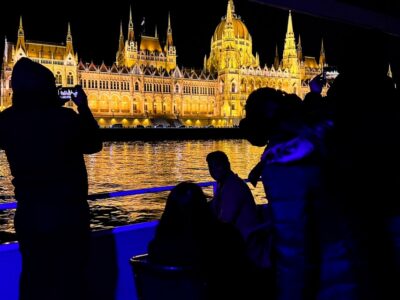 ★ 4.6City Highlights Sightseeing CruiseFrom $1843,981 reviews
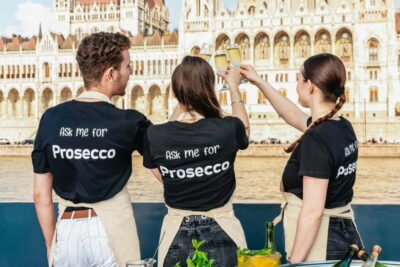 ★ 4.8Unlimited Prosecco, Beer and Aperol Spritz CruiseFrom $2937,304 reviews
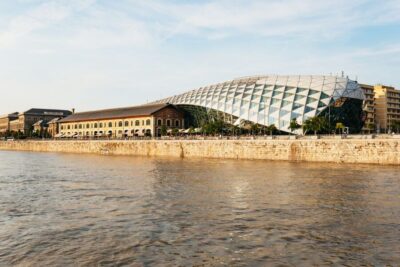 ★ 4.2Nighttime or Daytime Sightseeing CruiseFrom $1421,062 reviews
 ★ 4.3By Night Sightseeing Cruise with Welcome DrinkFrom $1515,533 reviews
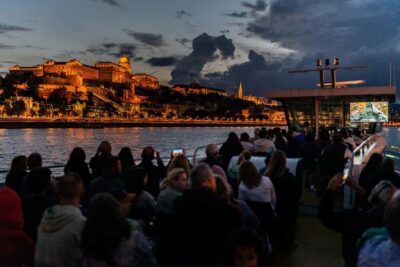 ★ 4.51-Hour Evening Sightseeing Cruise with DrinkFrom $299,421 reviews
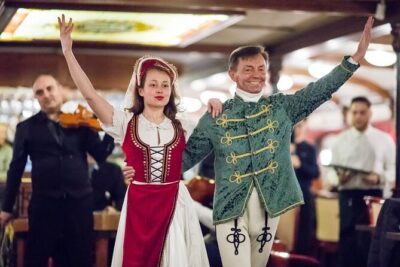 ★ 4.5Budapest Danube Cruise and Dinner Options, Live Music and DanceFrom $547,428 reviews
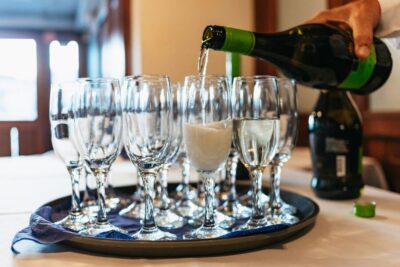 ★ 4.2Evening Cruise including Drink OptionsFrom $216,896 reviews
 ★ 4.7Historic Cruise with Welcome DrinkFrom $126,512 reviews
Browse the lists this tour appears in