

Reviewed · BUDA CASTLE & FISHERMAN'S BASTION
Buda Hills 2-Hour Segway Live-Guided Tour
Segways make Budapest feel like it shrinks. This Buda Hills tour strings together major viewpoints and landmarks in just about two hours, with multiple quick photo stops and stories in English. I love that it’s built for efficiency without feeling like a drive-by, and I also like that the experience includes real support: guided training, the full helmet-and-gear setup, and a pro guide who connects what you see to why it matters.
The main drawback to plan for is time. Each stop is brief (around 5 minutes), so you’ll get big exterior views and photo moments, but you may not have time for a long, slow visit inside places like Matthias Church or St Stephen’s Basilica. Also, the hills are part of the show—fun on a Segway, but not ideal if you don’t feel steady or comfortable with the motion.
In This Review
- Key Things You’ll Notice on This Segway Tour
- Why the Buda Hills Segway Format Beats Walking
- Training, Helmets, and How the Ride Stays Comfortable
- Castle District Highlights: Varhegy Walls to Matthias Church
- Stop 1: Varhegy (Castle Walls)
- Stop 2: Fisherman’s Bastion
- Stop 3: Buda Castle
- Stop 4: Matthias Church
- Stop 5: St Stephen’s Basilica (Szent Istvan Bazilika)
- Across the River: Váci Street, St Stephen Statue, and Danube Views
- Stop 6: Váci Street (Váci utca)
- Stop 7: Statue of St Stephen
- Stop 8: Danube River
- Stop 9: Buda Hill Funicular (Castle Funicular)
- Danube Memorials and the Hospital Bunker: Serious Stops Without the Slump
- Stop 10: Shoes on the Danube Bank (Jewish Memorial)
- Stop 11: Hospital in the Rock Nuclear Bunker Museum
- Stop 12: Erzsébet Bridge (Erzsebet Hid)
- More Icons After the River: King Matthias Fountain, Trinity Square, and Beyond
- Stop 13: Fountain of King Matthias
- Stop 14: Trinity Square
- Stop 15: National Archives of Hungary
- Stop 16: Budapest Eye (Ferris Wheel of Budapest)
- Stop 17: Soviet Heroic Memorial
- Price and Value: What Your $71.38 Covers
- Best for Who: First-Time Budapesters and View-Seekers
- Should You Book This Buda Hills Segway Tour?
- FAQ
- How long is the Buda Hills 2-Hour Segway live-guided tour?
- Where does the tour start and end?
- What is the price per person?
- What language is the tour offered in?
- Is a guide included?
- Does the tour include training and equipment?
- Are photo services included?
- Are raincoats provided?
- Are admissions included for the stops?
- How many people are in the group?
- Is free cancellation available?
Key Things You’ll Notice on This Segway Tour
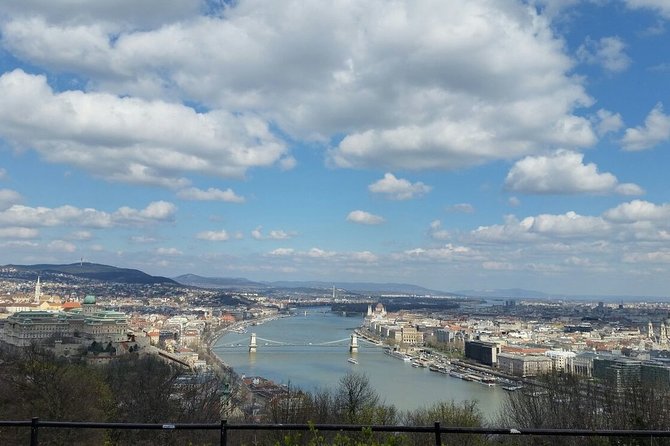
- A tight 2-hour loop that hits the Castle District views and major Danube-area sights
- Guide-led story stops built around quick context, not just moving from point to point
- Segway training included, with helmets and equipment ready for you
- Photo service and photo stops, so you don’t have to play photographer the whole time
- Small group size (maximum 15), which helps the pace feel controlled
- A mix of serious and scenic stops, from the Danube memorial to iconic bridges and squares
More of Castle Hill, turrets and the river below
- Budapest: Buda Castle Cave Tour★ 4.7 · 5,677 reviews
- Budapest: Buda Castle District Vampires and Myths Night Tour★ 4.6 · 3,830 reviews
- Budapest: Buda Castle Walk with Saint Stephen’s Hall★ 4.5 · 3,012 reviews
- Budapest: Buda Castle District Walking Tour★ 4.6 · 2,108 reviews
Why the Buda Hills Segway Format Beats Walking
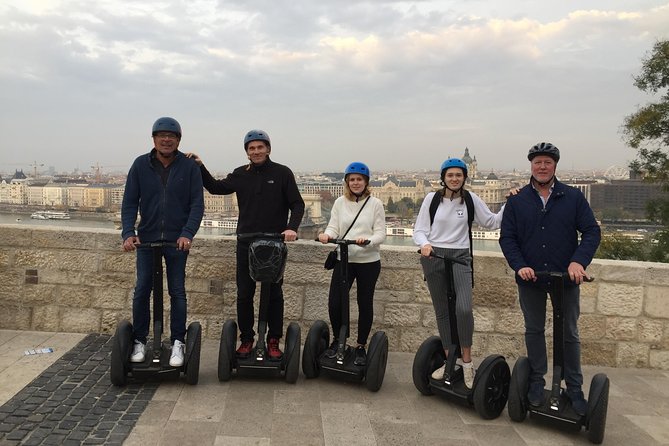
Budapest is made for viewpoints—hills on one side, grand river views on the other. The problem with walking is simple: you can spend half the day climbing, then arrive at the view already tired and rushed. On a Segway, you get the same sweeping feel with a lot less friction.
This tour is also a smart first-day tool. In about two hours you’ll get a mental map of how Buda and Pest connect, where the Danube dominates, and how key landmarks line up. That matters because Budapest can feel like separate worlds until you see the transitions.
And yes, going uphill in Buda is part of the charm. In the feedback I’ve seen, people consistently mention that the hill riding isn’t just tolerable—it’s genuinely fun, as long as you’re comfortable with the Segway basics and follow the guide’s cues.
Training, Helmets, and How the Ride Stays Comfortable
Before you start gliding, you get full guided training and all the equipment you need, including helmets. That’s a big deal for a first-time Segway rider, because your confidence comes fast when someone is right there guiding your balance and speed.
This is offered with professional live guidance and a mobile ticket, and the tour language includes English. The operator runs multi-lingual guides, so even if your group members speak different languages, you’re still not left guessing what’s happening.
They also provide raincoats if needed. That sounds like a small detail until you remember Budapest weather can switch moods quickly—especially near the river. And with a maximum of 15 travelers, you’re not stuck in a huge line; you can actually take in the sights between moments on the move.
Castle District Highlights: Varhegy Walls to Matthias Church
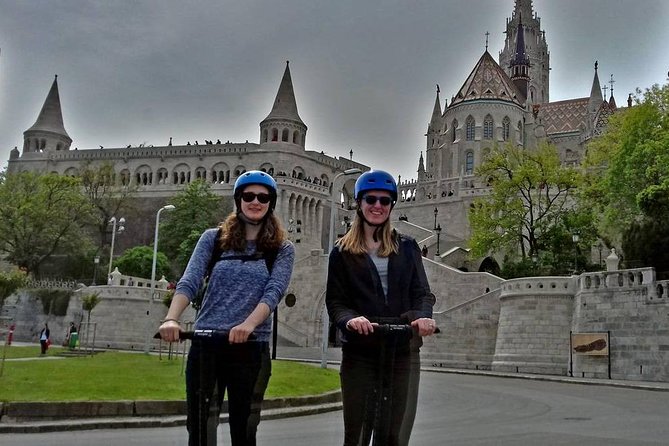
This tour starts in the Buda Castle area at Galamb u. 3, 1052 Hungary, and it ends back there. The first portion is designed for views: you get the “you’re in the right place” feeling early, then you keep layering landmark after landmark without burning your legs.
Stop 1: Varhegy (Castle Walls)
Varhegy is a strong opening because it immediately frames Budapest’s Castle District vibe. You get a chance to look at the castle walls and take in the hill setting from an angle that feels strategic—like you’re seeing why this area has always been a focal point.
What to expect: mostly exterior sightseeing.
Tip: use these early minutes to get your Segway rhythm down so later stops feel relaxed.
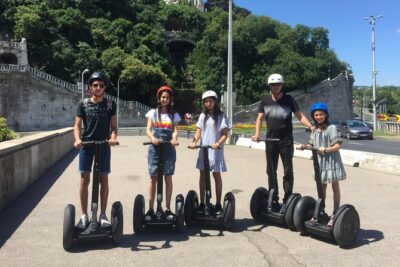
Glide the promenade, other Segway spins
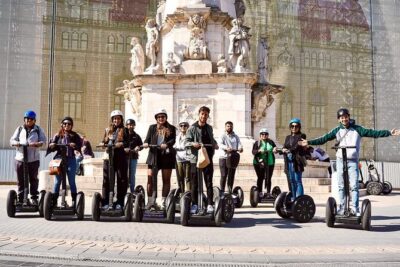

Stop 2: Fisherman’s Bastion
From here, the view energy really ramps up. Fisherman’s Bastion is one of those places where you don’t need a long explanation to understand the appeal—you can feel the viewpoint right away.
Why it’s worth it even for a short stop: it’s a perfect photo platform, and the guide’s story helps turn the pictures into something more memorable.
Stop 3: Buda Castle
Buda Castle is big and visually dominant, and that works well in a Segway format. You’re close enough to get the feel of the complex, and moving by quick stops lets you appreciate the scale without wasting time searching streets.
Possible drawback: since the stop is brief, you won’t get deep into the castle grounds. If you want that, you’ll likely need a separate add-on later.
Stop 4: Matthias Church
Matthias Church is the kind of landmark where a few minutes can still leave an impression—especially when you get story context from your guide. This is one of the stops where the tour’s pacing shines: you get the architectural identity, then you’re moving again before you overheat in the sun or cold.
Stop 5: St Stephen’s Basilica (Szent Istvan Bazilika)
This moves you toward Pest’s big, recognizable religious landmark. Even if you don’t go inside during the tour window, you’ll see why it’s such a marker point for orientation in the city—its shape and presence make it easy to remember.
What you’ll take away: a clear sense of where major routes funnel and how Pest’s highlights sit near the basilica area.
Across the River: Váci Street, St Stephen Statue, and Danube Views
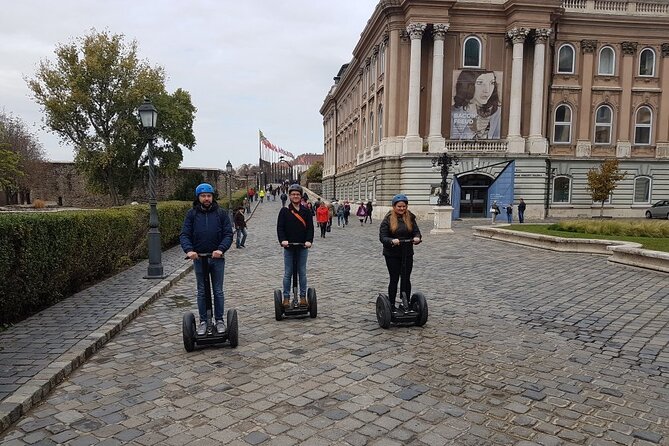
After the Basilica, you shift into a more street-and-river rhythm. This part is good for balancing the “heavy history” moments with more everyday Budapest energy.
Stop 6: Váci Street (Váci utca)
Váci Street is the famous shopping-and-promenade stretch people picture when they hear Budapest. On a Segway, it’s less about browsing and more about seeing the city’s “stage”: where people gather, where the street vibe lives, and how quickly you move between zones.
Stop 7: Statue of St Stephen
The statue stop reinforces a Budapest theme: St Stephen is part of the city’s identity, and seeing the monument helps connect the earlier church stop to something more civic than religious.
Even as a quick stop, it’s useful because it adds cultural glue. You’ll walk away with the feeling that the city’s landmarks aren’t random—they’re linked.
Stop 8: Danube River
The Danube is the reason Budapest looks dramatic from almost every angle. Getting a dedicated stop here matters because it gives you a “reset” moment between stops, so the next memorial and museum don’t all feel like the same kind of sight.
Photo note: This is exactly the kind of stop where photo service and guide positioning can help—because the best angles on the river don’t always match where you’d naturally stop on foot.
Stop 9: Buda Hill Funicular (Castle Funicular)
Even though you’re on a Segway, the funicular stop is a nice reality check. It shows another way people actually move up and down the hill, so you don’t think Segway is the only option for getting around this terrain.
Why this works for first-timers: it helps you plan future days. If you want to explore longer later, you’ll remember there’s a funicular option.
Danube Memorials and the Hospital Bunker: Serious Stops Without the Slump
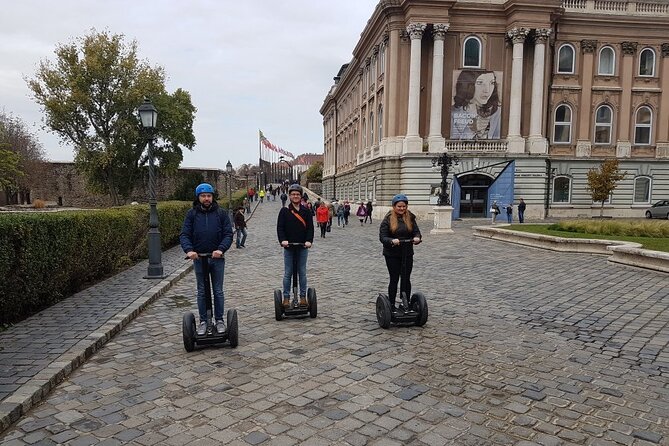
This is where the tour shows balance. Budapest isn’t just postcard views; it also has places that carry weight. The good news is the tour keeps moving while still giving you enough time to absorb what you’re looking at.
Stop 10: Shoes on the Danube Bank (Jewish Memorial)
This memorial is powerful, and even a short stop can hit hard. The key value of having a guide here is context—without it, you might see the shoes as symbols, but you might miss the full reason they’re there.
How to handle the moment: take the full five minutes rather than rushing photos. It’s one of the stops where slowing down actually improves your understanding.
Stop 11: Hospital in the Rock Nuclear Bunker Museum
The Hospital in the Rock stop adds an entirely different tone: survival history and Cold War-era fears made physical. The fact that it’s on the tour route is smart—because it prevents the day from becoming only scenic.
What you’ll likely appreciate most: the contrast between open river views and underground, enclosed history.
Stop 12: Erzsébet Bridge (Erzsebet Hid)
A bridge stop is a practical palate cleanser. It gives you motion again, wide-open sightlines, and a sense of how the city’s sides connect. Plus, bridge views are naturally photo-friendly, so you’ll likely come away with images that show Budapest’s layout.
More Icons After the River: King Matthias Fountain, Trinity Square, and Beyond
The final stretch keeps stacking recognizable landmarks. This is a good reminder that Budapest’s “best-of” isn’t only on the hill.
Stop 13: Fountain of King Matthias
This stop works well because fountains and public art are an easy way to spot Budapest’s character. Even if you only pause briefly, the guide’s framing can help you notice details you might otherwise ignore.
Stop 14: Trinity Square
Trinity Square is one of those central spaces where the city’s rhythm is visible. When you stop here, you’re stepping into an area that feels like it belongs to the city’s daily life as much as its historic identity.
Stop 15: National Archives of Hungary
The National Archives stop adds a civic and institutional angle. It’s a useful reminder that Budapest’s story isn’t only told through monuments; it’s also stored and shaped through national institutions.
Pace consideration: because the stop is short, focus on the exterior and how the building fits its surroundings.
Stop 16: Budapest Eye (Ferris Wheel of Budapest)
The Ferris wheel stop signals “big view” energy. Even if you don’t ride it, it’s a clear landmark that helps you understand how Budapest markets its skyline and how locals and visitors share the same spaces.
Stop 17: Soviet Heroic Memorial
The Soviet memorial brings the tour to a reflective close. It’s not the lightest ending, but it fits Budapest’s real mix of eras and influences. Having the guide here again helps keep your stop meaningful rather than just another statue picture.
Price and Value: What Your $71.38 Covers
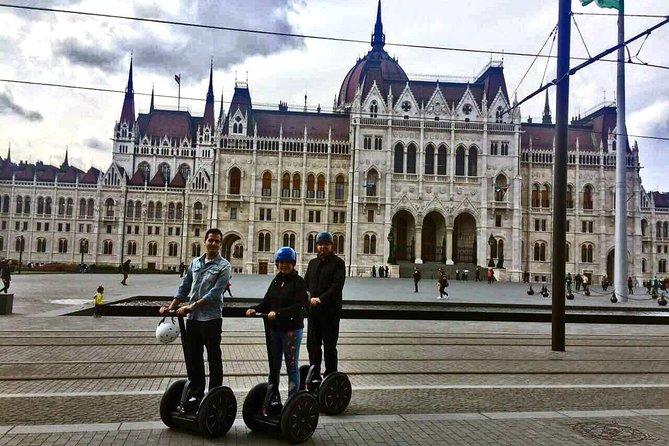
At $71.38 per person for about two hours, this tour sits in the midrange for Budapest activities. The value comes from what’s included: professional live guide, full training, all necessary equipment with helmets, a photo service, and raincoats if needed.
That inclusion list matters. Many “fast sightseeing” tours charge extra for equipment support or don’t offer real help when you’re learning. Here, you’re set up to ride confidently from the start.
Also, the option for a private tour can be a better deal if you’re traveling with people who want a customized pace. Even if you don’t need full privacy, a smaller, flexible format tends to improve the experience when stops are brief and timing matters.
The one cost to keep in mind beyond the tour price is gratuities, which are optional.
Best for Who: First-Time Budapesters and View-Seekers
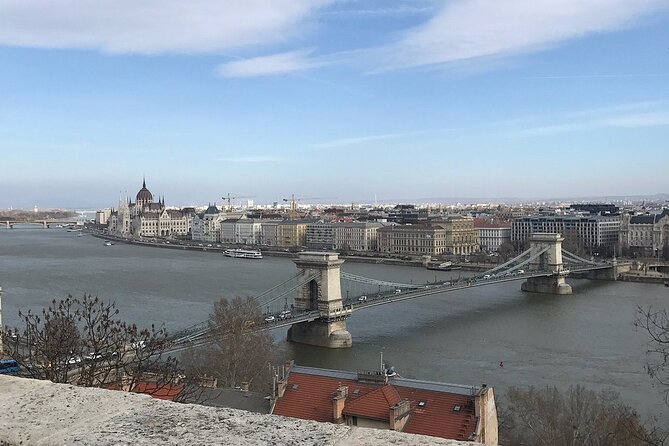
This Segway tour is built for people who want a lot of landmark coverage without getting stuck in gridlock or spending your whole day climbing. If you’re in Budapest for a short trip and want an efficient orientation, this works well as an early-day anchor.
It’s also a good match if you like the “guided story” approach. In feedback I’ve read, the guide style stands out—Jahan and Hami are named as hosts who made the places easier to understand with translation and context, not just names and dates.
If you prefer slow museum time, long church visits, or deep guided tours inside buildings, you’ll probably want to treat this as a highlight sampler. Think of it as setting direction for later exploration, not replacing it.
Should You Book This Buda Hills Segway Tour?
Book it if you want an efficient Budapest overview that mixes big views with real context—plus you want the convenience of Segway training, helmets, and photo support included. The two-hour timing is ideal when your energy is limited but your curiosity is high.
Skip (or at least consider carefully) if you hate short stops or you need lots of time inside major sites. Since the tour is designed around quick photo moments and moving efficiently, you won’t get the slow, fully detailed experience you might expect from a longer walking tour or a museum-focused day.
FAQ
How long is the Buda Hills 2-Hour Segway live-guided tour?
The duration is approximately 2 hours.
Where does the tour start and end?
It starts at Budapest, Galamb u. 3, 1052 Hungary and ends back at the same meeting point.
What is the price per person?
The price is $71.38 per person.
What language is the tour offered in?
The tour is offered in English.
Is a guide included?
Yes, you get a professional live guide.
Does the tour include training and equipment?
Yes. It includes full guided training and all necessary equipment, including helmets.
Are photo services included?
Yes, photo service is included.
Are raincoats provided?
Yes, raincoats are provided if needed.
Are admissions included for the stops?
The listed stops show admission ticket free.
How many people are in the group?
The tour has a maximum of 15 travelers.
Is free cancellation available?
Yes. You can cancel up to 24 hours in advance for a full refund.
More Tour Reviews in Budapest






Budapest by Segway




More of Castle Hill

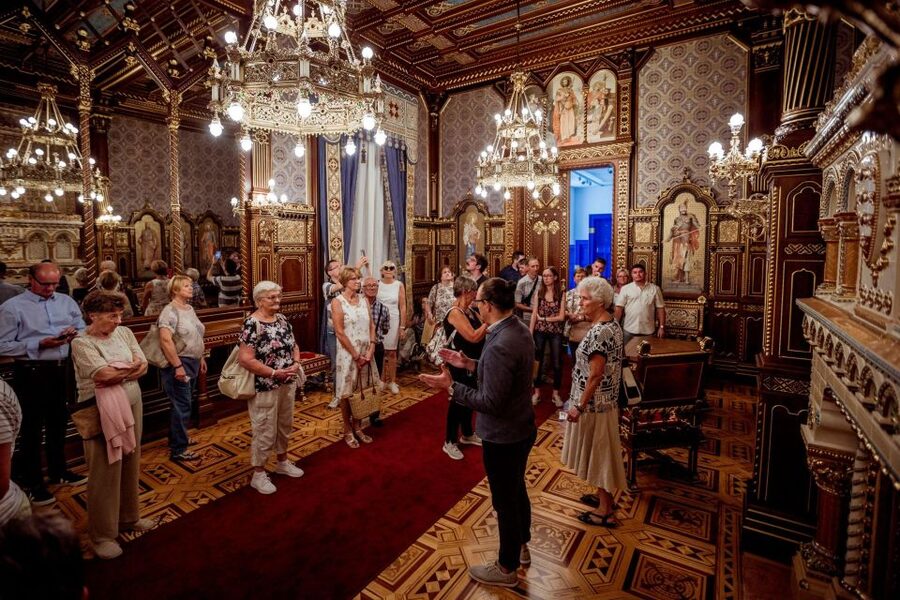



Just Added: More Budapest Reviews
- Sightseeing flight over Budapest
★ 5.0 · 3 reviews - Budapest: Walking Tour with Chimney Cake & Polaroid Photos
★ 5.0 · 3 reviews - Self Guided Tour In Budapest With 100 Captivating Audio Stories
★ 5.0 · 3 reviews - Budapest Art Nouveau Walking Tour
★ 5.0 · 3 reviews - Hungary today: a no-taboo conversation
★ 5.0 · 3 reviews
Buda Castle & Fisherman's Bastion, compared.
 ★ 4.7Buda Castle Cave TourFrom $195,677 reviews
 ★ 4.6Buda Castle District Vampires and Myths Night TourFrom $233,830 reviews
 ★ 4.6Buda Castle District Walking TourFrom $142,108 reviews
 ★ 4.33-Hour Grand City Tour and Castle WalkFrom $491,437 reviews
 ★ 4.5Buda Castle District Dark History, Legends and Vampire Night TourFrom $211,240 reviews
 ★ 4.9Buda Castle District Walking Tour with a HistorianFrom $63867 reviews
 ★ 4.6Classical Music Concerts in Matthias ChurchFrom $70792 reviews
 ★ 4.6Matthias Church Entry TicketFrom $25787 reviews
Browse the lists this tour appears in