
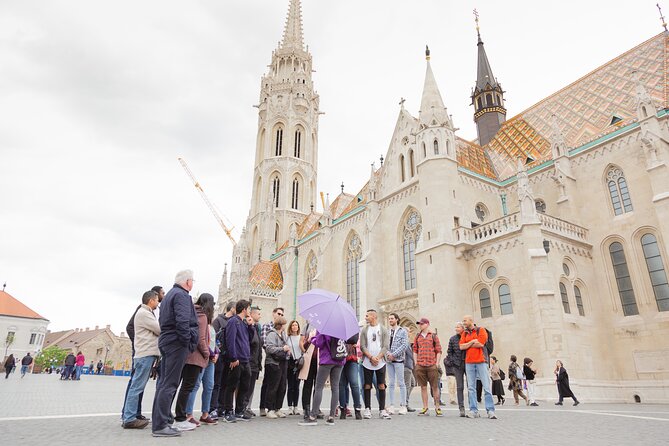
Reviewed · BUDA CASTLE & FISHERMAN'S BASTION
Buda Castle Tour: Fisherman’s bastion and hidden gems
Castle District in Budapest is all about views—and steps. This Buda Castle Tour strings together Matthias Church exteriors, Fisherman’s Bastion panoramas, and the kind of stories that make stonework feel personal. I love how guides like Sou and Ignacio explain what you’re looking at in plain language, and I also love the quick photo moments that actually help you understand the place instead of just snapping and moving on.
The only real catch is physical: you’re on a hill with plenty of stairs and slick surfaces can happen. If it’s scorching hot or pouring rain, you may have to adjust the pace, and the tour may feel a bit tighter than the 2-hour estimate.
In This Review
- Key highlights
- Castle District Hills: What 2 Hours Feels Like (and How to Prep)
- Matthias Church Photo Stop: The Details You Can Actually See
- Fisherman’s Bastion: The Panoramas That Earn Their Reputation
- Holy Trinity Column and Trinity Square: A Plague Monument With Personality
- Ruszwurm Confectionery Stop: Cake Culture Without the Detour
- Hadik Statue and Castle Hill Neighborhood Edges
- Hospital in the Rock Pass-By: What You Can Learn Without Entering
- The Maze Feel on Buda Castle Hill: Finding the Hidden Routes
- Sandor Palace and Karmelita Monastery: Power, Faith, and Modern Use
- Buda Hill Funicular: A Historic Ride Between River and Castle
- Királyi Lovarda, Matthias Fountain, and the Royal Palace Area
- Why This $3.63 Tour Can Still Feel Like a Real Value
- Who Should Book This Buda Castle Tour (and Who Might Reconsider)
- Should You Book This Buda Castle Tour With Fisherman’s Bastion?
- FAQ
- Is the tour in English?
- How long does the Buda Castle Tour take?
- Is the Matthias Church ticket included?
- Does the tour include Fisherman’s Bastion admission?
- Does the tour enter Hospital in the Rock?
- How big is the group?
- Are service animals allowed?
- FAQ
- Where does the tour start and end?
Key highlights
- Fisherman’s Bastion photo stops with big Danube and skyline viewpoints
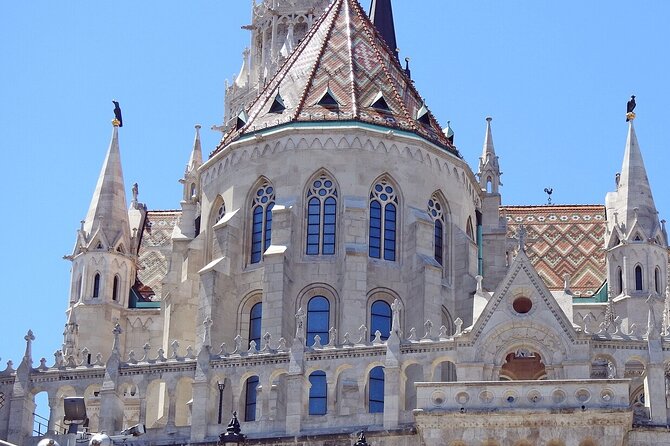
- Matthias Church exterior time plus what to look for in the Gothic Revival details
- Free stops in Trinity Square and Castle District including the Holy Trinity Column
- Ruszwurm Confectionery pause for Budapest’s classic cake culture
- Historic hill transport via the Buda Hill Funicular, connecting Chain Bridge to Castle Hill
More of Castle Hill, turrets and the river below
- Budapest: Buda Castle Cave Tour★ 4.7 · 5,677 reviews
- Budapest: Buda Castle District Vampires and Myths Night Tour★ 4.6 · 3,830 reviews
- Budapest: Buda Castle Walk with Saint Stephen’s Hall★ 4.5 · 3,012 reviews
- Budapest: Buda Castle District Walking Tour★ 4.6 · 2,108 reviews
Castle District Hills: What 2 Hours Feels Like (and How to Prep)
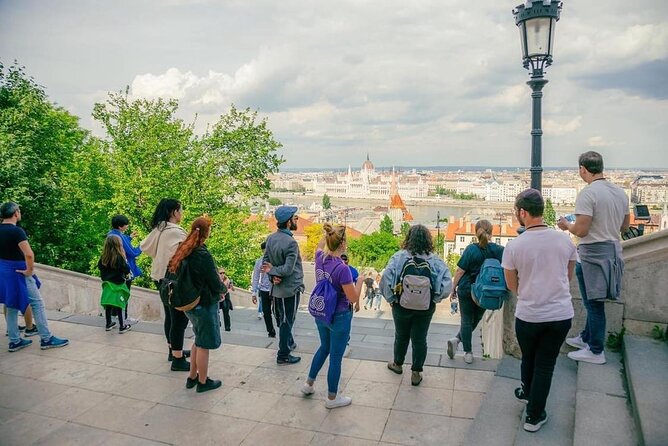
This tour moves through Budapest’s Castle District, which means the walking is never totally flat. It’s a short overall duration—about 2 hours—but the hill changes your rhythm. Think “slow, steady, stop often for photos,” not “power walk.”
I’d wear shoes you can trust on uneven stone. Even if your day in Budapest has been easy, Castle Hill can reset your expectations. If you’re traveling in hot weather, plan on water and a hat; if rain hits, expect the pace to get more cautious.
The group is small, with a maximum of 10 travelers, which helps. You’re not stuck in a crowd funnel, and guides can keep things moving while still answering questions.
Matthias Church Photo Stop: The Details You Can Actually See
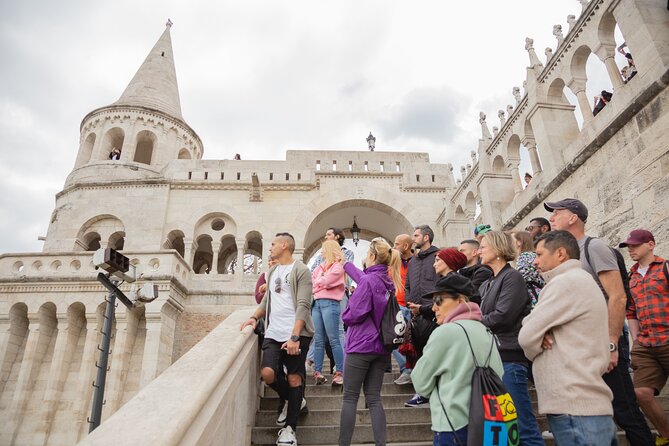
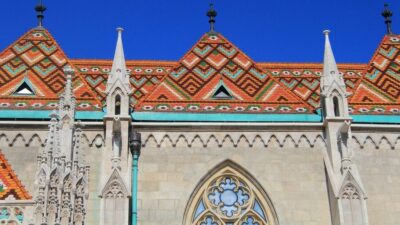
Matthias Church is the kind of building you instantly recognize—even from outside. The tour gives you time to take photos and focus on what makes it special: the Gothic Revival design and the colorful tiled roof that looks almost too perfect to be real. Inside is a big draw, but on this experience you stay outside and use the stop to set your visual “map.”
What I like about the Matthias Church stop is that it makes the rest of the Castle District click. You start noticing shapes, materials, and historical layers right away. If you do later choose to enter, you’ll already know what to look for.
Practical note: the Matthias Church admission ticket is not included, so if you want to go in on your own, budget for it.
Fisherman’s Bastion: The Panoramas That Earn Their Reputation
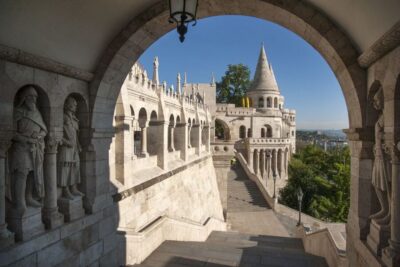
Fisherman’s Bastion is a fairy-tale terrace with views that don’t feel like a background—they’re the whole point. From here you get a clear look toward the Danube and the city skyline, and the architecture supports the mood: neo-Gothic and neo-Romanesque arches, turrets, and walkways that look like a movie set.
This is where I think the tour’s value really shows. The stop is short, but guides help you orient fast: where the main viewpoint is, what the skyline framing looks like, and how the terraces relate to the church district behind you.
And yes, it’s great for photos. But even if you don’t care about selfies, the viewpoint is one of the fastest ways to understand Budapest’s geography—Buda’s hill over the river, with the city spread below.
Fisherman’s Bastion admission is free during the stop, which makes it an easy win for your day.
Holy Trinity Column and Trinity Square: A Plague Monument With Personality
In Trinity Square, the Holy Trinity Column is the kind of monument that can look impressive from far away, then gets interesting once you notice the carvings and symbolism. The tour frames it as a commemoration of the end of an 18th-century plague. That context matters. Without it, it’s just stone ornamentation. With it, you can actually read the building like a story.
The column’s towering presence and intricate details make it a smart break from the bigger, louder landmarks. It’s also a reminder that the Castle District isn’t only about royalty and palaces—it’s about everyday history too.
This stop is quick (about 5 minutes), and it’s free, so you’re not losing time. You’re just adding meaning.



Ruszwurm Confectionery Stop: Cake Culture Without the Detour
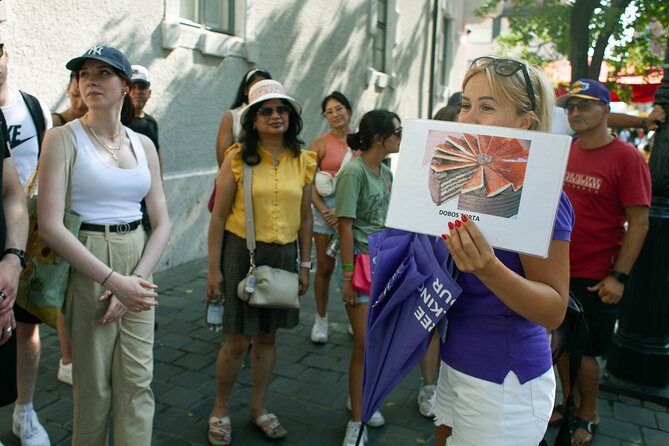
If you want a small, practical taste of Hungary, you’ll like the pause at Ruszwurm Confectionery. The shop has been serving since 1827, and the vibe is part of the experience: it feels like you’re walking into a long-running local ritual, not a generic tourist café.
The tour helps by guiding you there and pointing you toward traditional favorites like Dobos torta and krémes. The exact pastry you choose is up to you, but the value is that you won’t waste time wondering where to go or what’s genuinely traditional.
Admission here is free because it’s just a stop. You buy what you want. If you’re the kind of traveler who likes to build food into your sightseeing without turning the day into a food quest, this timing works well.
Hadik Statue and Castle Hill Neighborhood Edges
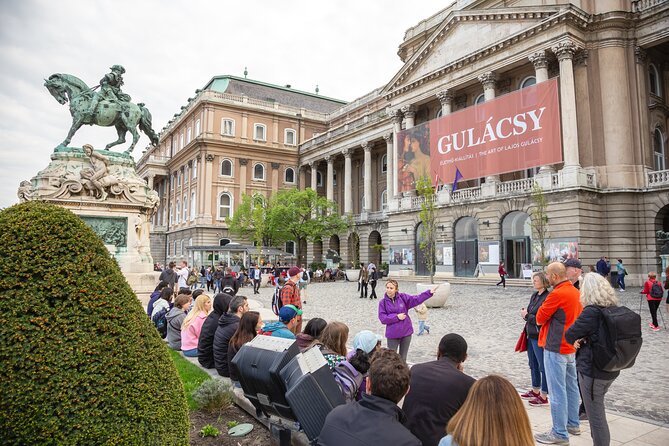
Not every stop in the Castle District has to be a palace or a church. The tour includes the Statue of Mounted András Hadik in the Castle District, named for a legendary Hungarian soldier and Maria Theresa’s favorite general. There’s also a fun superstition attached to it: touching the horse’s shiny bronze is said to bring good luck.
That sounds silly until you’re standing there and realize these little traditions are how old cities stay alive. It’s also a good moment to stretch your legs and reset before the tour moves back into more landmarks.
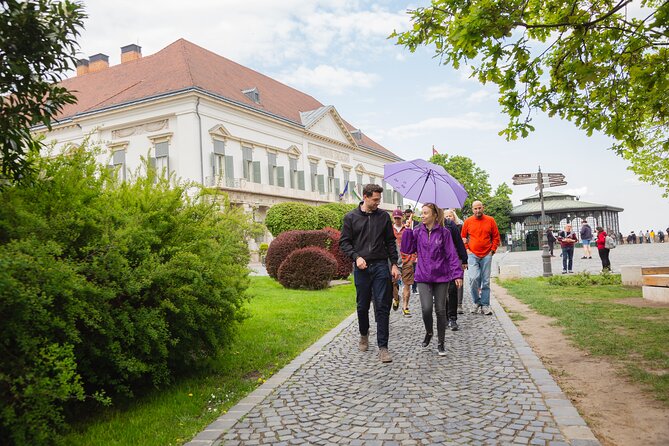
Next you head toward Árpád Tóth Promenade (Setany), which is described as a residential part of the Buda Castle hill. This matters because it changes the tone. You’re not only looking at history; you’re seeing how people actually live on the hillside near all those big sights.
Hospital in the Rock Pass-By: What You Can Learn Without Entering
The tour mentions Hospital in the Rock and explains what it is, but it does not go inside. Instead, you pass by and get the key context.
That approach is helpful if you’re short on time or if you don’t want your schedule to depend on museum entry timing. You still get the story anchor—why this site exists—so you’ll recognize it later if you come back on your own.
A quick “pass-by with explanation” also keeps the tour from turning into one long museum session. You stay mostly outside, which pairs well with Castle Hill’s open-air viewpoints.
The Maze Feel on Buda Castle Hill: Finding the Hidden Routes
One of the stops is described as a labyrinth around Buda Castle. The point of this segment isn’t that you’ll get lost forever. It’s that Castle District streets can feel like a maze—tight lanes, layered buildings, and corners that change your view.
This is the part of the tour that helps you navigate later, even if you don’t return to this exact route. Once you understand that the hill has these winding paths, you stop fighting it and start using it.
If you like walking tours, you’ll enjoy this segment because it’s about movement and orientation. It’s also free time where you can take in smaller details without a big-ticket threshold.
Sandor Palace and Karmelita Monastery: Power, Faith, and Modern Use
In the same hill district, you get very different kinds of authority and influence.
- Sandor Palace is the official residence of Hungary’s President. The tour also notes it was named after its original owner, Count Sándor Móricz, known for bold equestrian stunts.
- Karmelita Kolostor (Carmelite Monastery) has a layered past: it was a monastery, then served as theater and concert hall, and today it houses the Hungarian Prime Minister’s Office.
That last part is one reason this tour feels more real than a “look-at-big-buildings” stroll. The buildings aren’t frozen in time. They’ve changed roles while keeping their presence.
Both stops are free during the tour, and you’re given short viewing time. That’s ideal here because you’re not being rushed into a long interior schedule—you’re collecting context and moving.
Buda Hill Funicular: A Historic Ride Between River and Castle
The Buda Hill Funicular has operated since 1870, and it’s included as a stop. This is a smart use of time because it connects the Chain Bridge area to the Castle District. You get transport plus views without burning your legs.
Even if you don’t ride it often in other cities, this one’s worth your attention because it’s historic and it saves time on the hill. It also helps you understand how the Castle District developed: the river side and the hill side aren’t separate worlds—they’re connected by infrastructure.
The tour lists it as a free stop, so it’s part of the experience flow rather than an extra purchase you have to plan around.
Királyi Lovarda, Matthias Fountain, and the Royal Palace Area
Near the end, the tour shifts from viewpoints and story stops toward the palace core.
You’ll see:
- Kiralyi Lovarda (Riding Hall), a restored structure that once served as a royal equestrian facility.
- Fountain of King Matthias, a Baroque-style monument with a central sculpture of King Matthias riding a horse, symbolizing the power and flourishing of his reign in the 15th century.
- Buda Castle, described as the Royal Palace area with multiple museums nearby, including the Hungarian National Gallery, the Budapest History Museum, and the National Library.
The time at each location is brief, but the sequence helps. You go from equestrian themes (Lovarda), to monarchy symbolism (Matthias Fountain), to the museum zone where Hungary’s art, history, and literature live.
Admission for Buda Castle and those museums is free as part of the tour stop, meaning you can explore the area and decide later. If you want to enter specific museums, you’ll need to plan on your own based on the sites’ entry rules and hours.
Why This $3.63 Tour Can Still Feel Like a Real Value
The headline price—about $3.63 per person—is surprisingly low for a guided walk across major landmarks. The value comes from what’s included: professional guides and a structure that hits both the famous sights and the practical context you’d otherwise miss.
A few things help the math:
- Many stops are free (Fisherman’s Bastion, Trinity Square items, Ruszwurm’s admission as a stop, and more).
- You get a guided route that saves you from figuring out the best order on your own.
- Guides provide tailor-made recommendations, including restaurants, bars, and museums, which can improve the rest of your day beyond the walk itself.
One caution: Matthias Church admission isn’t included, so your real cost may be a bit higher if you want to go inside. Still, the tour is designed to work even if you choose to treat church interiors as optional.
If you’re traveling on a tight schedule and want Castle District highlights with explanations, this format is strong for the price.
Who Should Book This Buda Castle Tour (and Who Might Reconsider)
This tour fits best if you:
- Want a short, high-impact Castle District overview.
- Like walking tours that explain architecture and monuments in plain language.
- Appreciate local recommendations so you can eat and keep exploring right after.
It also helps that the group stays small (max 10 travelers) and the tour is offered in English, with mobile tickets.
The main reason to reconsider is the physical reality of Castle Hill. Even with a short overall duration, you’re dealing with steps and slopes. The description notes most travelers can participate, but if stairs are a problem for you, think hard before committing.
If you love museums, you might want to add extra time afterward. The tour points you toward museum options in the palace area, but it doesn’t promise a full museum day.
Should You Book This Buda Castle Tour With Fisherman’s Bastion?
Yes, I’d book it if you want an efficient, guided way to connect the Castle District dots—church exterior details, the views from Fisherman’s Bastion, and the smaller history markers like Trinity Square and the Hadik statue. The short stops are exactly what make this tour feel efficient, not rushed.
I’d only skip or modify plans if you know stairs and uneven ground will wear you out quickly. In that case, you may still enjoy parts of the area on your own, but a guided route built around Castle Hill geometry might be the wrong fit.
One last decision tip: if you’re planning on entering Matthias Church or any palace museums, decide before the tour starts. That way you can treat the guided walk as your orientation, then pick your optional add-ons with confidence.
FAQ
Is the tour in English?
Yes. The experience is offered in English.
How long does the Buda Castle Tour take?
It lasts about 2 hours (approx.).
Is the Matthias Church ticket included?
No. Admission for Matthias Church is not included, while many other stops are free during the tour.
Does the tour include Fisherman’s Bastion admission?
Fisherman’s Bastion is listed as free during the stop.
Does the tour enter Hospital in the Rock?
No. The tour passes by Hospital in the Rock and explains it, but it does not enter.
How big is the group?
The tour has a maximum of 10 travelers.
Are service animals allowed?
Yes, service animals are allowed.
FAQ
Where does the tour start and end?
It starts at Szentháromság tér, 1014 Hungary, and ends at the entrance of the National Gallery area at Szent György tér, 1014 Hungary (near Buda Castle).
More Tours in Budapest





More Tour Reviews in Budapest






More of Castle Hill



Just Added: More Budapest Reviews
- Sightseeing flight over Budapest
★ 5.0 · 3 reviews - Budapest: Walking Tour with Chimney Cake & Polaroid Photos
★ 5.0 · 3 reviews - Self Guided Tour In Budapest With 100 Captivating Audio Stories
★ 5.0 · 3 reviews - Budapest Art Nouveau Walking Tour
★ 5.0 · 3 reviews - Hungary today: a no-taboo conversation
★ 5.0 · 3 reviews
Buda Castle & Fisherman's Bastion, compared.
 ★ 4.7Buda Castle Cave TourFrom $195,677 reviews
 ★ 4.6Buda Castle District Vampires and Myths Night TourFrom $233,830 reviews
 ★ 4.6Buda Castle District Walking TourFrom $142,108 reviews
 ★ 4.33-Hour Grand City Tour and Castle WalkFrom $491,437 reviews
 ★ 4.5Buda Castle District Dark History, Legends and Vampire Night TourFrom $211,240 reviews
 ★ 4.9Buda Castle District Walking Tour with a HistorianFrom $63867 reviews
 ★ 4.6Classical Music Concerts in Matthias ChurchFrom $70792 reviews
 ★ 4.6Matthias Church Entry TicketFrom $25787 reviews
Browse the lists this tour appears in