
Reviewed · CITY TOURS
8-hour private Budapest city tour by car / minivan
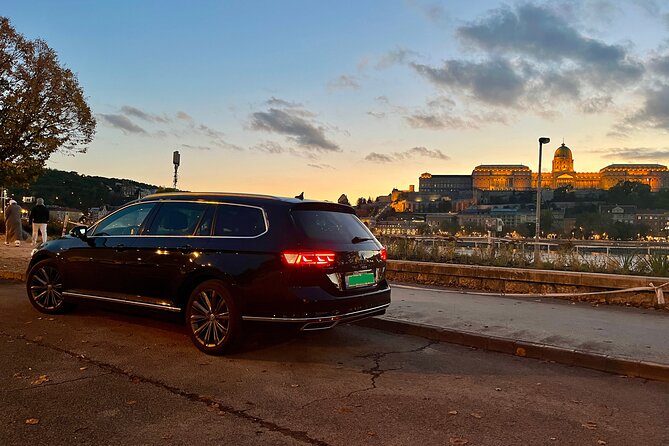
A full day of Budapest without the endless walking. This private 8-hour tour is built for maximum highlights with a guide—plus real context on Hungarian history and culture. I especially like the fact that you can get down whenever you want, so the day feels flexible instead of rigid.
One big plus: your driver-guide can tailor the flow to your interests, and names like Gergő (Gregory) and Gabriel show up in standout guide experiences. The other thing I like is the mix of “wow sights” and practical stops, so you’re not just taking photos—you’re learning what you’re seeing.
The main drawback to plan for is cost creep: several interiors and optional experiences aren’t included, like St. Stephen’s Basilica, Matthias Church, and some upper-level access. If you hate extra ticket decisions, just pick the one or two places you really care about going inside.
In This Review
- Key things to know before you go
- Why a Private Car Tour Makes Budapest Click Fast
- The 8-Hour Flow: How the Day Feels (and Where You’ll Spend Time)
- Andrássy Avenue: Budapest’s Showpiece Boulevard
- Heroes’ Square: Symbol of Hungary’s Turning Points
- Széchenyi Baths: A Break You’ll Be Happy You Took
- City Park Time: Vajdahunyad Castle and the House of Music
- Opera House and Basilica: Beautiful Buildings With Extra Entry Options
- Liberty Square: Embassies, Old Finance, and Art Nouveau Details
- Hungarian Parliament and the Danube Edge: Pest’s Big Statements
- Shoes on the Danube Bank: A Memorial That Lands Hard
- Chain Bridge and Margit Bridge: Danube Views Without the Day Getting Stuck
- Zero Kilometre Stone: The City’s Reference Point
- Matthias Church and Fisherman’s Bastion: Buda Castle District’s Peak Views
- Buda Castle: Historic Layers in One Long Stare
- Citadel Lookout on Gellért Hill: The Day’s Big Finale
- Price and Value: When a Private Group Tour Really Makes Sense
- Who Should Book This Tour (and Who Might Prefer Something Else)
- Should You Book This Private Budapest Day Tour?
- FAQ
- How long is the private Budapest city tour?
- How many people are in a group?
- Is pickup available from my hotel?
- Is the tour offered in English?
- Are attraction entrance fees included?
- Is lunch included?
- What’s the cancellation policy?
- Are service animals allowed?
Key things to know before you go
- Private, up to 3 people: your group stays together for the full 8 hours, no blending into a crowd.
- Door-to-door pickup: start from your hotel or accommodation anywhere in Budapest.
- Light walking only: you’ll move by car/minivan between sights, with short strolls at each stop.
- Most big exteriors are free: you’ll spend time at major landmarks where entry fees are not required for the exterior experience.
- Bath and church interiors cost extra: Széchenyi Baths and several churches have separate admission.
- Guide-led history, not a script: expect explanations tied to what you see along the route.
The big Budapest sights, gathered into one run
- Budapest: City Highlights Sightseeing Cruise★ 4.6 · 43,981 reviews
- Budapest: City Sightseeing Hop-On Hop-Off Bus Tour & Extras★ 4.1 · 4,337 reviews
- Budapest: Nighttime or Daytime City Sightseeing Cruise★ 4.1 · 2,046 reviews
- Best of Budapest Cruise★ 4.2 · 1,738 reviews
Why a Private Car Tour Makes Budapest Click Fast
Budapest is a city where the layout matters. On foot, you can burn time zig-zagging between neighborhoods, and then you’re too tired to care about the details. With a private car or minivan, you get the best of both worlds: big sightseeing plus short, manageable walks.
I also like the pacing. This isn’t a “stop, pose, speed-run” tour. Instead, your guide gives you history as you look at the real buildings, squares, bridges, and castle district—so the city makes sense instead of feeling like a postcard collage.
One more thing: Budapest has plenty of seasons and moods. Even in busy periods, a private setup helps you spend your time where you’ll actually enjoy it—whether that’s lingering at a viewpoint or cutting the day short on a cold, windy stretch.
The 8-Hour Flow: How the Day Feels (and Where You’ll Spend Time)
The tour runs about 8 hours, and you can expect stops that cluster by area. That matters because Budapest’s highlights are not evenly spread. You start on the grand boulevard side in Pest, then you cross toward the Danubefront memorials, and you finish on the castle hill viewpoints and historic core.
Timing is built around short “get your bearings” visits—often around 15 to 30 minutes—then a longer anchor stop for things like the castle complex and lookout areas. If you’re someone who wants fewer stops but longer sits, you can use your private format to slow down at the places you love most. If you’re the opposite—first-timer mode, trying to see the essentials—this format works well because you cover a lot without turning the whole day into a slog.
Also, note what’s practical. The tour includes parking fees and taxes, and it covers distances by private transportation, so you’re not juggling transit transfers while trying to enjoy the sights.
Andrássy Avenue: Budapest’s Showpiece Boulevard
Your first big stop is Andrássy Avenue, a boulevard dating back to 1872 that links the city center to Heroes’ Square. This street is a World Heritage Site (recognized in 2002), and it’s lined with striking Neo-Renaissance facades, embassies, cafés, theaters, and shopping.
This is one of those places where the building exteriors are the story. Even if you don’t go inside anywhere, you’ll get a feel for Budapest’s “grand city” identity—how it looks when a place wants to announce itself.
If you’re photogenic (or just camera-curious), this is a great early stop because the street gives you lots of architectural variety in a small area. It also sets up the rest of the day: once you see the style on Andrássy Avenue, the city’s other monumental buildings make more sense.
Heroes’ Square: Symbol of Hungary’s Turning Points
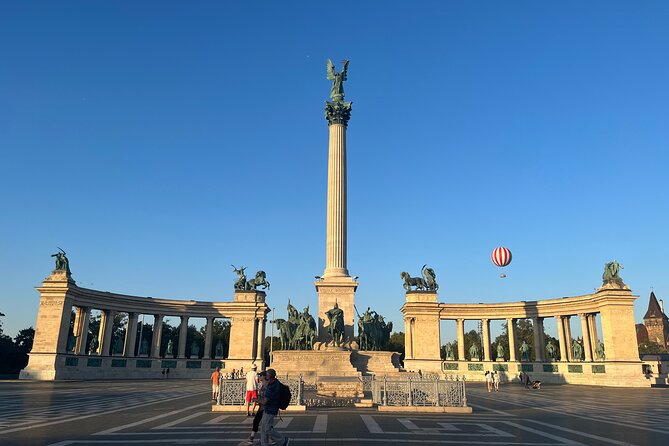
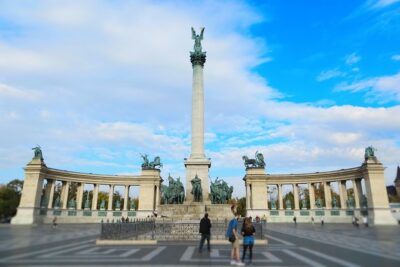
Next comes Heroes’ Square, one of Budapest’s major squares. The centerpiece is the statue complex featuring the Seven chieftains of the Hungarians, plus other major national leaders. It also includes the Memorial Stone of Heroes, and it’s near cultural institutions like the Museum of Fine Arts and the Art Gallery.
This stop isn’t just a pretty backdrop. It connects to modern Hungarian history too—because the square has hosted major political events, including the reburial of Imre Nagy in 1989.
Here’s a useful way to enjoy it: don’t rush through the monuments. Take a moment to look at the layout and the scale. The square is designed for remembrance, and that scale is part of the message.
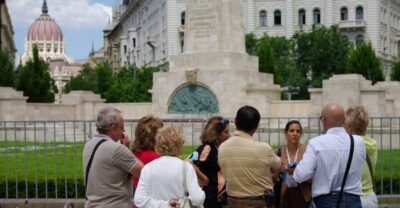
Your own guide and your own timing in Budapest
Széchenyi Baths: A Break You’ll Be Happy You Took
Then you shift to the Széchenyi Medicinal Bath and Pool area. Széchenyi is the largest medicinal bath in Europe. Two thermal springs feed the water, with temperatures around 74°C (165°F) and 77°C (171°F).
Even if you’re not a serious bath person, this is a smart mid-day reset. Budapest is a walking-heavy city, and a bath stop gives you a different kind of experience—one where you slow down without standing in long lines for attractions.
Important planning note: admission to Széchenyi Baths is not included, so expect to pay there if you go in. The tour gives you about a short window, so you’ll want to decide quickly—so you don’t lose time changing plans.
City Park Time: Vajdahunyad Castle and the House of Music
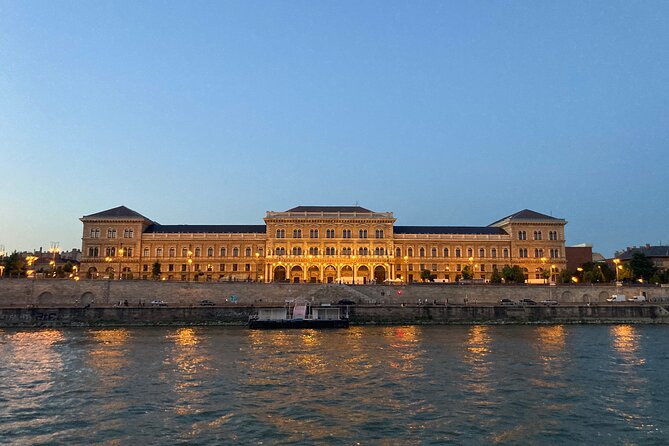
After the baths, you head toward City Park for two standout stops.
First is Vajdahunyad Castle. The current castle was built in 1896 for the Millennial Exhibition celebrating 1000 years of Hungary since the conquest of the Carpathian Basin in 895. The design includes copies of landmark buildings from across the Kingdom of Hungary—so the castle works like an architectural history lesson.
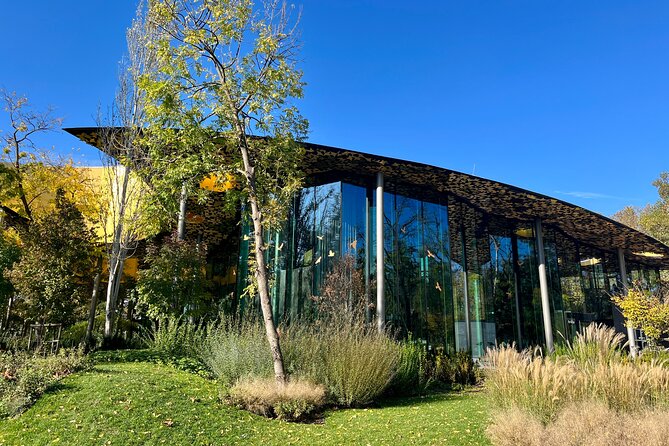
Next is the House of Music Hungary, which opened in January 2022. It’s a major music-history exhibition space, housed in an iconic building chosen from 170 international project entries. If you like modern design or want something different from the usual “old stone” sightseeing, this is a strong choice.
Both of these stops are good for different reasons:
- Vajdahunyad Castle gives you a historical reference point and a dramatic photo subject.
- The House of Music gives you a contemporary twist, which keeps the day from feeling repetitive.
If you’re trying to keep costs down, good news: both stops list free admission for your visit outside of interiors.
Opera House and Basilica: Beautiful Buildings With Extra Entry Options
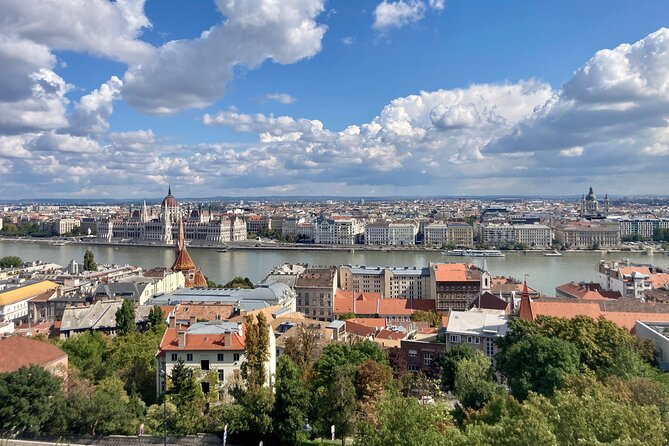
On Andrássy Avenue again, you’ll get time at the Hungarian State Opera House, a neo-Renaissance opera house in the heart of Budapest. This is another stop where the exterior and setting do a lot of the work for you—especially on a boulevard like Andrássy Avenue.
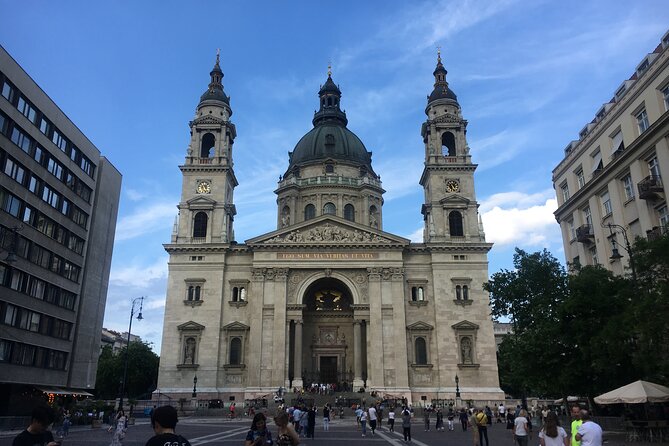
Then you move to St. Stephen’s Basilica. It’s a Roman Catholic basilica named for Stephen, the first king of Hungary, and it’s known for housing the right hand of Stephen in a reliquary. It’s also listed as the third-largest church building in present-day Hungary.
But there’s a catch: basilica entry isn’t included. So you’ll need to decide if it’s worth the extra ticket for you. If you do go in, expect it to be one of the spiritual “peak moments” of the day. If you don’t, you can still appreciate the scale and setting from outside.
Liberty Square: Embassies, Old Finance, and Art Nouveau Details
Liberty Square sits in the Lipótváros district and blends business and residential life. On one side you’ll find the US Embassy in Hungary, and nearby you’ll also see historicist headquarters of the Hungarian National Bank. Some buildings here feature Art Nouveau style details.
This stop is useful because it shifts your view from the big landmark storytelling to the city’s working identity. Budapest isn’t only monuments—it’s also government offices, commerce, and daily life.
If you like “between the famous places” moments, Liberty Square gives you that without forcing long detours.
Hungarian Parliament and the Danube Edge: Pest’s Big Statements
The tour then heads to the Hungarian Parliament Building in Kossuth Square, on the Pest side by the Danube. It’s described as the seat of the National Assembly and is currently the largest building in Hungary. Even if you only do an exterior stop, it’s hard not to notice the scale.
From here, Budapest’s political and cultural story becomes very physical: you’re looking at a building meant to project national presence.
Right after that, you head to the Danube waterfront for one of the city’s most haunting memorial stops.
Shoes on the Danube Bank: A Memorial That Lands Hard
The Shoes on the Danube Bank memorial honors Jews killed by the Arrow Cross militias during World War II. Conceived by film director Can Togay and sculpted by Gyula Pauer, it’s set along the Danube’s edge on the east bank.
This stop doesn’t need extra explanation to be meaningful. Still, your guide’s context helps you read it correctly—not as a “sad art thing,” but as a specific remembrance of violence.
Practical tip: keep your pace slow here. The point is to let it sink in. A quick look turns it into another photo stop. A slower one turns it into something you carry with you for the rest of your trip.
Chain Bridge and Margit Bridge: Danube Views Without the Day Getting Stuck
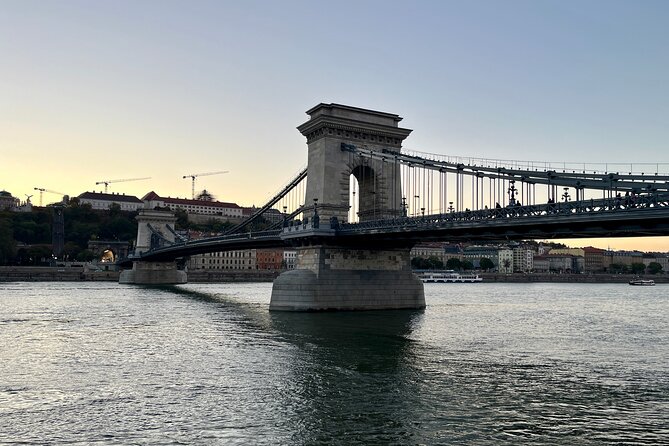
You’ll also see the Széchenyi Chain Bridge, the first permanent bridge across the Danube in Hungary, opened in 1849 and designed by engineer William Tierney Clark with construction by Adam Clark. It’s one of those bridges where you immediately understand why it became a symbol.
You’ll also pass by the Margit Bridge, the second oldest bridge in Budapest, opened in 1876. It connects Pest and Buda and links to the recreational area on Margaret Island.
Bridge stops are where the whole city layout clicks. When you look at both sides of the river, Budapest stops feeling like separate “Pest things” and “Buda things.” It becomes one interconnected city.
Zero Kilometre Stone: The City’s Reference Point
A quick but interesting stop is the Zero Kilometre Stone, a limestone marker about 3 meters high. It signals the reference point for road distances to Budapest, with the pedestal marked with “KM.”
It’s not a major tourist photo spot for everyone—but for anyone who likes the nuts-and-bolts of how a place works, it adds personality. It’s one of those tiny stops that makes the day feel more lived-in and less like a checklist.
Matthias Church and Fisherman’s Bastion: Buda Castle District’s Peak Views
Now you’re in the castle district zone, where the scenery does a lot of talking. You’ll stop at Matthias Church (The Church of the Assumption of Mary), located in the heart of Buda Castle District. The current building is florid late Gothic, built in the second half of the 14th century, then extensively restored in the late 19th century.
Matthias Church entry is not included, so again: choose your level of “inside time.” If you go in, it’s likely to feel like a payoff moment—this is one of those places people remember.
Next up is Fisherman’s Bastion. It’s famous for its panorama terraces over Budapest. The key building phase noted is between 1895 and 1902, on the base of the Buda Castle walls. Like Matthias, admission options aren’t included, including details like upper-floor access.
If you’re deciding where to spend your energy, here’s the rule I’d follow: prioritize the viewpoints. If you’ve got time, consider the interiors. If not, terraces outside still deliver the big skyline experience.
Buda Castle: Historic Layers in One Long Stare
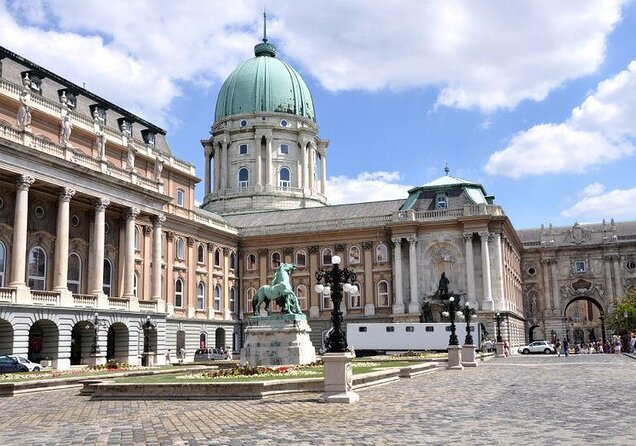
The tour then reaches Buda Castle, the historical castle and palace complex of Hungarian kings. Parts of it date back to 1265, while much of the Baroque palace we see today was built between 1749 and 1769. It’s part of the Budapest World Heritage Site, declared in 1987.
Buda Castle is one of those places where the exterior and the general layout are enough to understand why it matters. A longer visit helps, but even with limited time, it’s easy to feel the weight of centuries here.
The tour lists admission as free for your visit, which is helpful if you’re trying to manage extra tickets.
Citadel Lookout on Gellért Hill: The Day’s Big Finale
To finish, you’ll go to Citadel Lookout at Gellért Hill. The citadel (Citadella) is a fortification built in 1851 by Julius Jacob von Haynau. This is one of the city’s most spectacular viewpoint areas, and it gives you a “wrap your mind around Budapest” ending.
At this point in the day, you’ll have already seen Andrássy Avenue’s grand boulevard feel, Pest’s major civic buildings, and the Danubefront memorials. From the hill, you can finally connect those parts into one picture.
If you’re traveling with limited time, this is the kind of viewpoint stop that makes the whole tour feel like it paid off.
Price and Value: When a Private Group Tour Really Makes Sense
At $505.73 per group (up to 3) for about 8 hours, this isn’t a cheap “grab-and-go” option. But it can be strong value depending on how you travel.
Here’s the value math that matters:
- If you’re a couple, the cost often feels more reasonable because it’s spread across two people.
- If you’re traveling with a small group (up to three), the private car and door-to-door pickup can feel like a better deal than paying individually for multiple separate tours.
- You’re paying for convenience and a guide who explains what you’re seeing—especially useful in Budapest, where the history is deeply tied to specific buildings and places.
Also, consider what’s included vs. not included. The tour covers private guiding, door-to-door pickup, parking fees and taxes, and transportation. What you’ll likely pay extra for are interior visits like St. Stephen’s Basilica, Matthias Church, parts of Fisherman’s Bastion, and the Széchenyi Baths admission, plus lunch.
If you plan to do lots of interiors, your total spend will rise. If you mainly want exterior highlights plus a couple key interiors, this stays a much better value.
Who Should Book This Tour (and Who Might Prefer Something Else)
This is a great fit if:
- You want to see the big Budapest hits in one day without turning the day into a long walk marathon.
- You enjoy history explanations tied to the actual streets and buildings.
- You value flexibility, like being able to adjust your timing within the day.
You might choose a different style of tour if:
- You prefer fully independent travel with no guide.
- You dislike paying optional entrance fees and would rather do only free stops.
- You want a more slow, neighborhood-by-neighborhood experience rather than a “cover a lot” day.
Should You Book This Private Budapest Day Tour?
If you’re planning a short Budapest visit and you want a guide to help you connect the dots between Pest’s civic identity and Buda’s castle-area story, this private 8-hour format is a smart move. The convenience of door-to-door pickup, short walks, and a flexible pace is exactly what you want when time is tight.
My advice: go into it knowing where the extra ticket costs are likely to be, then decide in advance which one or two interiors you really care about. Do that, and you’ll leave with a strong sense of Budapest’s layout—and a lot more understanding than you’d get from a photo-only route.
FAQ
How long is the private Budapest city tour?
It runs for about 8 hours.
How many people are in a group?
The tour is private for your group and is listed as up to 3 people per group.
Is pickup available from my hotel?
Yes. Pickup can start from any hotel or other accommodation type in Budapest.
Is the tour offered in English?
Yes, it is offered in English.
Are attraction entrance fees included?
Not all. Entrance fees are not included for some optional interior visits, including examples like St. Stephen’s Basilica, Matthias Church, and the upper floor of the Fisherman’s Bastion. Széchenyi Baths admission is also not included.
Is lunch included?
Lunch is not included. There is time and the option for an optional lunch break, but meals are paid on-site.
What’s the cancellation policy?
You can cancel for free up to 24 hours in advance for a full refund.
Are service animals allowed?
Yes, service animals are allowed.
More Tour Reviews in Budapest






Private Budapest, Your Pace






Budapest in a Single Day




Just Added: More Budapest Reviews
- Sightseeing flight over Budapest
★ 5.0 · 3 reviews - Budapest: Walking Tour with Chimney Cake & Polaroid Photos
★ 5.0 · 3 reviews - Self Guided Tour In Budapest With 100 Captivating Audio Stories
★ 5.0 · 3 reviews - Budapest Art Nouveau Walking Tour
★ 5.0 · 3 reviews - Hungary today: a no-taboo conversation
★ 5.0 · 3 reviews
City Tours, compared.
 ★ 4.6City Highlights Sightseeing CruiseFrom $1843,981 reviews
 ★ 4.1City Sightseeing Hop-On Hop-Off Bus Tour & ExtrasFrom $414,337 reviews
 ★ 4.1Nighttime or Daytime City Sightseeing CruiseFrom $142,046 reviews
 ★ 4.4Grand City Tour with Parliament VisitFrom $701,598 reviews
 ★ 4.33-Hour Grand City Tour and Castle WalkFrom $491,437 reviews
 ★ 4.7Hungarian Chimney Cake Workshop in the City CenterFrom $421,263 reviews
 ★ 4.7Guided City Discovery Bike TourFrom $38702 reviews
 ★ 4.5City Center Walking TourFrom $14626 reviews
Browse the lists this tour appears in